Concrete on the Palmer Divide
Monument is in northern El Paso County on I-25, about 20 miles north of downtown Colorado Springs and roughly 50 miles south of Denver, just below the high ground of the Palmer Divide. The Air Force Academy lies to the south, and Monument Creek begins its run toward the Springs in this area. Drivers know Monument Hill as one of the stretches of I-25 where winter weather tends to be worse than in the cities on either side.
That weather follows people home. It means more plowing and shoveling, more deicer tracked onto driveways, and more meltwater dripping off vehicles onto garage floors. Concrete leveling in Monument leans toward the slabs that take that load: garage floors, driveway aprons and the walks between the drive and the front door.
Garage floors that hold water
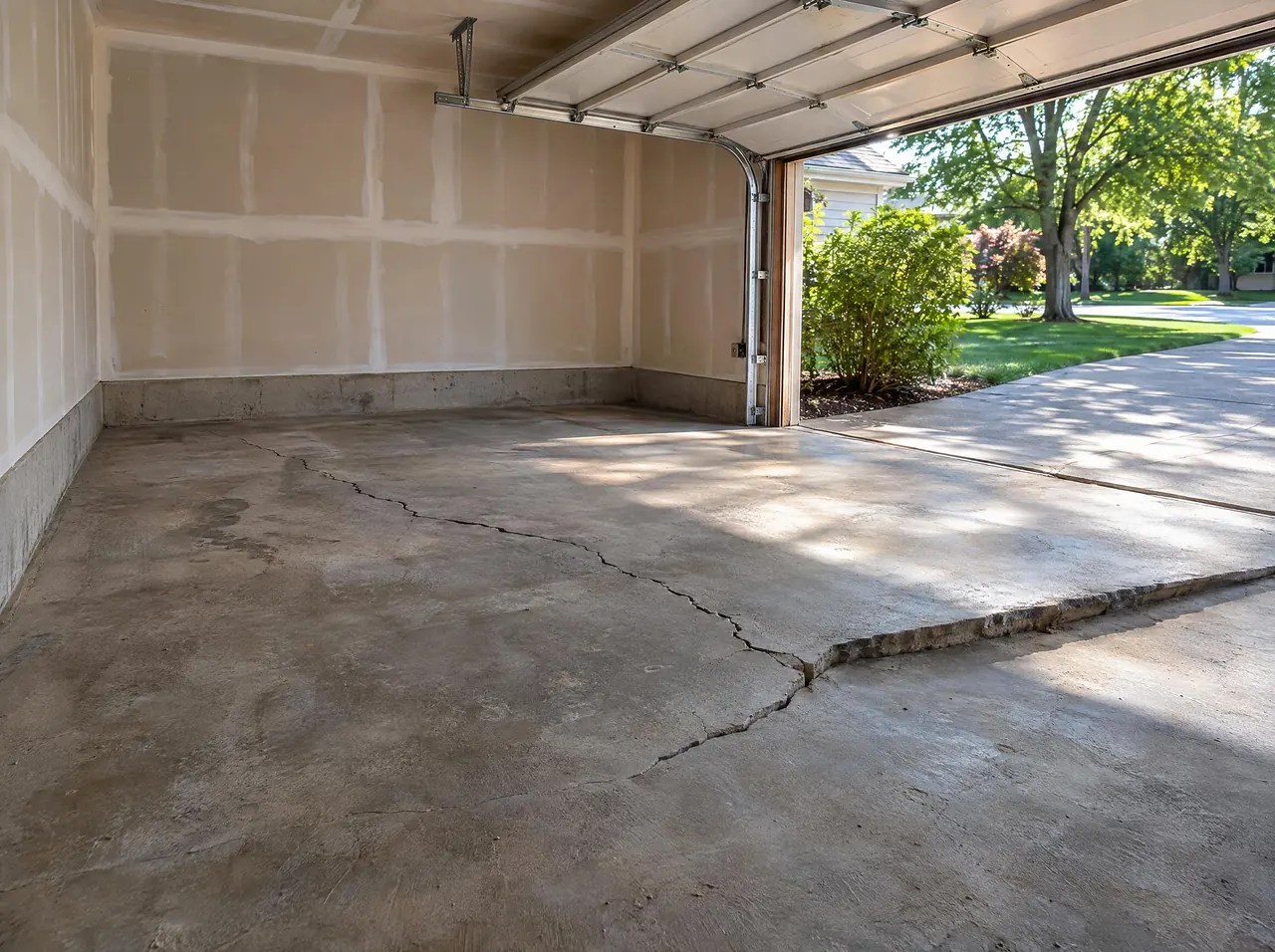
A garage slab sits on fill inside the foundation walls, and fill along those walls or over plumbing trenches can settle. A sunken area in a garage tends to make itself known in winter, when snowmelt off a truck runs to the low spot and sits there, sometimes freezing overnight. Standing water works into cracks and joints and down to the soil, which keeps the settling going.
Basement floors in Monument homes can settle for similar reasons, usually over plumbing runs or along walls. They're lifted the same way, from inside, as long as the slab is a floating floor and not part of the foundation itself. If walls are cracking along with the floor, have a structural engineer look before anyone touches the slab.
Lifting the sunken section restores the slope toward the door. The work happens from inside the garage through drilled holes, so nothing gets torn out and the garage door and walls stay as they are. Our garage and basement floor leveling page covers interior slabs in more detail.
| Where the slab dropped | What you notice in winter | Approach |
|---|---|---|
| Middle of the garage floor | Meltwater pools and freezes | Lift the low section, seal the cracks |
| Joint between garage and driveway | A bump at the door; an ice ridge forms along the joint | Lift the driveway apron panel |
| Driveway panel near the street | Water stands where the drive meets the walk or road | Lift it; confirm who owns any public walk portion |
| Front walk | An icy low spot in front of the door | Lift the panel and move the nearest downspout |
Send photos of the garage floor or drive with a tape across the low spot, and we'll help you plan the visit.
Request an estimateDeicers, scaling and what leveling can't fix
Flaking or pitting on the surface, known as scaling, is damage to the top of the concrete, often from freeze-thaw with salts present. It isn't settlement, and lifting won't change it. A slab can be scaled and sunken at once; leveling fixes the height, not the surface.
Open joints and cracks let deicer-laden meltwater run straight to the base, where it softens the soil and feeds the next round of settling. After a lift, the joints should be sealed with a flexible sealant; joint and crack sealing is the step that keeps winter water out.
Town of Monument or El Paso County
Plenty of homes with a Monument address sit outside town limits, on larger wooded lots in unincorporated El Paso County, and some of those streets have no public sidewalk at all. For a public walk or anything in the street right-of-way, check with the Town of Monument if you're inside town limits and El Paso County if you're not. Private driveways, patios and garage floors are the owner's call either way, subject to any HOA covenants.
Planning a job this far south
- Photograph each problem slab with a tape measure across the offset.
- Say whether the slab is inside a garage, on a steep drive, or somewhere equipment can't easily reach.
- Mention any hollow-sounding areas so void filling can be planned for the same visit.
- List every settled slab on the property, since handling them together makes sense on a longer trip.
Our concrete leveling process explains what happens from first photos to sealed joints. For properties farther south, see the Colorado Springs page.