Why an open joint can sink a slab
Every gap in a slab is a drain. Rain, snowmelt and sprinkler overspray run along the surface, find the joint and drop straight into the base and soil below. Over time that water softens the subgrade, carries fines away, and on clay soil makes the ground swell and shrink unevenly. Concrete joint sealing in Denver is about closing those drains so the soil under the slab stays as dry and steady as possible.
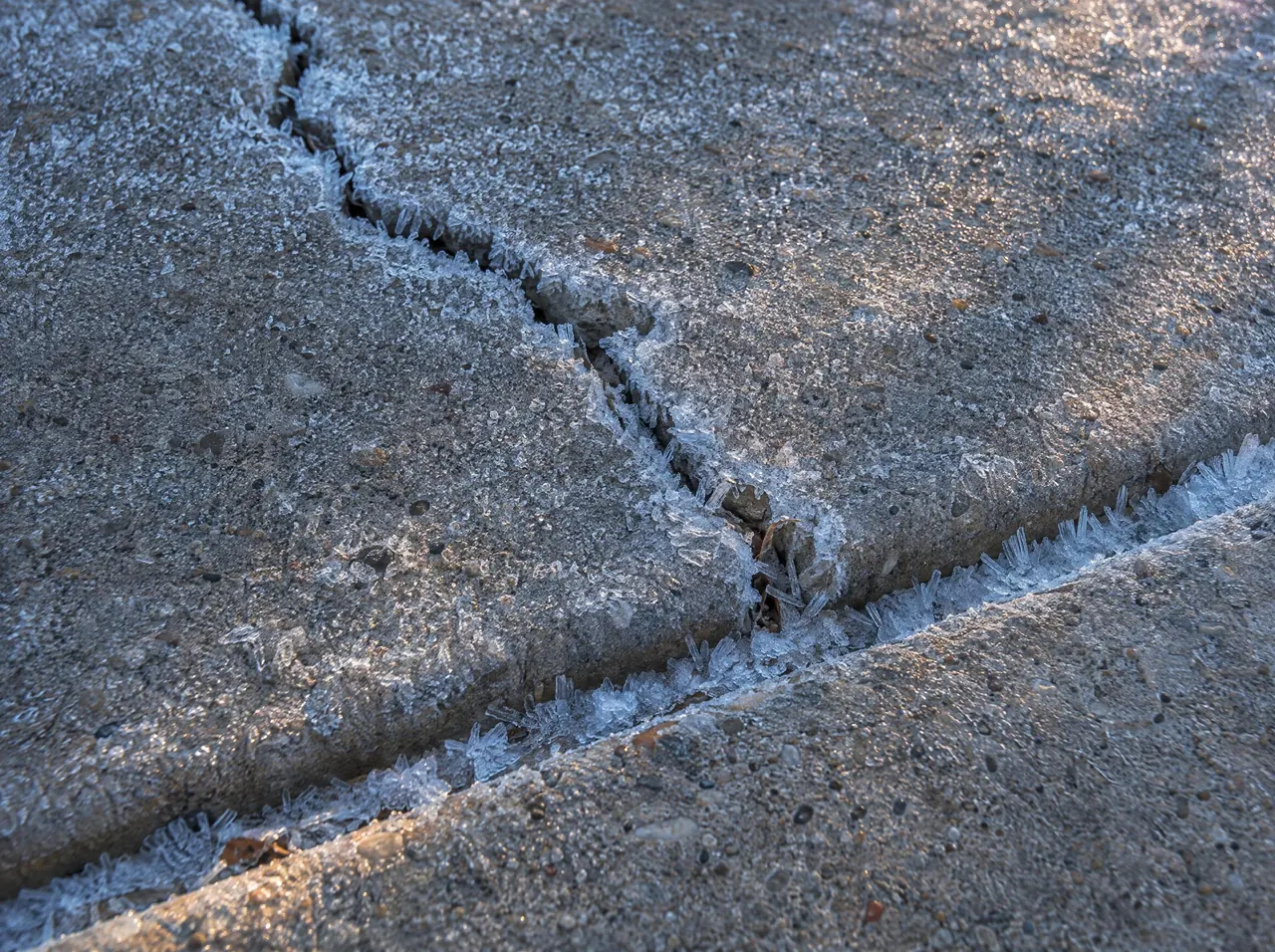
Winter adds another problem. Water that sits in a joint or crack can freeze and expand, and repeated freeze-thaw over a Front Range winter keeps prying at the edges. A flexible seal sheds most of that water before it gets in.
Joints, cracks and what each one needs
Not every line in your driveway is the same thing, and they don't all get the same treatment.
| Type | Where you'll see it | How we'd seal it |
|---|---|---|
| Control joint | Straight saw cuts or tooled grooves across driveways and walks, commonly spaced about 24 to 36 times the slab thickness (roughly every 8 to 12 ft on a 4 in slab) | Clean, backer rod, self-leveling sealant |
| Isolation joint | Where a slab meets the house, garage floor, a step or another slab, often with a strip of fiber board in it | Cut down or remove deteriorated filler, then rod and sealant |
| Joint against a wall | The vertical gap between a patio or walk and the foundation | Backer rod and a non-sag (gun-grade) sealant |
| Active crack | A crack that opens and closes with the seasons or shows dirt and weeds in it | Rout it to a clean channel, then seal |
| Hairline crack | Thin surface cracks that aren't moving | Often better left alone and watched |
Control joints exist so the slab cracks where it's told to. A crack running down the bottom of a control joint is the joint doing its job, and sealing it is routine.
How a sealed joint is built
Clean it to sound concrete
Old sealant, dirt, weeds and crumbling edges come out first. Sealant bonds to clean, dry concrete and very little else, so most early failures trace back to this step.
Set the depth with backer rod
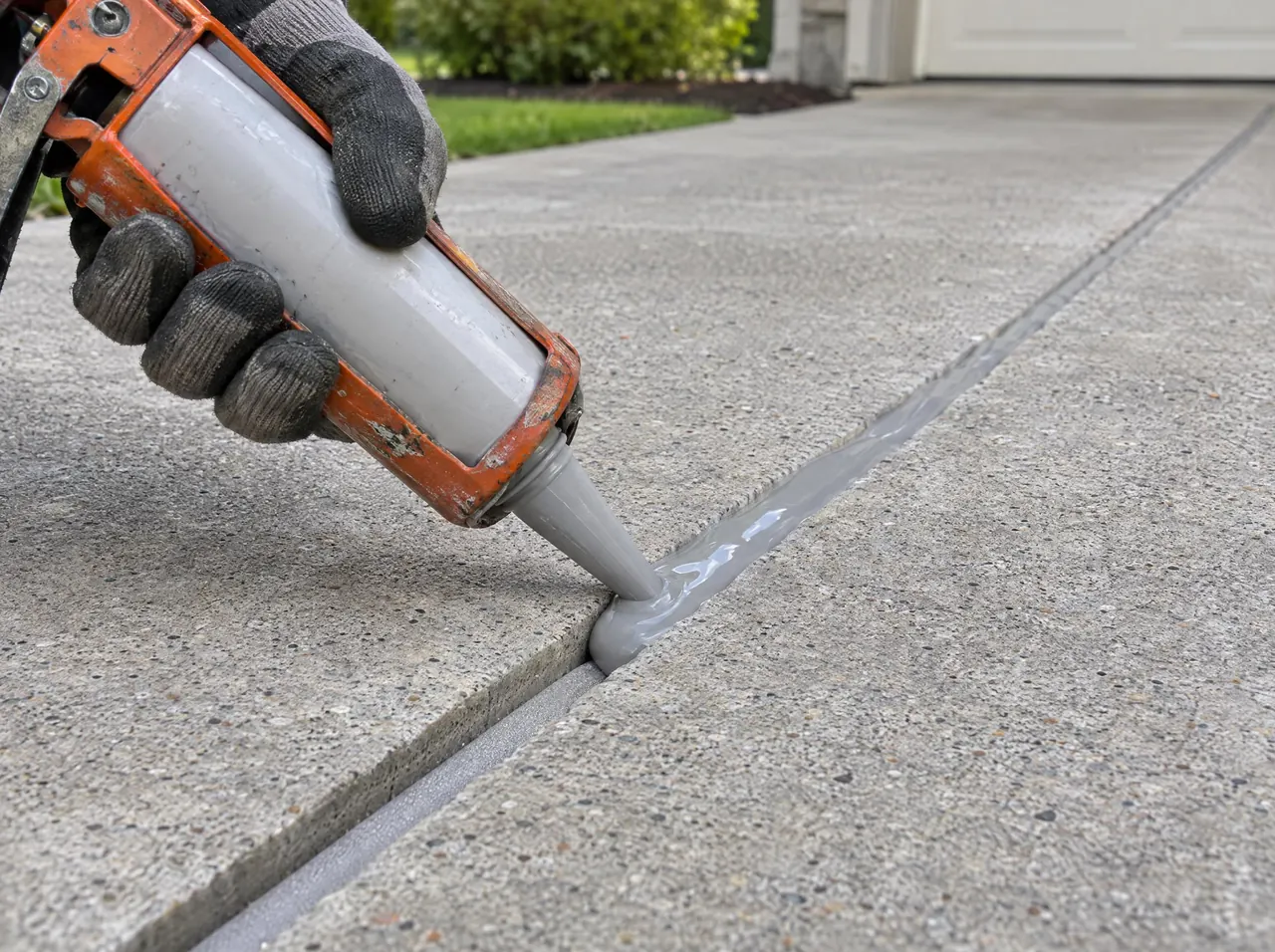
Backer rod is a round, closed-cell foam cord pressed into the joint. It sets how deep the sealant goes and keeps the sealant from sticking to the bottom of the joint.
Sealant that bonds to both sides and the bottom of a joint can't stretch properly when the slabs move apart, so it tears. Backer rod leaves the sealant stuck only to the two side walls, which lets it flex like a rubber band. Getting the depth right follows the sealant maker's width-to-depth guidance.
Pick the sealant for the surface
Self-leveling sealant flows out flat on its own, which makes it the usual choice for driveway joint caulking and other flat or gently sloped work. On a vertical gap or a steep slope it would run, so those joints get a non-sag sealant that stays where it's tooled. In both cases the finished bead sits slightly below the surface so tires and snow shovels ride over it instead of catching the edge.
Have open joints or cracks you want sealed before winter? We can look at them and recommend the right materials.
Request an estimateSeal after the slab is leveled, never before
If a panel has already dropped, sealant won't bring it back. Worse, lifting a panel moves the joints around it, and fresh sealant across a joint that's about to change width will tear. So the order on a settled slab is always the same: lift first, patch the injection holes, then seal.
That's why concrete crack sealing and joint work usually come at the end of leveling a settled driveway or repairing a sidewalk trip hazard. If a slab sounds hollow but hasn't moved, filling the void first and then sealing is the better sequence. You can see where sealing fits in a full visit on our leveling process page.
Pick a dry, mild stretch for sealing
Concrete shrinks a little in the cold and grows a little in the heat, so joints are wider in January than in July. Sealant installed at a middle temperature has room to stretch in winter and compress in summer. Installed on the coldest or hottest day of the year, it starts life at one end of its range.
The joint also has to be dry. A day or two after rain, or after the sprinklers have been shut off for the season, is usually a better time than the morning after a storm. Each product lists its own temperature and moisture limits, and those govern the schedule.
Signs your joint sealant has failed
- The bead has pulled away from one side of the joint, leaving a thin dark gap.
- It has split down the middle.
- Weeds or grass are growing through the joint.
- Sand or soil is washing up onto the surface after rain.
- The sealant has turned hard and brittle, or is sticky and tracking onto shoes.
- Chunks are missing where a tire or shovel caught a bead that sat too high.
Failed sealant comes out completely before resealing. Laying new material over old rarely holds.
What joint sealing won't do
A crack that keeps getting wider, cracks that line up with cracks in the house wall, or a slab edge that's heaving upward point to something bigger than a sealing job. Sealant closes gaps. It doesn't hold slabs together or stop soil from moving.
Sealing also won't fix a lip at a joint. Any offset over about 1/4 in is a lifting job first, and the sealant goes in afterward. We cover the full Front Range, and you can find your city on the service-area list.