A lot of Lakewood concrete dates from the post-war boom
Lakewood grew quickly after World War II, and much of east Lakewood, between Wadsworth Boulevard and the Denver line, is ranch homes from that era. Their driveways, front walks and patios have sat through decades of Front Range winters. Further west the city climbs toward Green Mountain and the foothills, and to the south it runs along Bear Creek.
For concrete leveling in Lakewood, that age matters less as a date than as a count of winters. Each freeze-thaw season, each spring melt and each summer of irrigation adds a little movement. A slab shows what it has been through if you look at it at the right time of year.
Do a fall walk-around before the first freeze
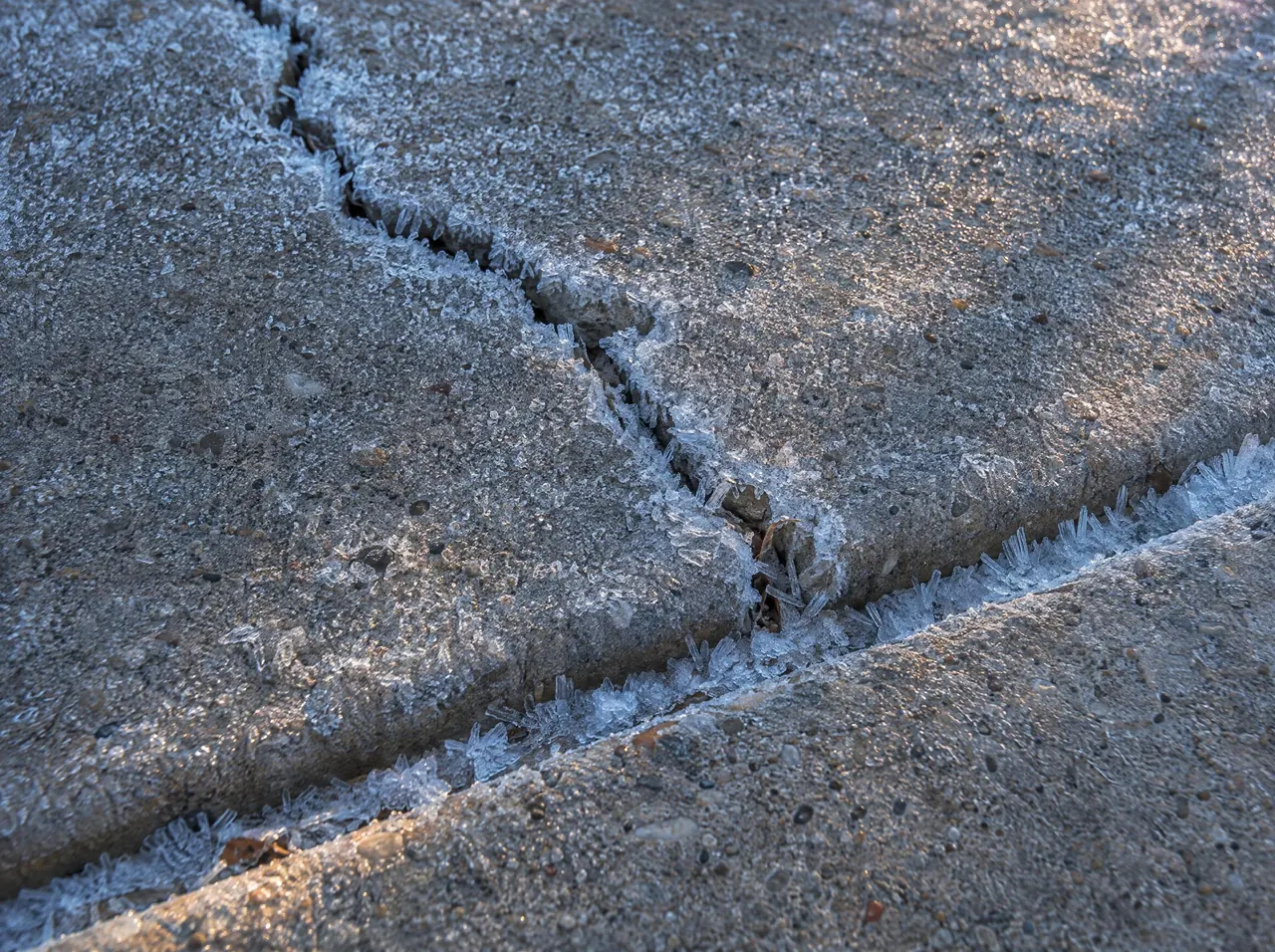
Each part of the year leaves its own mark. Winter's daily melt and overnight refreeze works water into open joints and flakes the surface wherever deicer gets used. Spring storms and quick snowmelt soak the soil beside downspouts. Summer irrigation keeps the ground wet along every slab edge, and where expansive clay is present it swells under watered lawn and shrinks under dry spots. By fall the ground has dried and movement has mostly paused, which makes it the easiest time to see what the year did.
A half hour with a tape measure and a level covers most of it:
- Lay a straightedge across every joint on the driveway and front walk, and write down any drop over 1/4 in.
- Set a level on the back patio, pointing toward the house. Any fall toward the wall is the first thing to fix.
- Run a hose on the patio for a minute and watch where the water goes.
- Tap suspect slabs with a hammer handle. A hollow sound over an area that hasn't dropped often means a void underneath.
- Look at each downspout and note whether it empties onto or beside concrete.
That list tells you what to lift and what to seal before winter puts water back into the joints. Sealing joints and cracks right after a lift is the step that protects it. Leveling isn't limited to fall, though; a trip hazard on a busy walk shouldn't wait for the calendar.
Ranch-house driveways and add-on patios
A ranch house keeps most of its concrete at grade and close to the walls: a driveway to an attached garage or carport, a short front walk, a stoop, and a patio out back. Some of those patios went in years after the house, occasionally poured by a homeowner over soil nobody compacted. They also tend to sit under the roof edge, where gutters overflow in a heavy storm.
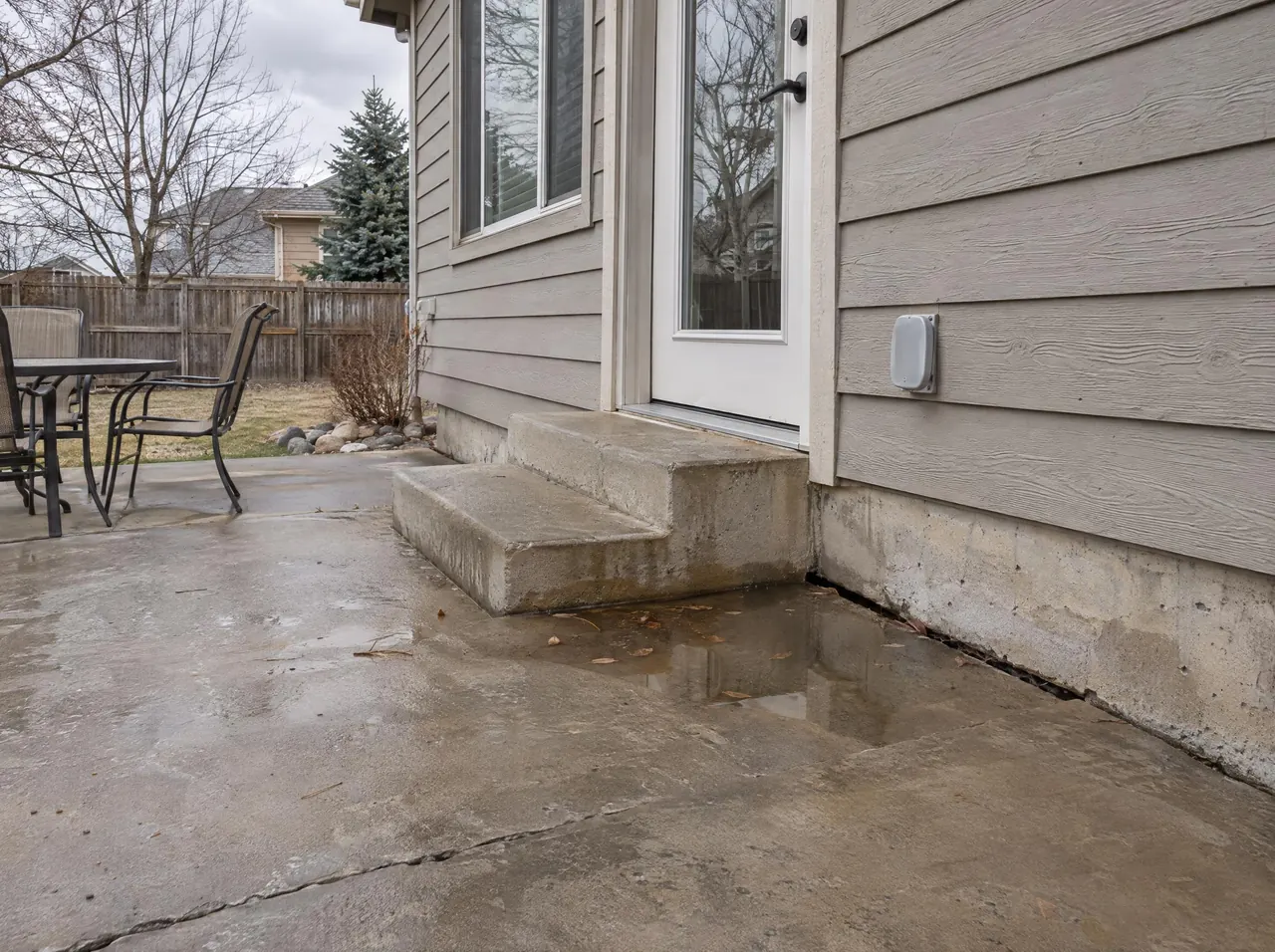
On an older driveway, start with the panels at both ends, by the garage and by the street. Those joints carry the most water and the most traffic, and that's where a lip forms. Driveway leveling lifts only the panels that dropped and leaves the rest alone.
Some old concrete is past saving. Leveling won't repair a surface that has flaked away after years of deicer, a patio poured an inch or two thinner than it should be, or concrete cracked apart into many fragments. Lifting those leaves them level and still worn out, so replacement is the honest recommendation.
Neighboring Wheat Ridge has a lot of the same post-war housing, along with more mature trees and larger lots.
Have your Lakewood driveway and patio measured before the next round of freeze-thaw opens the joints further.
Request an estimateApartment and townhome walks
Lakewood also has a large stock of apartments and townhomes, and their walks see steady foot traffic from residents, delivery drivers and visitors. For a property manager, the concern is the trip edge at the mailbox cluster or the step from the parking lot, more than how a slab looks.
Those walks are best handled as a single measured list, every offset recorded and ranked, then lifted in phases so each building keeps an open entrance. Foam suits that schedule, since a lifted walk is typically back in use the day it's done. Our multifamily and commercial leveling page goes into how that work is planned.
A Lakewood slab is easiest to read in late summer or fall. Measure the offsets then, lift what dropped, and seal the joints before winter puts water back in them.