How a pool deck ends up below the coping
An in-ground pool sits in a large excavation. Once the shell is built, the space between the shell and the surrounding ground is backfilled, and the deck is poured over that fill. It's the same loose-backfill problem that tips a patio back toward a house, except here it wraps all the way around the pool.
Water does the rest. Splash-out and wet feet soak the joints all summer. Deck drains clog with leaves. A slow leak in a return line or skimmer pipe can wash soil out from under one section for months before anyone connects it to a pool that needs topping off more often. Under the fill, Front Range expansive clay adds its own seasonal swelling and shrinking.
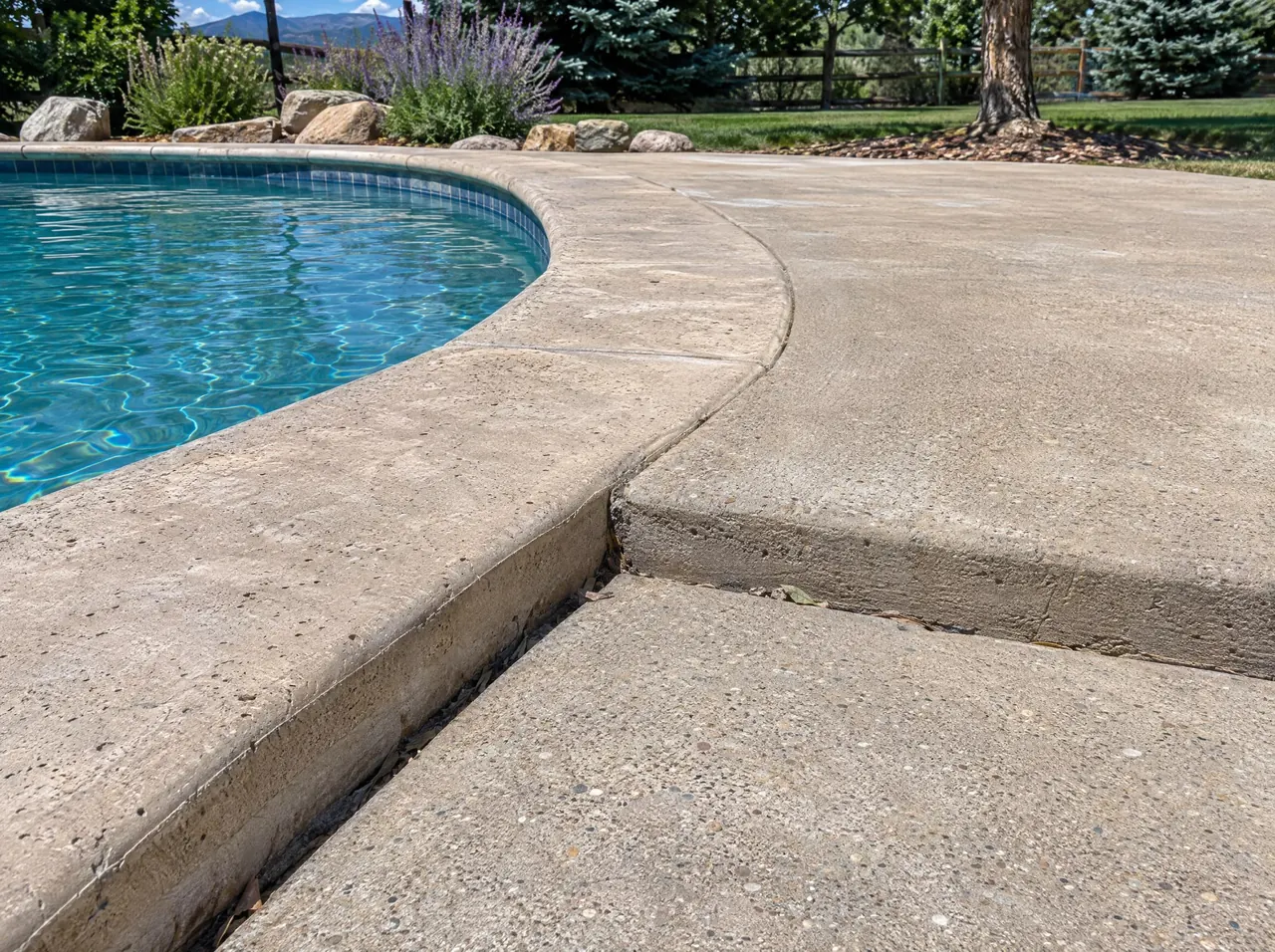
What you end up with is a deck that drops away from the coping, opens a gap at the joint, and starts sloping back toward the water.
What we check around the pool before drilling
Drilling into a pool deck without knowing what runs underneath is how a leveling job turns into a plumbing repair. The crew works through this list first:
- Where the return, skimmer and main drain lines run between the pool and the equipment pad
- Deck drains and the pipes that carry their water away
- Electrical conduit for pool lights, and the bonding around the pool
- The condition of the joint between the deck and the coping
- Which sections sound hollow, and how far the hollow area reaches
- How far each section has dropped relative to the coping, measured at several points
- Signs of an active leak, such as soil that stays wet in dry weather or a water level that falls faster than evaporation explains
If nobody knows where the plumbing runs, a pool service company can usually trace it. If a leak is suspected, have the lines pressure tested before the deck is lifted. Raising a slab over a leaking pipe only buys time.
Foam and slurry next to a swimming pool
We lean toward foam for most pool deck concrete lifting, for reasons specific to pools. The small holes, about 5/8 in, are easier to place between known pipe runs. The material is light, so it doesn't add a heavy load right beside the shell. And because foam doesn't wash out, it holds up in ground that gets wet every time someone cannonballs.
Foam expands as it reacts, though, and that force has to be controlled near pipes and the shell. It goes in a little at a time while the crew watches the slab and the coping joint. Mudjacking can still suit a section with a large void well away from the plumbing, but slurry's weight and its 1 to 2 in holes make it a harder fit on most decks. Our polyurethane foam leveling page goes further into how the material behaves.
On a pool deck, the method matters less than the homework. Know where the pipes are, rule out a leak, then inject in small, watched increments.
Have your pool deck measured against the coping before the next swim season starts.
Request an estimateLift the deck, but keep it below the coping
On most slabs the target is simple: make two panels meet. A pool deck has a different target. It should finish slightly below the coping and slope away from the pool, so splash water heads for the yard or the deck drains. Pushing a deck up hard against the coping can crack coping stones or load the bond beam at the top of the shell.
So each section's stop point comes from the coping height. Near the pool edge, the lift happens in small steps with frequent checks.
A raised spa wall, built-in steps or a planter curb set into the deck each has its own height to respect. The deck around them should still fall away from the water, so a section beside one of them may need a different pitch from the open deck nearby.
Pool deck problems leveling can't touch
Cracks in the pool shell, a pool that keeps losing water, and loose or broken coping all belong to a pool contractor. Leveling the deck around them won't stop a leak or reset a coping stone.
Coated decks deserve a mention. Spray-textured and acrylic deck coatings will show the patched holes, and a coating that's already peeling won't bond any better after a lift. Sections that have heaved upward from swelling clay can't be lowered by injecting under them; they have to be cut out and replaced. A deck broken into small pieces near the shell is in the same category.
Joints and drainage after the lift
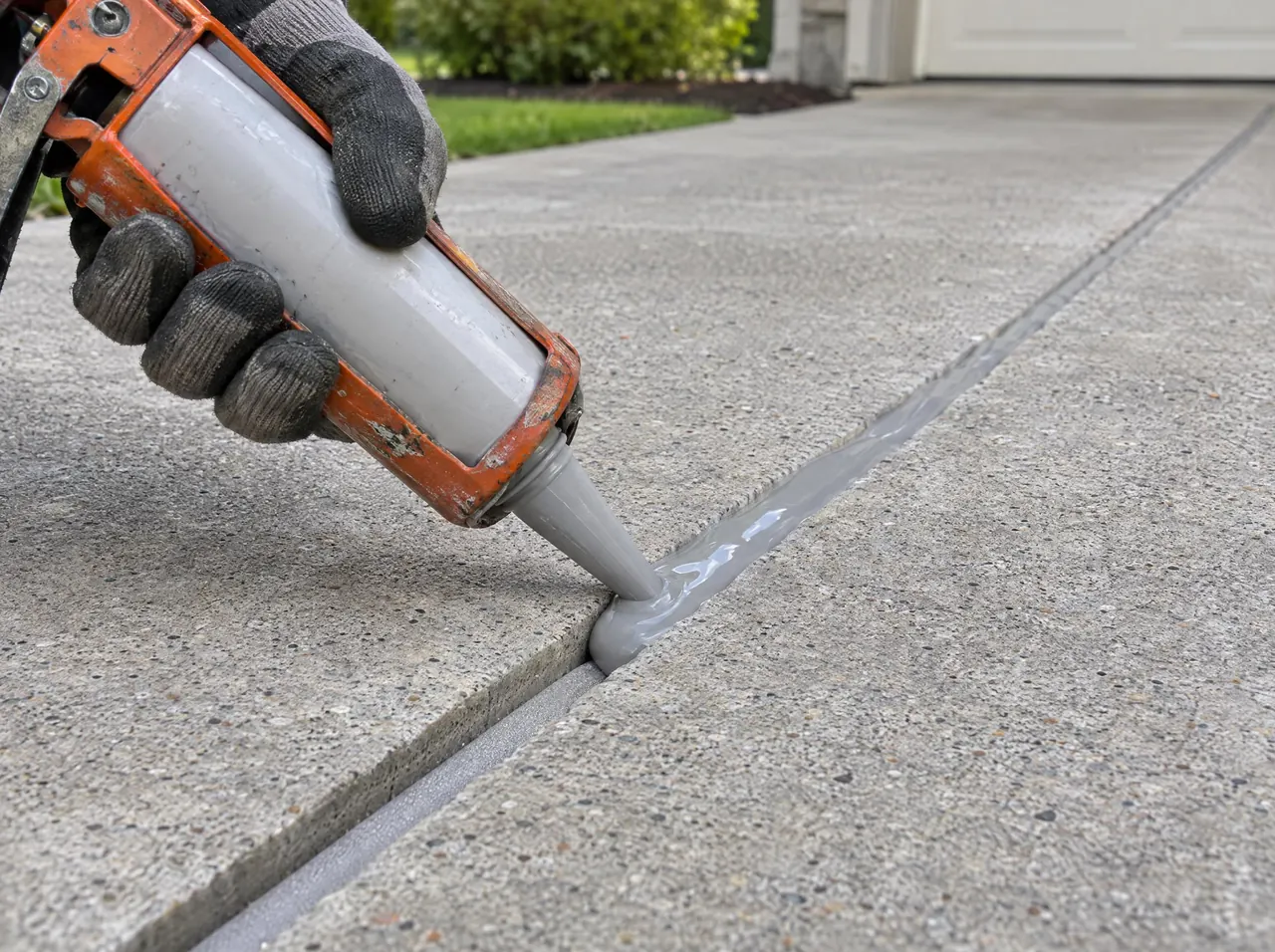
The joint between deck and coping is the main way water reaches the backfill around a pool. Once the deck is back in position, clean out the old material and fill that joint with a flexible sealant; rigid fillers crack as the deck and the shell move at different rates. Seal the control joints across the deck as well.
Then look past the concrete. Clear the deck drains and run a hose through them. Make sure downspouts from the house don't empty onto the deck, keep sprinklers off its outer edge, and check that the yard beyond falls away from it. Our joint and crack sealing service handles the coping joint and deck joints after a lift. We work pool decks throughout the Front Range service area, and the leveling process page explains what happens during a visit.