What a void under concrete means
A slab on grade is only as good as the soil under it. When that soil washes out, compacts or shrinks away, the concrete is left bridging an empty pocket. For a while nothing looks wrong. The slab still sits at its original height because it's spanning the gap, held up by the edges that still have support.
Concrete handles squeezing loads well and bending loads poorly. Ask an unsupported slab to carry a car, a grill or a loaded hand truck, and it flexes over the void until a crack opens. That's why concrete void filling in Denver is mostly about timing: filling the space before the slab breaks or drops is usually simpler and less costly than dealing with it afterward.
Signs your slab is hollow underneath
- A dull, drum-like sound when you tap the slab with a hammer or drop a set of keys, compared with a sharp sound elsewhere.
- A panel that rocks or clicks when someone steps on one corner.
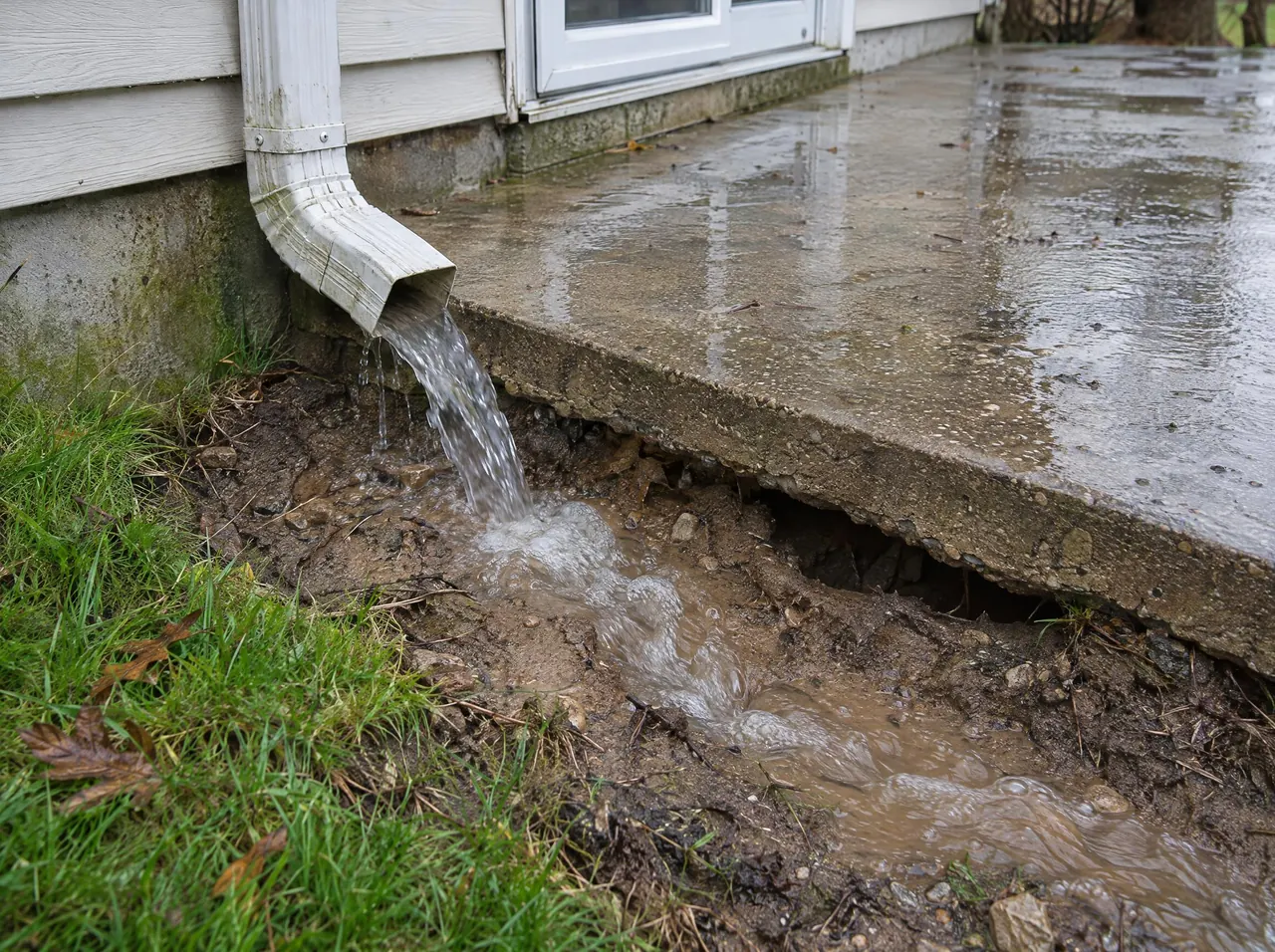
- A visible gap between the slab edge and the soil, especially where a downspout or sprinkler hits.
- Water that disappears under the edge of the slab after rain instead of running off.
- New corner cracks or a crack running diagonally across a panel that hasn't changed height yet.
- Soil or sand washing out of a joint onto the surface.
One sign alone doesn't prove a void. Two or three together on the same panel usually do.
What the symptoms usually point to
Hollow concrete slab repair works best when we know why the space opened up. These are the patterns we look for on a site visit.
| What you notice | What's often happening below | What it calls for |
|---|---|---|
| Hollow spot near a downspout or along a lawn edge | Runoff washing fine soil out from under the slab edge | Redirect the water, then fill the void |
| Hollow area next to the house | Backfill around the foundation that was never fully compacted and has consolidated | Fill the void; lift too if the slab has started tipping toward the house |
| Hollow area over a known pipe route | A leak carrying soil away, or loose fill in the old trench | Plumber checks the line first, then fill |
| Gaps at slab edges that open in dry months | Expansive clay shrinking as it dries | Fill, seal joints and keep moisture steadier around the slab |
| Hollow sound plus a drop of more than 1/4 in | The void has already let the slab settle | Lifting, which fills the space as part of the work |
Fix the water source before the fill
Expansive clay is common along the Colorado Front Range, and the Colorado Geological Survey publishes maps and guidance on swelling soils for anyone who wants the detail. Clay soil swells when it gets wet and shrinks as it dries, so uneven watering around a slab keeps the ground moving.
If a downspout empties right at the slab edge, an irrigation head sprays the joint every morning, or a water bill has crept up for no clear reason, deal with that before filling. Material injected under the slab doesn't stop the water that made the void in the first place.
Simple fixes go a long way: a downspout extension, a sprinkler head turned away from the concrete, and soil graded to fall away from the slab.
If a slab sounds hollow, we can sound it, mark the voids and tell you whether filling makes sense.
Request an estimateHow filling voids under concrete is done
- Sound the slab and mark the hollow area in chalk so the injection points cover it.
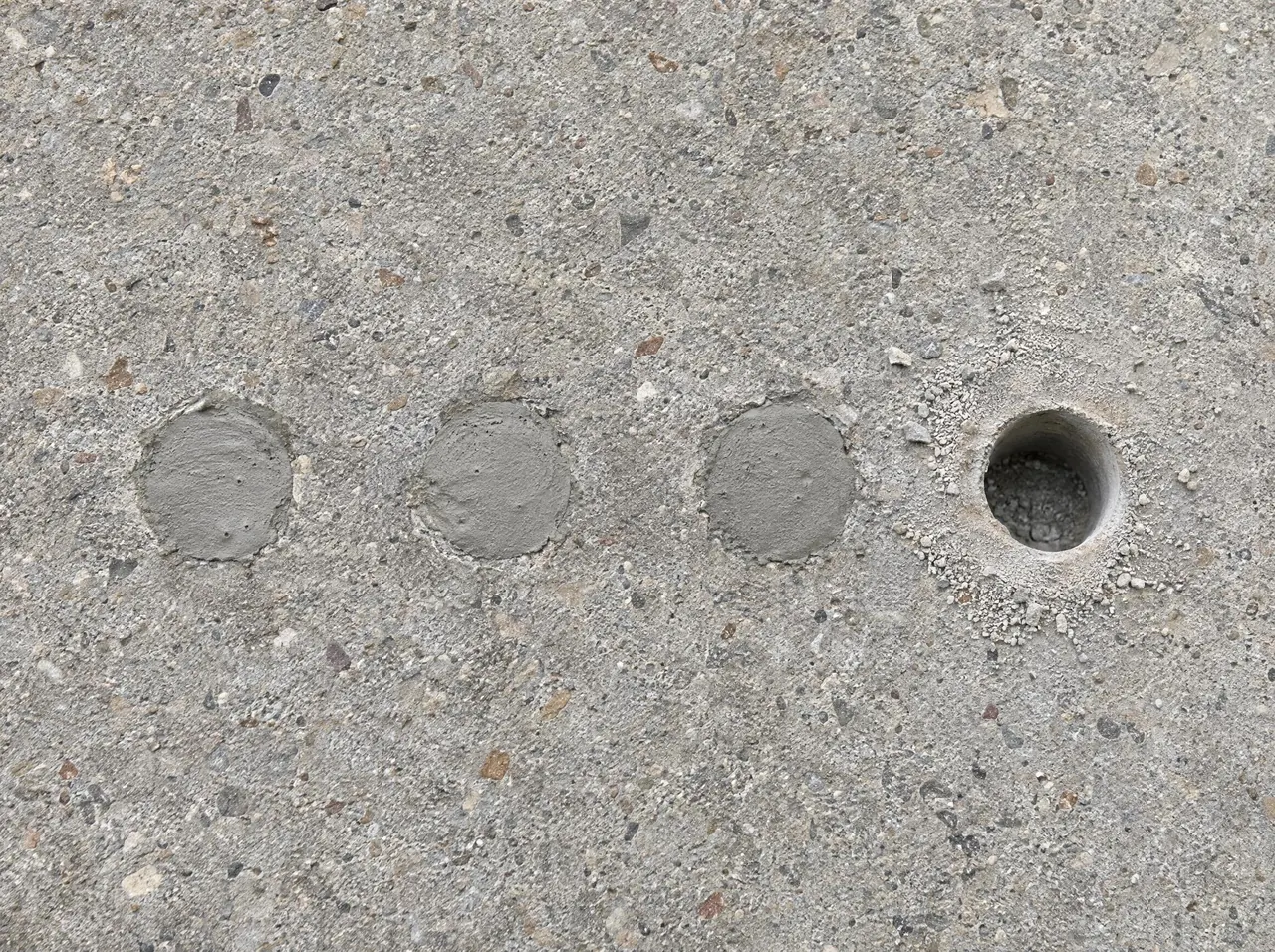
- Drill injection holes through the slab, spaced to reach the whole void.
- Inject material while someone watches the slab surface with a level or laser.
- Stop each hole once it takes no more material or the slab shows any upward movement.
- Patch the holes and seal any open joints along the filled area.
Filling and lifting use the same tools, but the goal is different. When a slab is already at the right height, the job is to fill the space without moving the concrete, so injection goes slowly and stops at the first sign of rise.
Our process page walks through a typical visit, from the first measurement to cleanup.
Choosing a material for slab void fill
Both of our methods can fill a void. Polyurethane foam goes in through holes about 5/8 in across, weighs very little, sets fast and doesn't wash out, which suits voids under soft or wet soil and slabs that need to be back in use quickly. Cement slurry from mudjacking needs larger holes and more curing time but usually costs less in material, and that can matter when the void turns out to be large.
Indoor slabs are a common case for foam, since smaller holes and less equipment inside the building keep the work tidier. If the hollow area is in a garage or basement, our page on leveling garage and basement floors covers the extra prep involved.
When a hollow slab needs more than fill
Void filling assumes the slab is still in one piece and roughly where it belongs. A panel broken into several pieces won't be held together by support underneath, and a slab that's heaved upward has the opposite problem. Neither is a fill job.
The other limit is structural. A void under a structural slab, or settlement that shows up as cracks in the house itself, belongs with a structural engineer before anyone injects anything.
Fill early, while the slab is intact and level. Fix the water first, then fill, then seal the joints and cracks so runoff has fewer ways back under. If your property is outside Denver, check our service area along I-25.