Longmont's housing eras and their concrete
Longmont is a full-size city on St. Vrain Creek, northeast of Boulder and roughly 35 miles north of Denver. Most of it lies in Boulder County, with a portion in Weld. It has housing from almost every period of Front Range building, from older homes around the historic Main Street downtown to subdivisions finished in the last few years. Concrete ages with the houses, so a useful first question about concrete leveling in Longmont is when the slab was poured.
| Era | Typical slabs | Common movement | Worth checking |
|---|---|---|---|
| Historic homes near downtown | Front walks, porch steps, alley aprons | Long, slow settling; root heave from mature trees | Whether a panel sank or was lifted by a root |
| Mid-century neighborhoods | Narrow driveways, patios added years after the house | Add-on patios sinking, driveways dipping at the street end | How much base was put under a later patio |
| 1990s to today | Wide driveways, front stoops, garage floors | Settling over foundation backfill close to the house | Downspout and sprinkler locations |
| Newer alley-loaded neighborhoods | Rear aprons and parking pads off the alley | Apron edges dropping where alley runoff collects | Who owns the alley paving |
Alley garages and rear aprons
Several Longmont neighborhoods put garages on alleys, from the older blocks around downtown to Prospect New Town, which was designed around them. Alley aprons take more abuse than most front driveways. Water from the alley runs to the lowest point, which is often the seam between the alley surface and the private apron. Once the apron edge drops, water pools there, freezes and works the gap wider with every hard freeze.
Lifting the apron back up to the alley grade and then sealing the joint against water closes that path. The alley paving itself may belong to the city or, in some newer neighborhoods, to an HOA, so find out which before anyone works on it.
Patios added after the house was built
Many mid-century houses got their back patio years after the house went up, sometimes poured by a homeowner over whatever ground was there. Those slabs can be thinner than a driveway and may sit on little or no compacted base, which is why they sink and tilt more than the original concrete. A thin slab can still be lifted, but it can also crack while it rises, so the crew checks thickness and condition first. If it's already broken into several pieces, replacing it with a properly prepared base is the better money.
Porches and steps in the older blocks
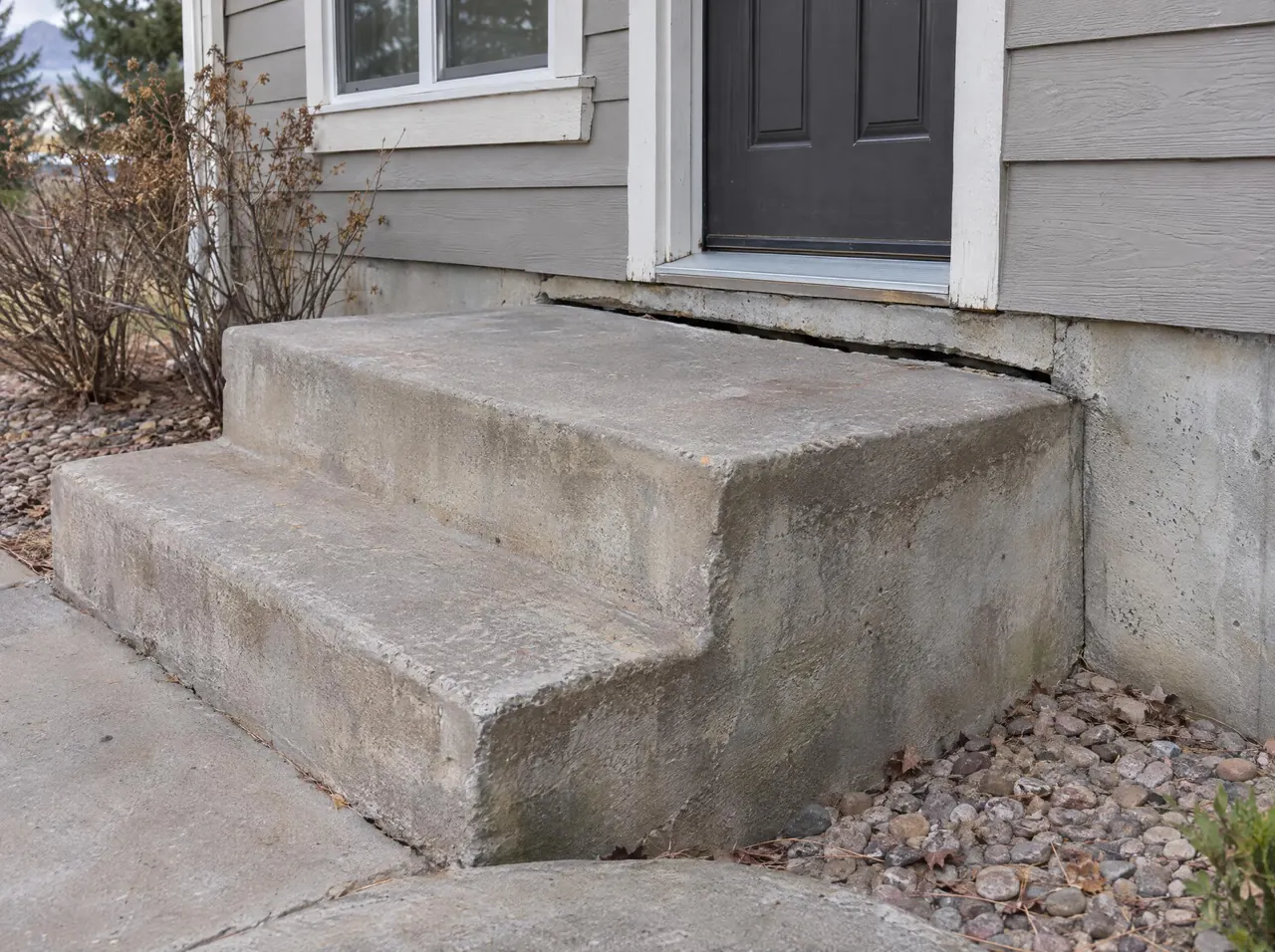
Front porches with concrete steps are common in the older parts of Longmont. Steps tend to drop away from the porch as a unit, leaving a gap at the top riser that grows a little each year and catches heels. If they are a single cast piece, they can often be lifted back against the porch. Steps that have split from the landing or crumbled at the treads are a tougher repair. More on that in our porch, step and patio leveling guide.
Measure before you call
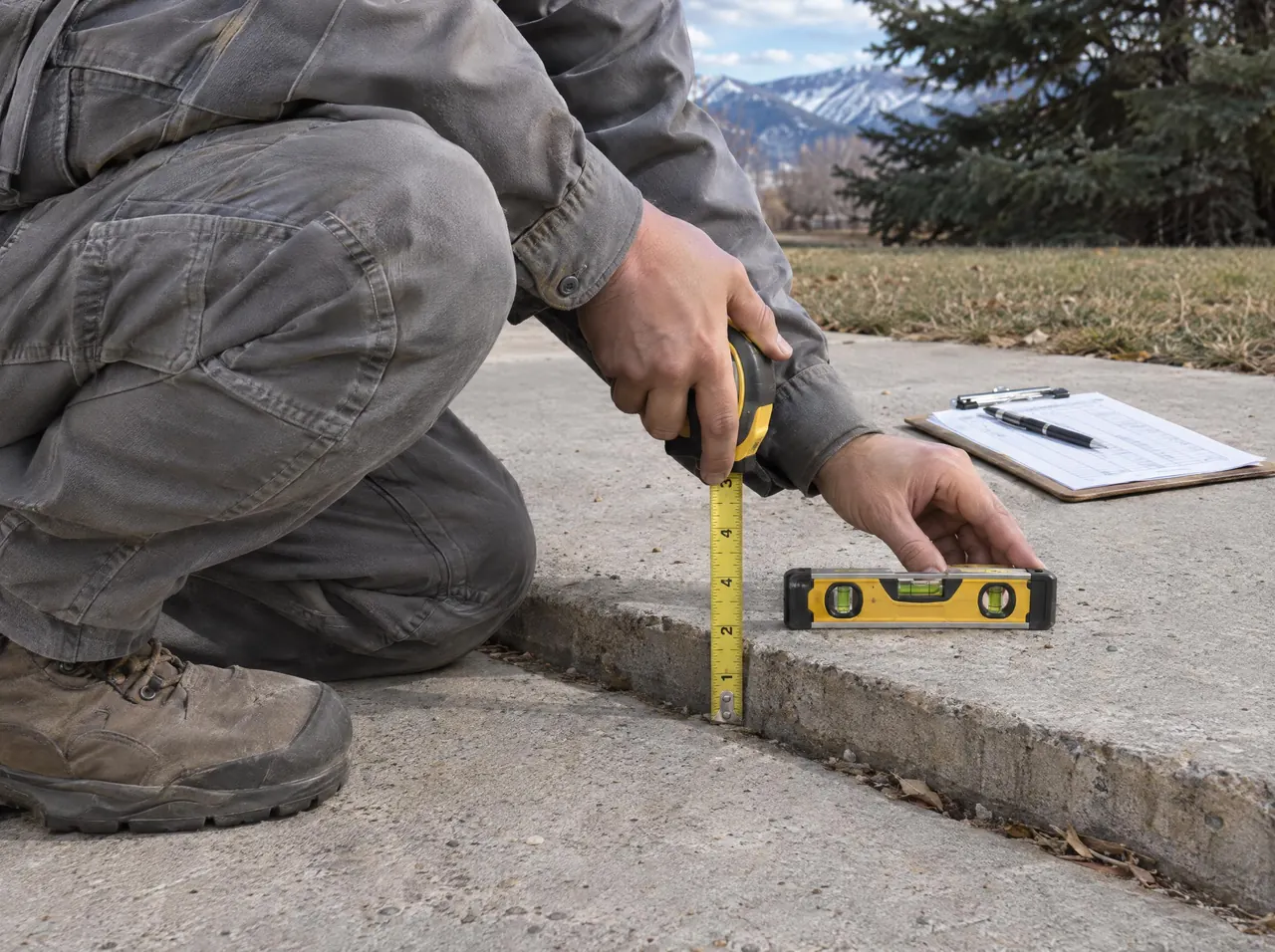
A few measurements make the first conversation far more useful. You don't need special tools.
- Pick the worst spot and set a level or a straight board across it so one end rests on the higher slab.
- Measure the space between the board and the low slab, to the nearest quarter inch.
- Note which slab moved, if you can tell: is the low one sitting below the lawn, or is the high one tipped up?
- Take one photo from a few feet back and one close up with the tape in the frame.
- Jot down where downspouts and sprinkler heads sit relative to the slab.
That's usually enough to judge whether a slab looks like a lifting job before anyone drives out. The step-by-step leveling process covers what happens after that.
Send your measurements and photos from Longmont, and we'll follow up to arrange an on-site look.
Request an estimateSidewalks and street trees
Mature street trees line many older blocks, and roots lift sidewalk panels there just as often as settling drops them. A heaved panel can't be leveled down, so it's worth knowing which kind you have before calling a contractor of any sort. For the walk beside the street, the City of Longmont can say who is responsible and whether a tree is involved. Owners of apartment buildings and HOA properties with long runs of uneven walk can look at our sidewalk trip hazard leveling for how an entire site gets mapped.
Figure out when the slab was poured and where the water goes. In Longmont, those two answers usually point straight at the repair.