Two building eras, the same winters
Castle Rock is the Douglas County seat, on I-25 roughly 30 miles south of Denver, and it takes its name from the butte that overlooks downtown. East Plum Creek runs through town. The housing falls into two broad groups: older homes and sidewalks on the streets around the historic downtown along Wilcox Street, and a much larger set of master-planned neighborhoods such as The Meadows and Crystal Valley Ranch, built over the last few decades with attached garages and HOA-maintained common areas.
The two groups settle for different reasons. Older walks sit over decades-old utility trenches and joints that have let water in for a long time. Newer driveways and patios sit partly on foundation backfill that is still compacting. Both get the same freeze-thaw cycles, and the seasons shape when concrete leveling in Castle Rock is worth scheduling and what you can learn about a slab before it's done.
What slabs do through the year
| Season | What's happening under the slab | What to do |
|---|---|---|
| Winter | Freeze-thaw cycles; frozen soil can push slabs up slightly; meltwater refreezes in open joints | Note icy low spots and where meltwater runs; don't trust offset measurements yet |
| Spring | Ground thaws and is often at its wettest; settled panels show their true position | Measure offsets and photograph them; this is the most honest picture of the year |
| Summer | Irrigation runs hard at slab edges; unwatered clay can dry and shrink | Check sprinkler overspray and adjust heads before the lift |
| Fall | Soil is usually drier and stable before the first hard freeze | A sensible window to lift and seal joints ahead of winter |
None of that means the work can only happen in one season. It means the spring measurements are the ones to trust, and a lift followed by joint sealing before winter gives the repair its best start.
Frost cracks and settlement are separate problems
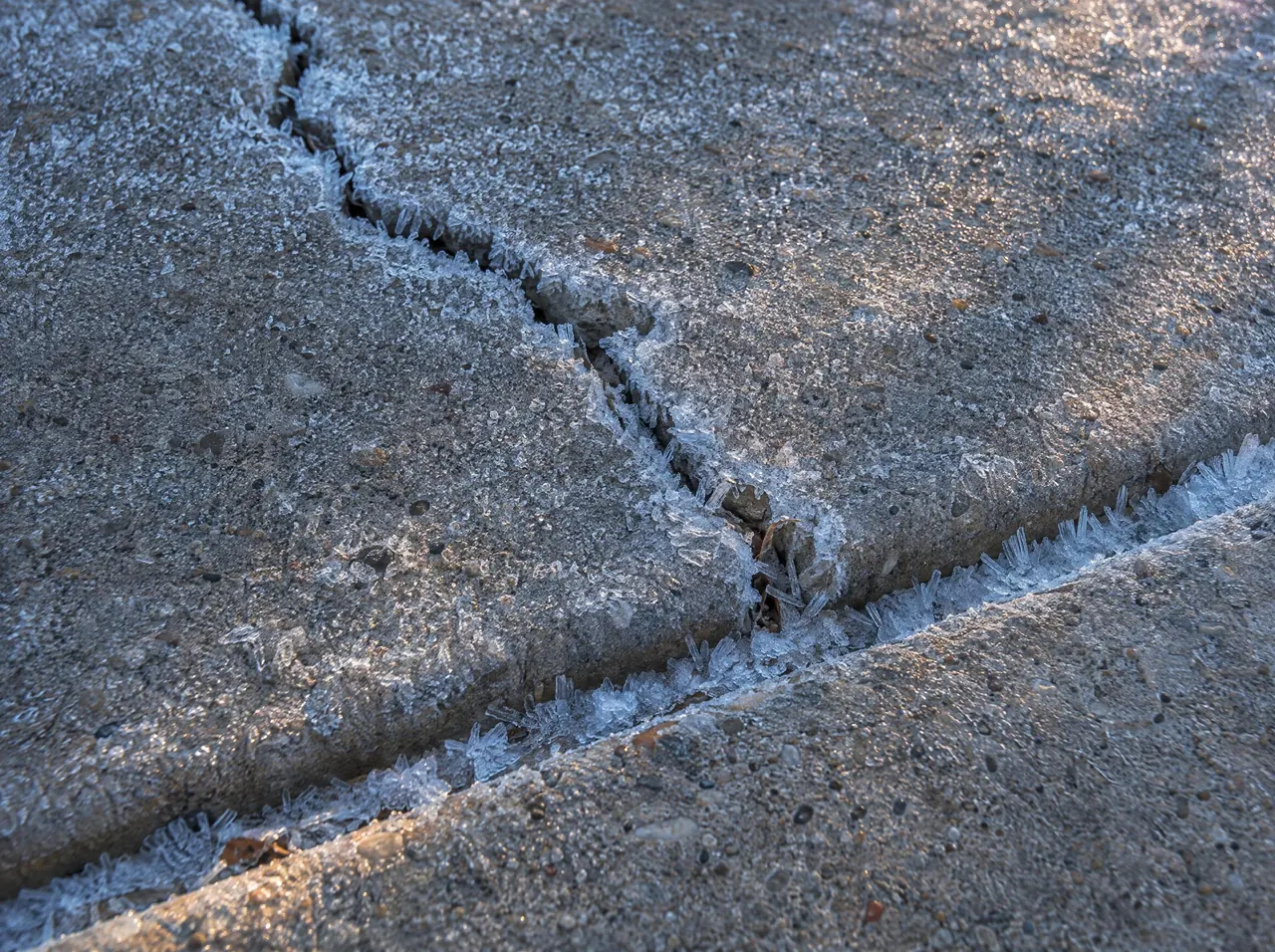
A crack that runs across a slab after a hard winter is a different issue from a panel that dropped. Freeze-thaw cracks the concrete; settlement moves it. Plenty of slabs have both, and leveling only addresses the second one. If a cracked panel has split into two solid halves that both sank, the crew can drill both and lift them together, then the crack gets sealed. If the slab is broken into many pieces, it needs replacing.
Scaling, where the top layer of a slab flakes or pits, starts at the surface. Leveling raises a slab; it doesn't touch the finish. If a panel has both problems, expect the lift to remove the trip edge and the surface to look the same as before.
Open joints matter more here than they look. Every one that's unsealed lets snowmelt down to the base, where it freezes, thaws and softens the soil. Sealing the joints and cracks after a lift is what keeps the next winter from undoing it.
Measure the offset once the ground has thawed, send a photo, and we'll tell you if the slab is a lift.
Request an estimateOlder walks near downtown
On the older streets of Castle Rock, the usual complaint is a sidewalk panel that has dropped at a joint and become a trip edge. Before arranging work on any walk in the public right-of-way, check with the Town of Castle Rock about who is responsible. For walks on private property, the sidewalk leveling page explains how to tell a sunk panel from one pushed up by a root.
Driveways in the newer neighborhoods
In the master-planned areas, the driveway panel at the garage door is the one that most often drops, because it sits over the backfill against the foundation. Lifting it closes the step at the garage and sends meltwater back toward the street. Patios behind these homes often follow the same pattern along the house wall, and the fix is the same: lift the low edge and move the downspout that feeds it. Castle Rock homeowners in HOA neighborhoods should check covenants for any exterior-work approval before scheduling. Our driveway leveling page covers apron panels and the joints around them. If your association maintains shared walks, it should approve any work on them first.
Measure in spring, lift what sank, and seal the joints before the next freeze. Cracks and scaling are separate repairs.