Read the offset before choosing a fix
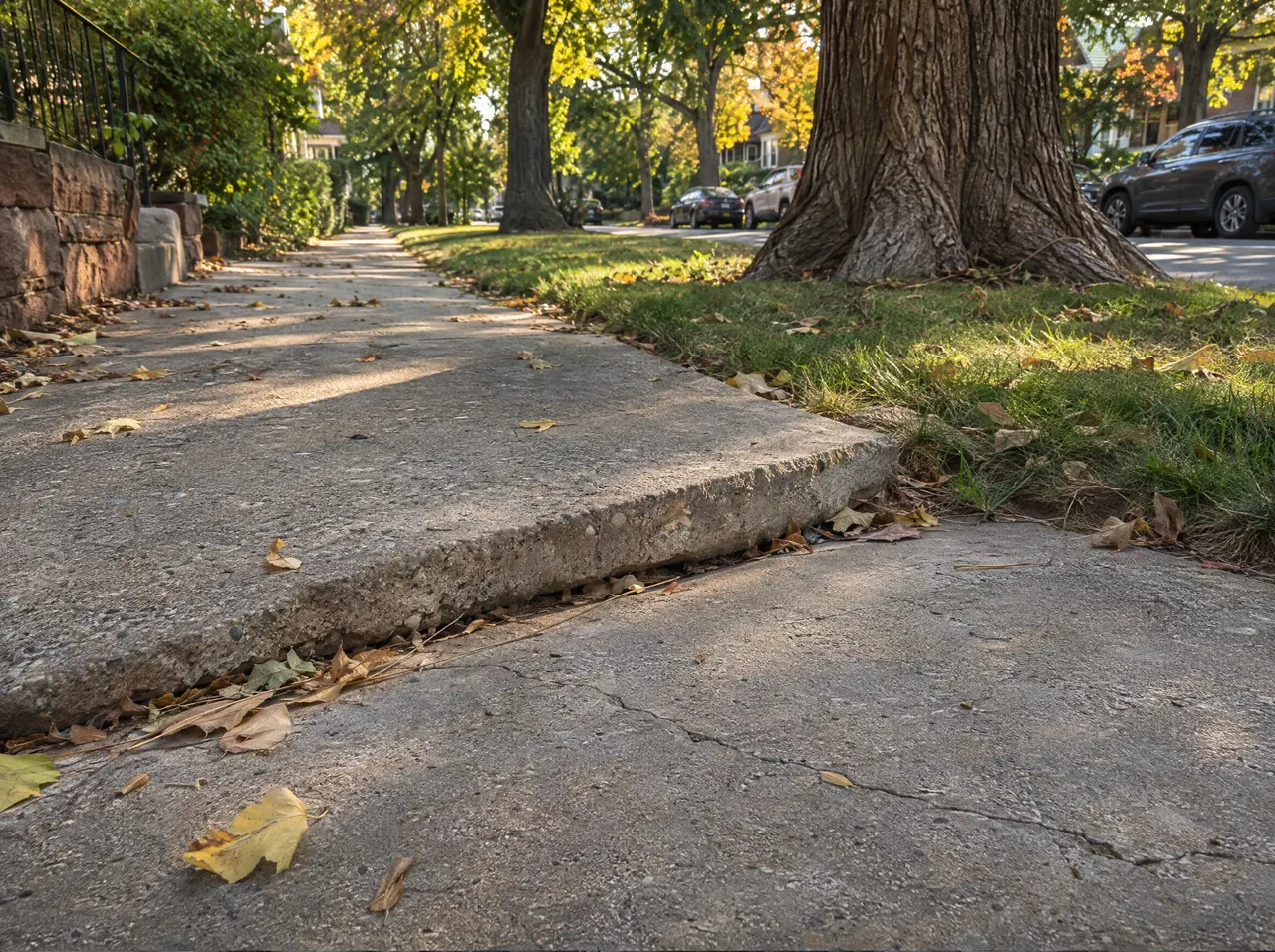
A raised edge on a walk tells you a lot once you know which side moved. Lay a straightedge across the joint. If the panel you step onto has dropped, it settled. If the panel you step off has climbed, something pushed it up. From a few feet away those two look identical, and they need completely different repairs.
| What you see | Likely cause | What usually works |
|---|---|---|
| One panel low, its neighbors flat | Washed-out or poorly compacted base under that panel | Lift the panel back to flush |
| Panel tilted, low on the lawn side | Irrigation or runoff softening soil along the edge | Lift, then redirect the water |
| Several panels stepping down in a row | Settling trench backfill or a long void | Lift each panel in sequence and fill the voids |
| Panel rocks underfoot or sounds hollow | Empty space under the slab | Void filling, often combined with a lift |
| Panel higher than its neighbors, cracked near a tree | Root heave | Root work and new concrete |
| Panel broken into several pieces | Load or freeze damage | Replace that panel |
The first four rows are what sidewalk lifting was made for. A hollow panel that hasn't dropped yet is a good candidate for slab void filling before it cracks. The last two rows are where lifting doesn't belong.
Lift a panel that went down. A panel that came up needs root work or replacement, and the panels around it should wait until that's done.
Why sidewalk panels sink
Sidewalks are thin, narrow slabs, often about 4 in thick and a few feet wide, and they sit exactly where water gets dumped. Lawn sprinklers hit both edges. Downspouts on older houses frequently discharge onto the walk or right beside it. Snowmelt runs along the joints all winter. Every one of those soaks or erodes the soil under a slab with very little mass to bridge a soft spot.
Utility trenches are the other big cause. Gas, water and communication lines cross under public walks and front walks alike, and trench backfill tends to keep settling well after it's placed. Along the Front Range, expansive clay adds seasonal movement on top of that, swelling in a wet spring and shrinking in a dry late summer.
Control joints cut a walk into short panels, so a single sidewalk is really a row of small slabs moving independently. One settled panel usually makes two trip edges, one at each end.
Trip hazard thresholds for commercial and HOA walks
Property managers and HOA boards usually want to know how big an edge has to be before it counts. The 2010 ADA Standards for Accessible Design, sections 303.2 and 303.3, give the clearest public yardstick for accessible routes:
- A vertical change of up to 1/4 in is allowed without treatment.
- From 1/4 in to 1/2 in, the edge has to be beveled no steeper than 1:2.
- Over 1/2 in, the change in level needs a ramp.
Lifting the low panel brings the joint back toward flush and deals with the edge at its source. This isn't legal advice, and what applies to a given property depends on its use. For storefront walks, multifamily sites and common areas, our commercial concrete leveling page covers scheduling work around the people who use the walk.
Have the offsets on your walk measured joint by joint so you know which ones to fix first.
Request an estimateHow sidewalk lifting works on a narrow panel
A sidewalk panel is light, and that cuts both ways. It rises easily, so it can also over-lift or rotate if material goes in too fast on one side. The usual approach is to raise the low corner first, then bring the panel level across its width, watching both end joints so the slab doesn't bind against its neighbor and chip the edge.
We use foam for most sidewalk work. The holes are small, about 5/8 in, the walk can usually take foot traffic the same day, and very little weight goes onto soil that is already soft. Mudjacking still fits a walk with a large, well-defined void over firm ground, where a dense cement-based fill makes sense, but its 1 to 2 in holes stand out on a slab only a few feet wide. Our foam leveling method page compares the two materials in more depth, and the leveling process overview covers the visit itself. We take sidewalk jobs throughout our Front Range service area.
When a sidewalk can't be lifted
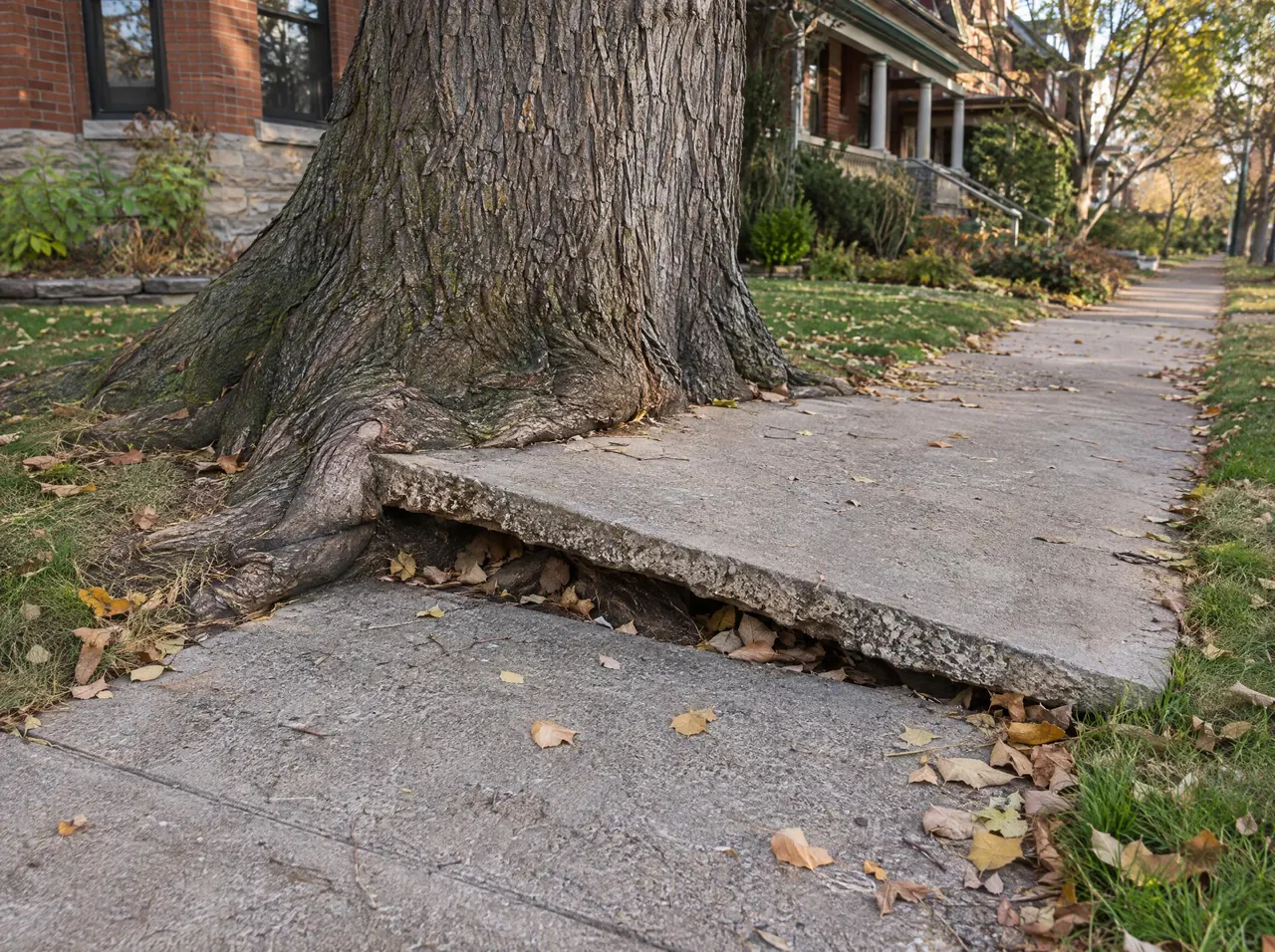
Near a street tree, check which panel moved before calling about a trip hazard. If the high side is close to the trunk and cracked along the root line, the panel was pushed up, and the fix is root work and new concrete.
Panels that have crumbled at the edges don't lift cleanly either. And when a panel has settled away from a curb, driveway or step that is itself out of position, the whole run needs to be looked at together. Fix one piece in isolation and you can create a new edge a few feet away.
Keep the walk dry underneath
Once the sidewalk is level, the joints become the easiest way in for water. Sealing them with a flexible sealant keeps runoff and snowmelt out of the base. Point downspouts away from the walk, or carry them under it in a pipe if the yard allows. Adjust any sprinkler head that throws water along the slab edge. If the lawn on one side has built up higher than the concrete over the years, cut it back so water can run off the walk instead of pooling against it.