Start by confirming which Littleton you're in
The City of Littleton sits on the South Platte River about 10 miles south of downtown Denver. It's the Arapahoe County seat, and its limits also reach into Jefferson and Douglas counties. The Littleton mailing address covers far more ground than the city itself, though, including large unincorporated areas such as Ken Caryl and Columbine in Jefferson County.
For private concrete that distinction barely matters; a sunken patio is the owner's to fix wherever the lot is. It matters a lot for the public sidewalk out front, because who is responsible, and whether any approval is needed, depends on the jurisdiction. Inside city limits, check with the City of Littleton. Outside them, ask the county. Settle that before booking concrete leveling in Littleton for a walk that might be public.
Older blocks and later subdivisions settle differently
Littleton grew outward from its historic Main Street district. Homes near the old downtown and the light-rail line are generally older, with mature street trees, narrower walks and concrete that has been through many decades of freeze-thaw. Neighborhoods farther out came later, mostly with attached garages and wider drives.
| Older blocks near downtown | Later subdivisions | |
|---|---|---|
| Slabs that usually need attention | Front walks, public sidewalks, stoops | Driveways at the garage, back patios |
| Common causes | Old utility trenches, water at joints, tree roots | Foundation backfill, downspouts, sprinklers |
| First thing to check | Whether the panel sank or was pushed up | Where roof and irrigation water lands |
| Liftable? | Yes if sunk and whole; no if root-heaved | Yes in most cases, if the slab is in one or two pieces |
Tell a sunk panel from a heaved one
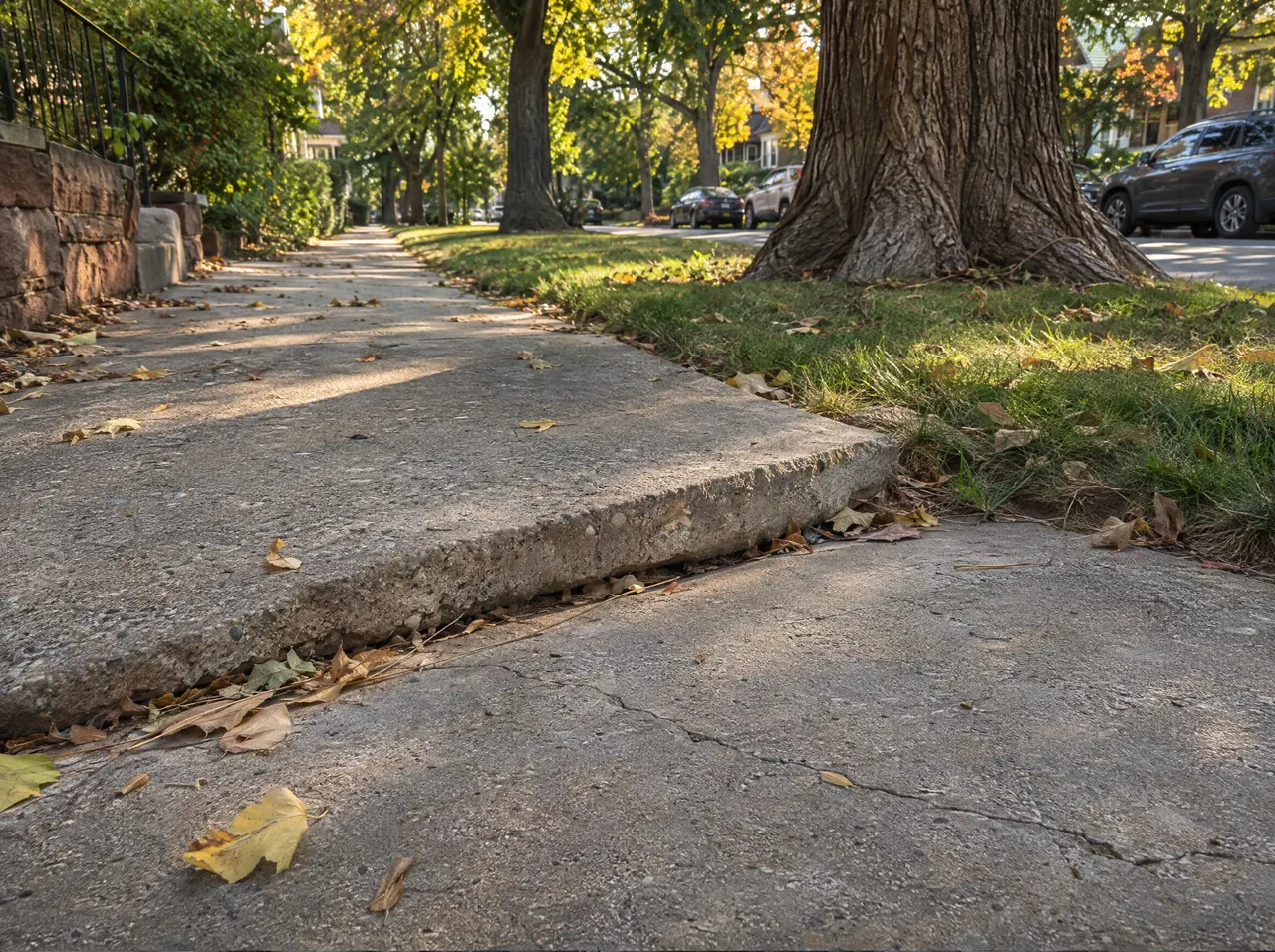
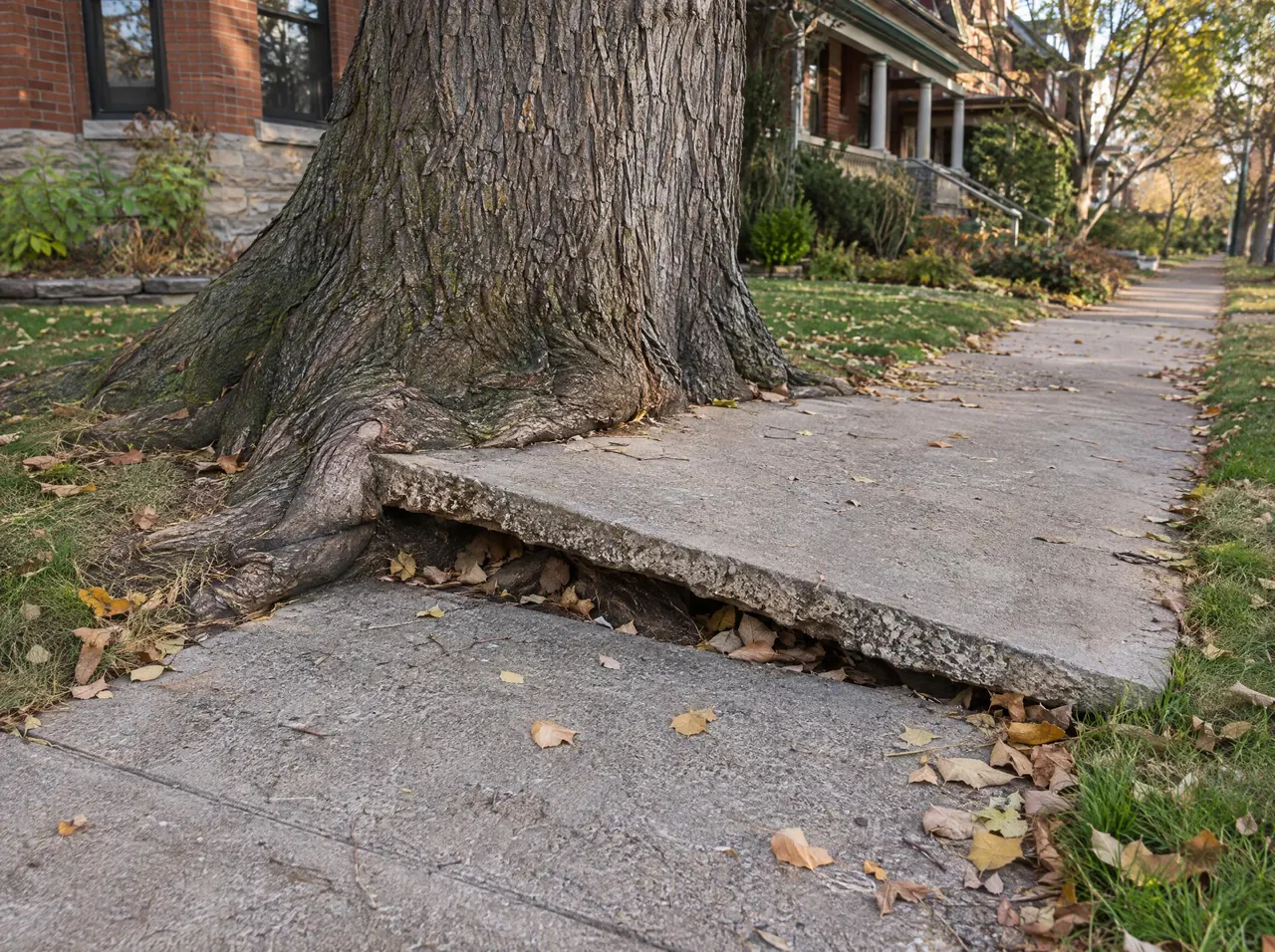
Streets lined with big old trees produce both kinds of trip edge, and from the curb they look identical. Put a straightedge across the joint. If the panel you're stepping onto has dropped below the line of the walk, it settled, and sidewalk leveling can bring it back up. If the panel ahead is higher than everything around it, often cracked, with a trunk a few feet away, a root pushed it. Raising the neighbors to match a heaved panel only spreads the problem down the block.
Some walks have both: a heaved panel next to one that sank because water now pools against the bump. Deal with the root first, then lift whatever settled.
Before anyone cuts a root, find out who owns the tree. A street tree in the strip between walk and curb may not be the homeowner's to prune or remove, so ask the city or county first.
Measure the step at the joint, snap a photo with the tape in it, and send it over. A sunk panel and a heaved one get very different answers.
Request an estimateWhat older concrete changes about the method
Older slabs are often thinner, with worn surfaces and rounded edges. They can still be lifted, though the hole layout and the pace of the lift matter more on a panel that has sat in one position for a long time. Foam's holes are about 5/8 in across, which leaves small patches on a surface that's already uneven. Mudjacking needs larger holes, roughly 1 to 2 in, and its material cost is usually lower, which can make sense on a plain driveway with big voids. The crew chooses per job; our page on polyurethane foam leveling covers the trade-offs in more detail.
On the newer side of town, the driveway at the garage door is the usual complaint. The first panel sits on backfill dug out for the foundation, and it tends to drop as a single piece, leaving a step at the garage and sometimes tipping meltwater back toward the door. Lifting that panel restores the fall away from the house. Homes south of C-470 often have the same pattern, which we cover on the Highlands Ranch page.
Work out who owns the walk, then whether the panel sank or heaved. A sunk panel in one piece can usually be lifted; a heaved one needs the root dealt with first.