What changes on a sloped Boulder lot?
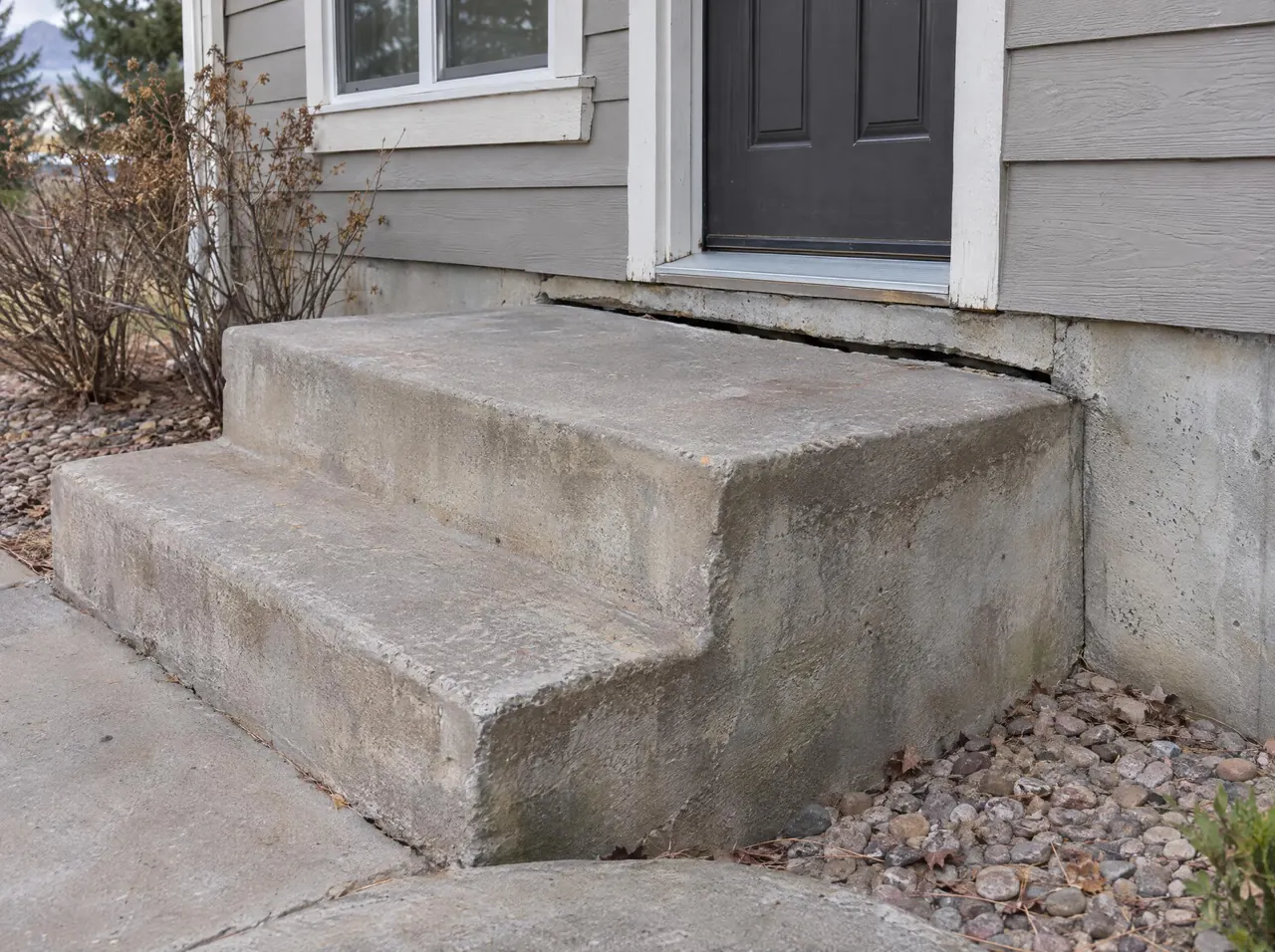
Gravity, mostly. The west side of Boulder climbs toward the Flatirons, and many homes along the foothills edge sit on lots that fall away from the street or toward the back yard. On a slope, a slab that settles rarely drops straight down. It rotates. Steps pitch forward, a stoop tilts away from the threshold, and a patio on the downhill side creeps outward and opens a gap at the house.
Runoff adds to it. Water coming off a hillside moves fast after a summer storm or a quick spring melt, and it follows the easiest path, which is often the seam between a slab and the soil beside it. Over a few years that seam becomes a small channel and the slab edge loses its support.
| Sloped lot near the foothills | Flatter lot farther east | |
|---|---|---|
| How slabs usually move | Tilt and rotate downhill | Drop more evenly at one end or joint |
| Where water does damage | Along the uphill edge and under steps | Where downspouts and sprinklers discharge |
| Common candidates | Entry steps, stoops, terraced patios | Driveways, front walks, back patios |
| Fix alongside the lift | Surface drainage across the slope | Downspout extensions and sprinkler heads |
A set of steps that has pulled forward can often be raised and turned back toward the house without breaking it out. The page on patio, porch and step leveling shows how a rotated slab is lifted from the low side.
Can the old walks in Boulder's older neighborhoods be lifted?
Often, yes. Neighborhoods such as Mapleton Hill near downtown and Martin Acres near the university have front walks and public sidewalks that have been in place for a long time. Age alone doesn't rule out leveling. What matters is whether each panel is still in one or two solid pieces, and whether it sank or was pushed up.
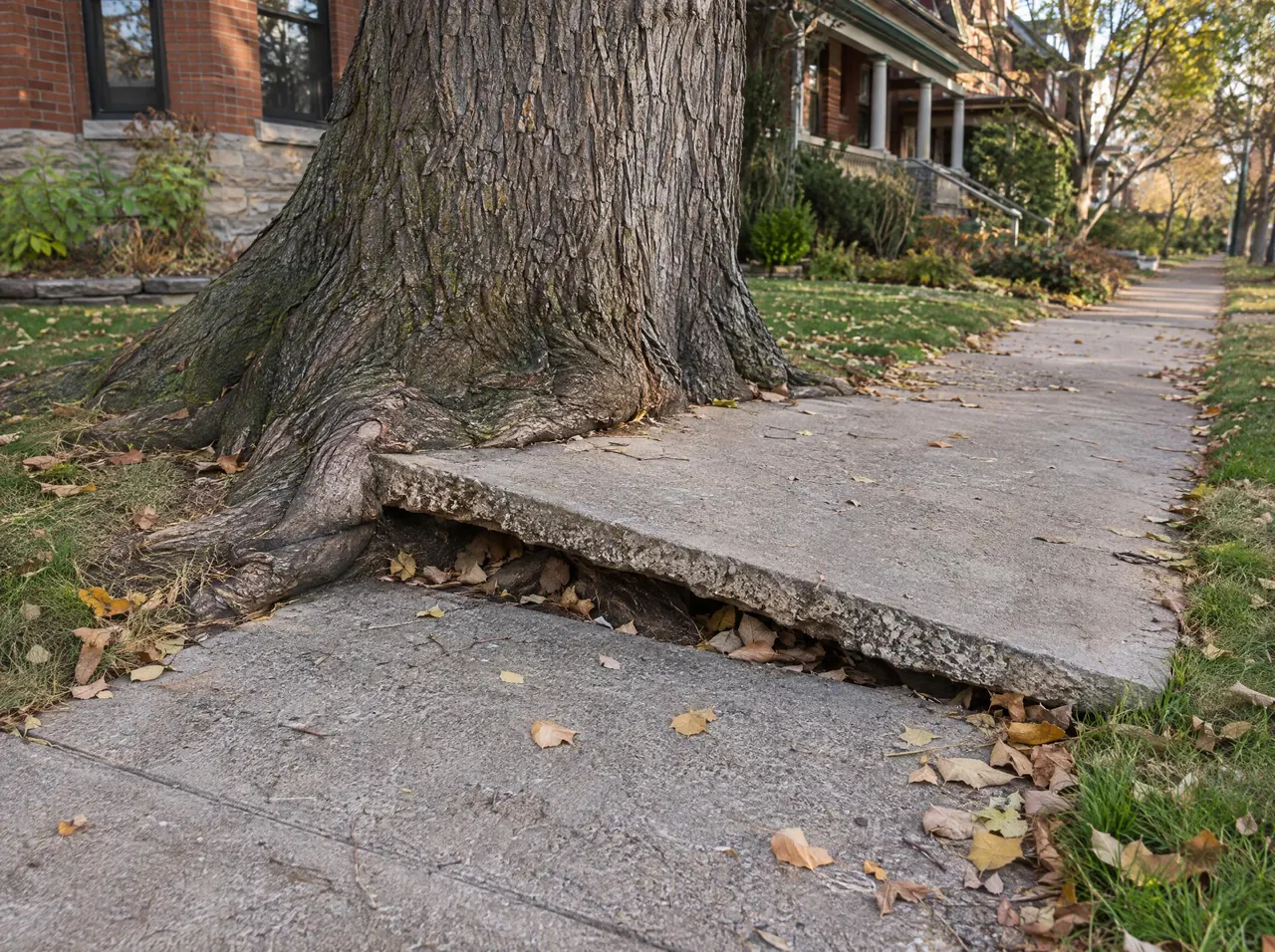
That second question carries more weight on these blocks than in a new subdivision. Mature street trees line many of the older streets, and their roots lift panels from below. A root-heaved panel sits higher than its neighbors, so lifting the ones around it to match only spreads the problem down the walk.
For the public sidewalk out front, ask the City of Boulder whose job it is before hiring anyone.
What should landlords near CU look at?
The streets around CU Boulder hold a lot of rental housing, and a rental's front walk gets heavy use from tenants who may never mention a raised edge. A walk around the property each fall, before the first snow, catches most of it: a lip at a joint, a stoop that has dropped below the threshold, a patio holding water against the foundation. Low spots that collect meltwater also turn into ice in the shade of a north-facing house.
Measure any lip you find with a tape at its worst point. Even half an inch catches a toe. Our page on fixing sidewalk trip hazards explains how offsets are read and which side of the joint actually moved.
Get the low panels on your property measured before the next freeze turns them into ice patches.
Request an estimateWhich method suits Boulder slabs?
Both methods work here, and the crew picks per slab. Foam's light weight is the main argument for it on a hillside: packing heavy slurry under a step or a slab that is already creeping downhill adds load in the wrong place. It also cures quickly, so a front walk is usually walkable the same day, and its injection holes are small, about 5/8 inch.
Mudjacking uses holes roughly 1 to 2 inches wide and much heavier material. On a broad, flat driveway over stable ground it remains a sensible option with a lower material cost. Expansive clay soils, documented across much of the Front Range by the Colorado Geological Survey, show up in parts of the Boulder area too; where clay is involved, controlling water near the slab matters as much as the choice of lifting material. The step-by-step leveling process covers drilling, lifting and patching.
On a sloped Boulder lot, expect slabs to have rotated as well as dropped, and fix the water path along with the lift. On older tree-lined blocks, rule out root heave before calling anything a leveling job.