Rebuilt lots and fresh backfill
The Marshall Fire in December 2021 destroyed hundreds of homes in Louisville, along with many in Superior and unincorporated Boulder County. Rebuilding followed, and new construction brings freshly disturbed soil around foundations and under new walks, stoops and driveways. That makes backfill the main topic for concrete leveling in Louisville on many newer lots.
Backfill is the soil pushed back into the gap between a basement wall and the undisturbed ground once the foundation is built. It is hard to compact well in that narrow space, so it continues to settle under its own weight and with every soaking from sprinklers, snowmelt and downspouts. Driveway aprons, front stoops, side walks and patios are usually poured right over it, which is why the concrete nearest the house is the first to move on a new home anywhere along the Front Range.
How settling concrete over new fill tends to progress
Movement over fresh fill isn't one event. It usually shows up in stages, and the right response depends on where a slab is in that sequence.
| Stage | What you see | Sensible response |
|---|---|---|
| Early seasons after the pour | Hairline cracks, a small gap opening where the stoop meets the house | Mark the edges or photograph them with a tape; check downspouts and grading |
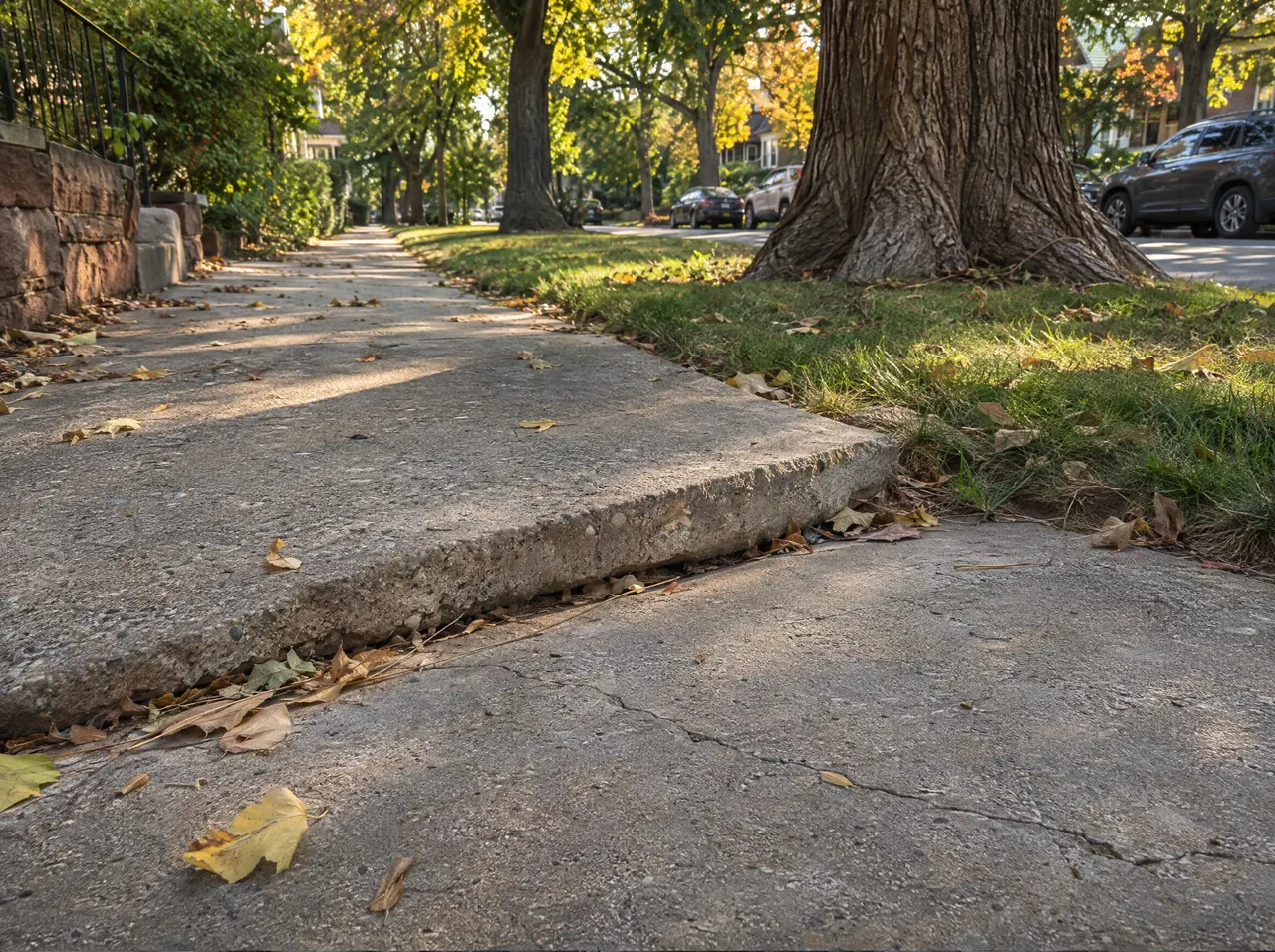
| Movement continuing | Lips over 1/4 inch at joints, patio holding water, apron below the garage slab | Lift now, with foam's light weight in mind over fill that is still compacting |
| Movement has stopped | The same readings two seasons in a row | Lift what moved and seal the joints |
| Slab hollow but still in place | Drummy sound when tapped, no visible drop yet | Support it now with void fill |
| Slab broken into several pieces | Loose sections, rocking pieces | Replace that slab |
The hollow-slab row is easy to miss. A slab can bridge a void for a long time before it cracks, and filling the void under a slab at that point supports it while it is still whole.
If your house was built or rebuilt recently, read what your builder's warranty says about flatwork before arranging a repair. It is worth knowing where you stand first.
Downtown and the older streets
Plenty of Louisville predates any of this. The historic downtown along Main Street goes back to the town's coal mining years, and the surrounding blocks have older homes with walks and steps that have been in place for generations. Neighborhoods built from the 1970s through the 1990s spread out from there toward US-36. On those properties the cause of settlement is more often water from a specific source, such as a downspout emptying beside a walk or a sprinkler soaking the same slab edge every night.
Freeze-thaw works on older concrete too. Water in an open joint freezes, expands and widens the gap, then lets more water reach the soil below when it thaws. Sealing the joints after a lift closes that path; see joint and crack sealing for how it's done.
Have the lips and dips around your house measured so you know which slabs are ready to lift.
Request an estimateA sensible order of work
- Fix the water first: extend downspouts, adjust sprinklers and correct grading that slopes toward the house.
- Have utilities marked through Colorado 811 before any trenching or regrading.
- Measure each lip and dip so you can tell later whether anything changed.
- Lift the slabs that moved. The sidewalk leveling page shows how a walk is brought back flush.
- Seal the joints and the gap at the foundation.
Louisville sits off US-36 between Boulder and Broomfield, a little over 20 miles northwest of downtown Denver, with Coal Creek running through it. Next door, Superior has many of the same rebuilt lots.
On a new or rebuilt lot, the concrete closest to the house moves first. Watch it, control the water, and lift it once the movement is measurable. On older blocks, find the water source before anything else.