Where a Denver driveway usually drops first
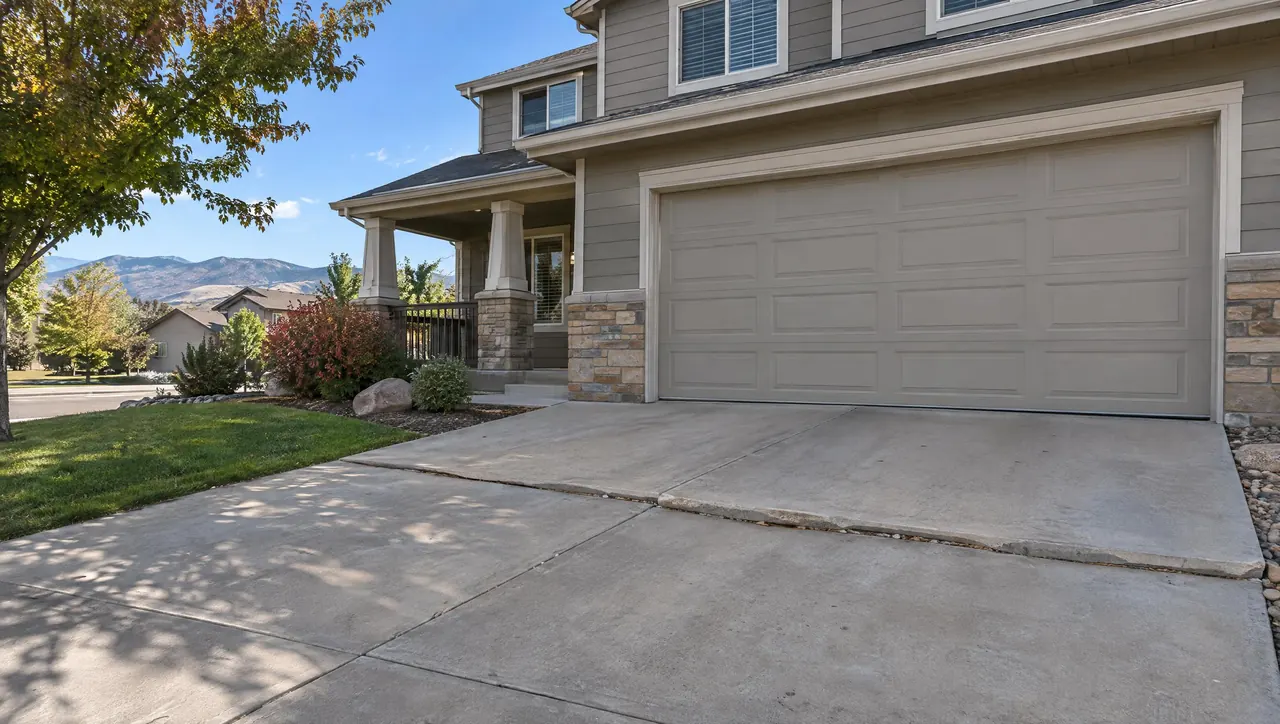
Most driveways don't sink evenly. One or two panels go, and they go in predictable places. The panel against the garage is the usual suspect, because it sits on backfill that was pushed back against the foundation after the house went up. That soil is rarely compacted as well as undisturbed ground, and it can keep consolidating for years. When it does, the driveway drops away from the garage slab and leaves a lip you feel every time you pull in.
The second common spot is where the driveway meets the public sidewalk or the street apron. Utility trenches often cross there, and trench backfill behaves a lot like foundation backfill. Then there are the edges. A panel next to a lawn that gets watered three times a week, or one sitting under a downspout that empties straight onto the concrete, will see its subgrade softened or washed out faster than the rest.
Front Range clay adds a twist. Expansive clay soils swell when wet and shrink as they dry, and the Colorado Geological Survey has published a good deal on how common they are along the I-25 corridor. A driveway riding on that clay can drop in a dry stretch and move again after a wet one, so we look at the pattern of movement as well as the height of the lip.
What our crew checks on a sunken driveway
Before anyone talks about foam or slurry, the crew walks the whole driveway. A quote built on one panel misses the reason it moved.
- The height of each offset, measured with a straightedge, including the step at the garage door and at the sidewalk
- Which way each panel tilts, and whether any now pitch water toward the house
- Hollow spots, found by sounding the slab, that point to voids underneath
- Cracks that cut a panel into separate pieces, since each piece has to be lifted on its own
- Downspouts, sprinkler heads and low spots where water collects after a storm
- Any panel sitting higher than its neighbors, which can mean heave from roots or swelling soil
That last item matters more than people expect. If the panel by the street has heaved up, lifting the low one to meet it just moves the trip edge somewhere else.
Foam or slurry: a decision matrix for driveway slabs
We use both polyurethane foam leveling and mudjacking with a cement-based slurry, and the driveway itself usually makes the choice. Here's how the common situations sort out.
Neither choice is automatic. The crew will tell you which way they lean for each panel and why, and you'll see the reasoning before anyone drills.
Soft fill near the garage and a short window before you need to park points to foam. A big void over firm soil, with time to let the material cure, is where slurry makes sense.
Get every joint on your driveway measured before you decide between foam and slurry.
Request an estimateDriveway problems that lifting won't solve
Driveway slab lifting raises concrete and fills the space beneath it. It doesn't resurface anything, and it can't make a broken slab whole.
A panel shattered into many small pieces won't rise as a unit. The pieces shift independently and the result can look worse than before. Panels pushed up by tree roots need the root dealt with, and that sits outside what leveling does.
Surface scaling, the flaking that shows up after a few winters of freeze-thaw and deicing salt, stays exactly as it is. A driveway poured too thin, or without reinforcement where heavy trucks turn, will keep cracking no matter how well it's lifted. In those cases replacement is the right call, and we'll tell you so.
Redirect the water that sank it
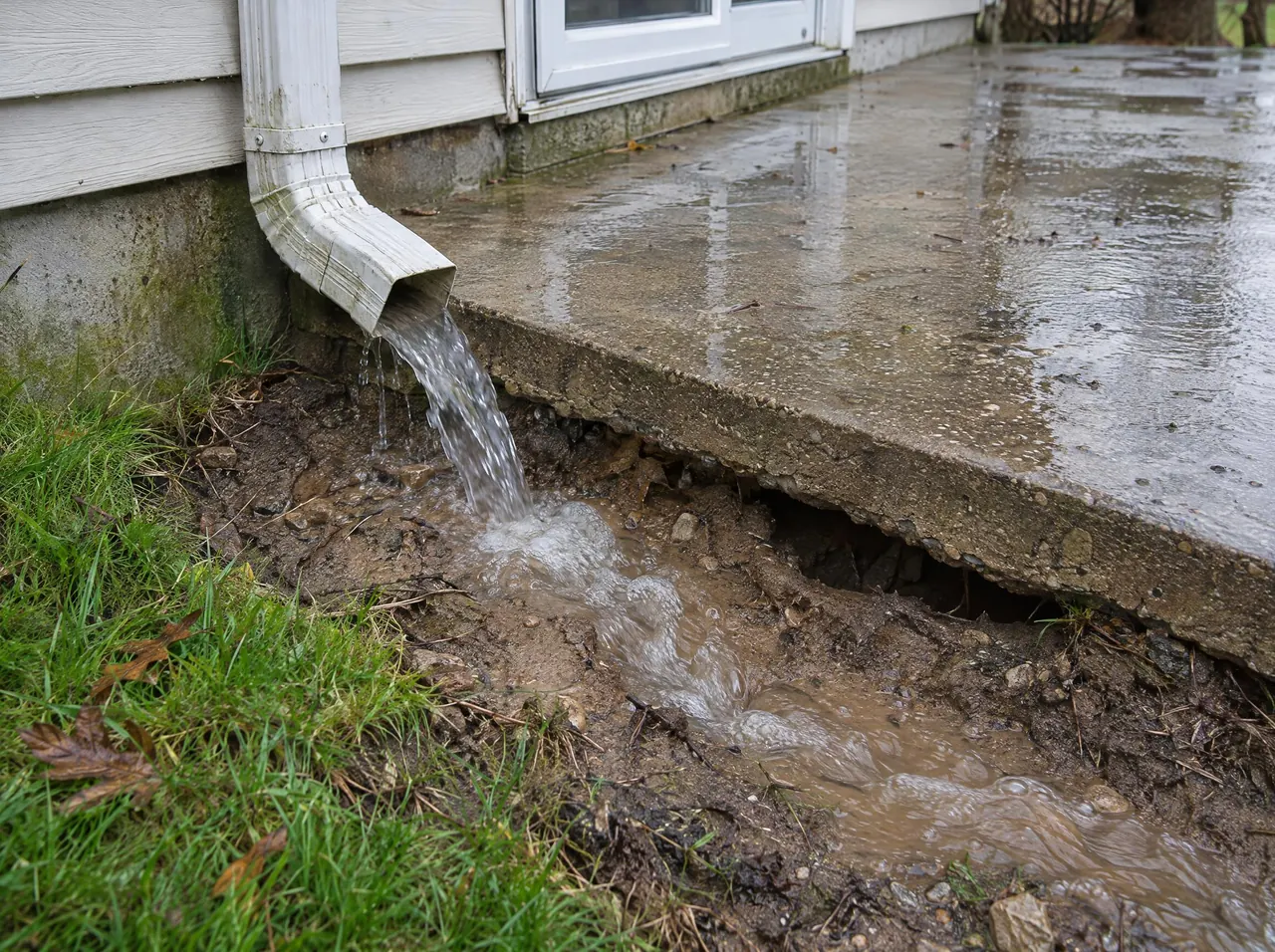
A lifted driveway that keeps getting soaked will start moving again. The repair lasts about as long as the drainage around it allows, so once the slab is back in line, spend an afternoon on the water.
- Extend any downspout that empties onto or beside the driveway so the water lands several feet out, on ground that falls away from the concrete.
- Turn sprinkler heads so they spray the lawn and leave the slab edge dry.
- Seal the joint between the driveway and the garage slab, plus the long joints along the lawn, so runoff can't run straight down into the base. Joint and crack sealing is usually the last step after a lift.
- Watch the first heavy rain. Any panel that still sends water toward the house deserves a second look.
Before you book a driveway lift
Move vehicles off the driveway and clear anything stored along the edges. Let us know about sprinkler lines, low-voltage lighting or a heated driveway near the concrete, since all of them affect where holes can go. If you want to see how a visit runs from measuring to patching the holes, our step-by-step leveling process walks through it. We work driveways along I-25 from Colorado Springs to Fort Collins, and the full list of service areas shows the cities by name.