Where a garage slab drops, zone by zone
A garage floor is usually its own slab, poured inside the foundation walls, so it can settle while the walls stay put. Where it sinks tells you a lot about why.
| Zone | What you see | Usual cause |
|---|---|---|
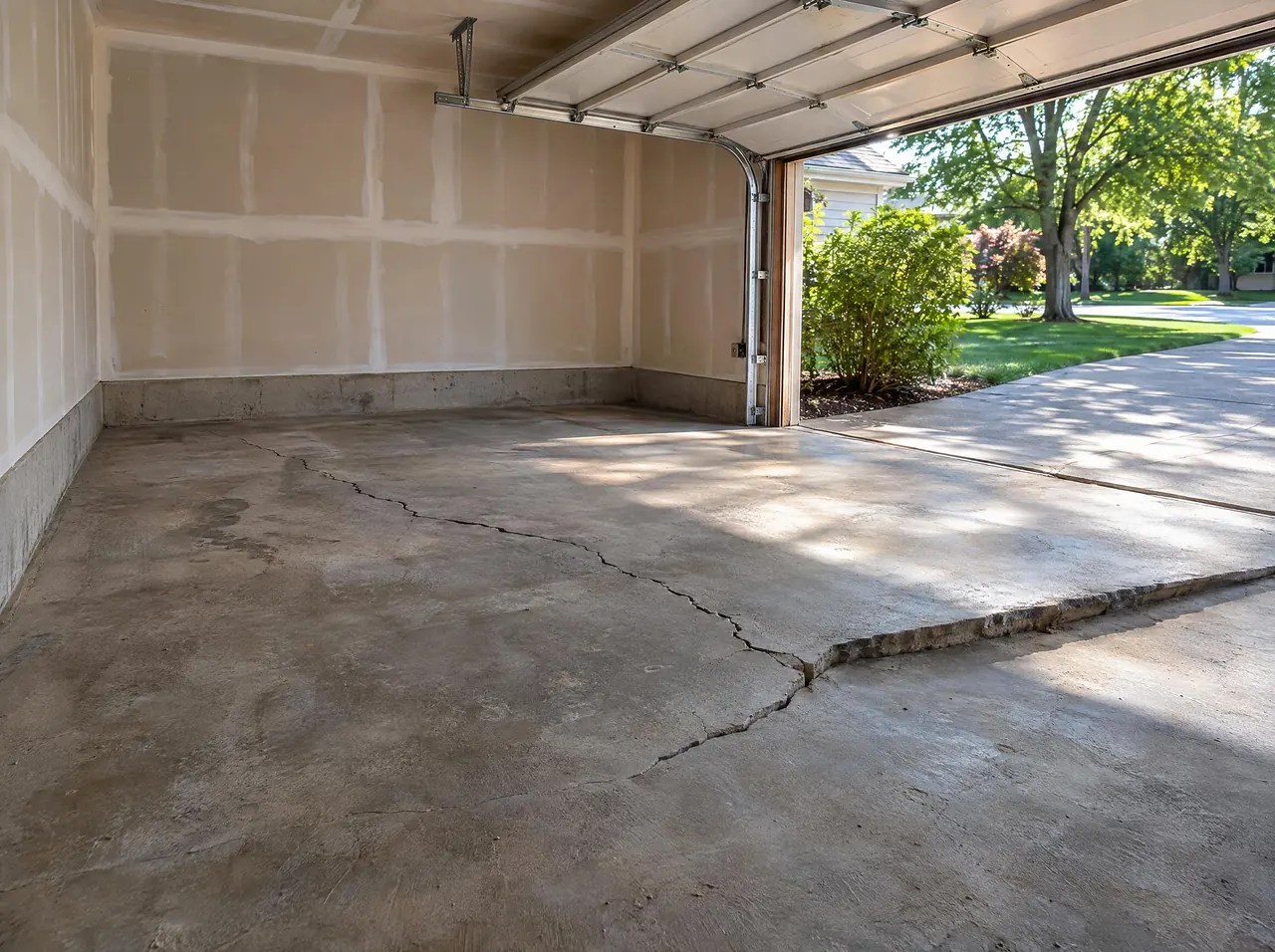
| Door line and apron | A step down from the garage floor to the driveway, or the reverse | Fill under the apron or driveway settling at a different rate than the floor |
| Along the side and back walls | A gap between slab and wall, with the slab sloping toward the wall | Loosely compacted fill against the stem wall |
| Middle of the floor | A dip that holds meltwater from parked cars | A soft spot in the fill, or a void from a plumbing leak |
| Around a floor drain | Cracks radiating from the drain, slab dished toward it | Soil eroding into a cracked drain line |
| Near the water heater or laundry | Cracks and a low corner | Leaks soaking the base |
The apron drop is the one a car feels every day, and it often involves the outside slab as much as the floor. If the step is on the driveway side of the door, our driveway leveling page covers that half of the problem.
Why an indoor slab settles at all
It seems odd that a slab under a roof would move. The soil under a garage floor stays out of the rain, yet it still gets wet. Cars carry in snow that melts and runs into cracks and along the wall joint. Water heaters and laundry lines leak. Downspouts at the garage corners soak the ground right next to the foundation, and that moisture travels under the slab. Front Range expansive clays react to those changes even under cover.
The fill is the other half of it. Garage floors are poured on fill placed inside the stem walls, and if that fill wasn't compacted in thin layers when it went in, it can keep settling for years.
What the crew looks for inside a garage
- In-floor radiant heat tubing, which rules out drilling in some spots
- Floor drains, sump pits and the lines leaving them
- Gas, water and electrical lines that come up through the slab
- Signs the slab is post-tensioned, where a drill could hit a tensioned cable; that is a stop-and-verify situation
- Coatings such as epoxy, which will need touch-up over the patched holes
- Shelving, freezers and stored items along the walls being lifted
We'd rather spend extra time finding what's under a garage floor than drill into it. Clearing the floor ahead of the visit helps, and mention any heated floor or past plumbing repairs when you request an estimate.
Get the drop at your garage door and along the walls measured before winter meltwater finds the cracks.
Request an estimateWhy foam usually fits indoor floors
Foam's holes run about 5/8 in, which matters on a coated or polished floor. Slurry needs holes of roughly 1 to 2 in and far more material by weight, which is a lot to set on fill that already let a slab down. The mudjacking method page explains where slurry still earns its place, and concrete void filling covers hollow spots that haven't settled yet.
Basement floor leveling is a different conversation
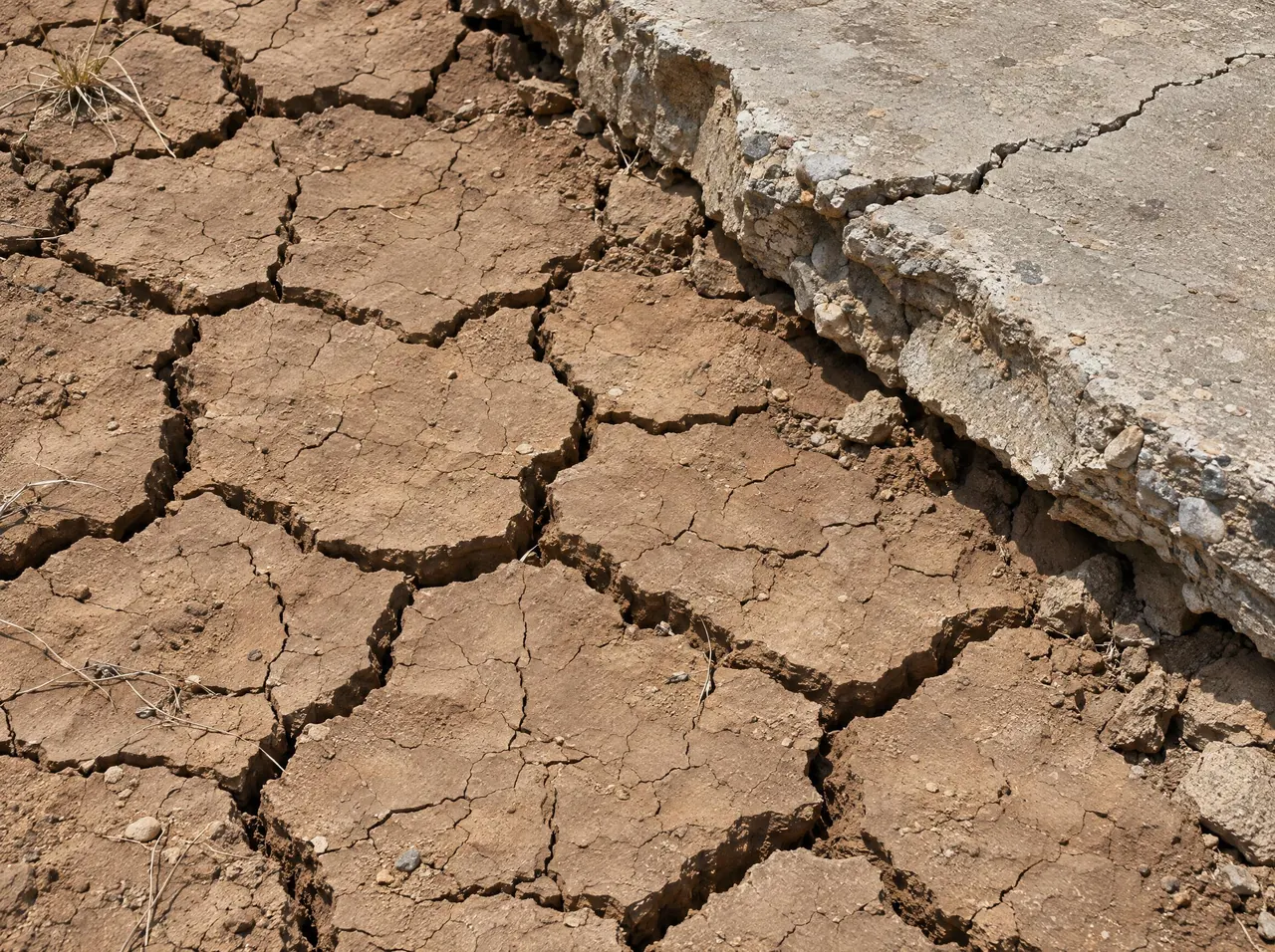
Many basements along the Front Range were built with a floating slab. The floor isn't tied to the foundation walls, and interior partition walls are often framed with a gap at the bottom so the floor can move without shoving the framing above it. That design exists because expansive clay can push a basement floor upward.
So the first question on any basement floor is whether it went down or came up. Leveling only raises concrete. A basement slab that settled over a void or soft fill near a wall can be lifted with foam. A slab that has heaved can't be lowered by injection, and raising the rest of the floor to match the high spot usually makes things worse. If the house has a radon mitigation pipe through the slab, the crew works around it, and every hole gets patched so the slab stays sealed.
What leveling can't fix in a garage or basement
Bowing or cracked foundation walls, and doors or windows above the garage going out of square, call for a structural engineer before anyone lifts the floor. Slabs broken into many pieces and floors that have heaved are also outside what slab lifting does.
Shrinkage cracks, the thin ones that show up in nearly every garage floor, aren't a reason to level on their own. They matter only when one side of the crack has dropped below the other.
Keep meltwater out of the base
After garage slab lifting, seal the joint where the floor meets the apron, and the cracks across the floor, with a flexible sealant, since those are where meltwater gets in. Push slush toward the door in winter instead of letting it sit. Fix any drip at the water heater or laundry, and extend downspouts at the garage corners so roof water lands well away from the stem wall. For a basement, keep gutters clear and the soil around the house sloping away; basement slab trouble usually starts with water outside. Joint and crack sealing is the usual follow-up to a lift, and we level garage and basement floors across the Front Range cities we serve.