Older lots, older trees, harder diagnosis
Wheat Ridge sits just west of Denver along I-70, with Arvada to the north and Lakewood to the south, and much of it was built out in the decades after World War II. Lots tend to be larger than in neighborhoods closer to downtown, and many have trees that have grown beside the driveway for as long as the house has stood. That makes concrete leveling in Wheat Ridge a two-step job: work out which way the concrete moved, then decide whether lifting is the answer.
Settled or heaved: the first question on any walk
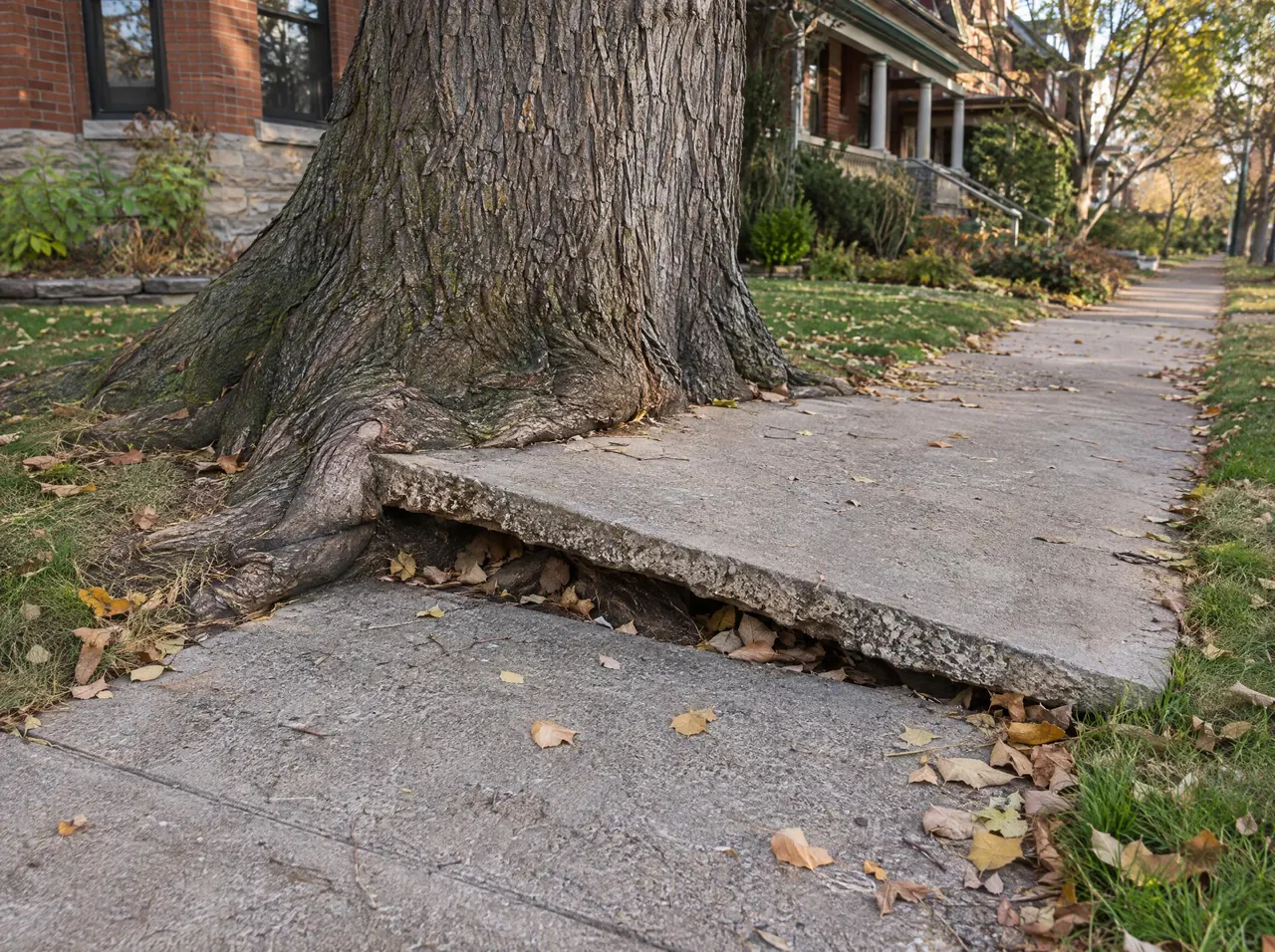
From a few feet away, a trip edge looks the same whether one panel dropped or the other rose. The cause is what differs, and it decides everything that follows.
The third case is easy to miss. A root lifts one panel, water pools against the raised edge, and the soil under the next panel softens until it drops. Fixing only half of that leaves a trip edge behind.
Long driveways, detached garages and shop slabs
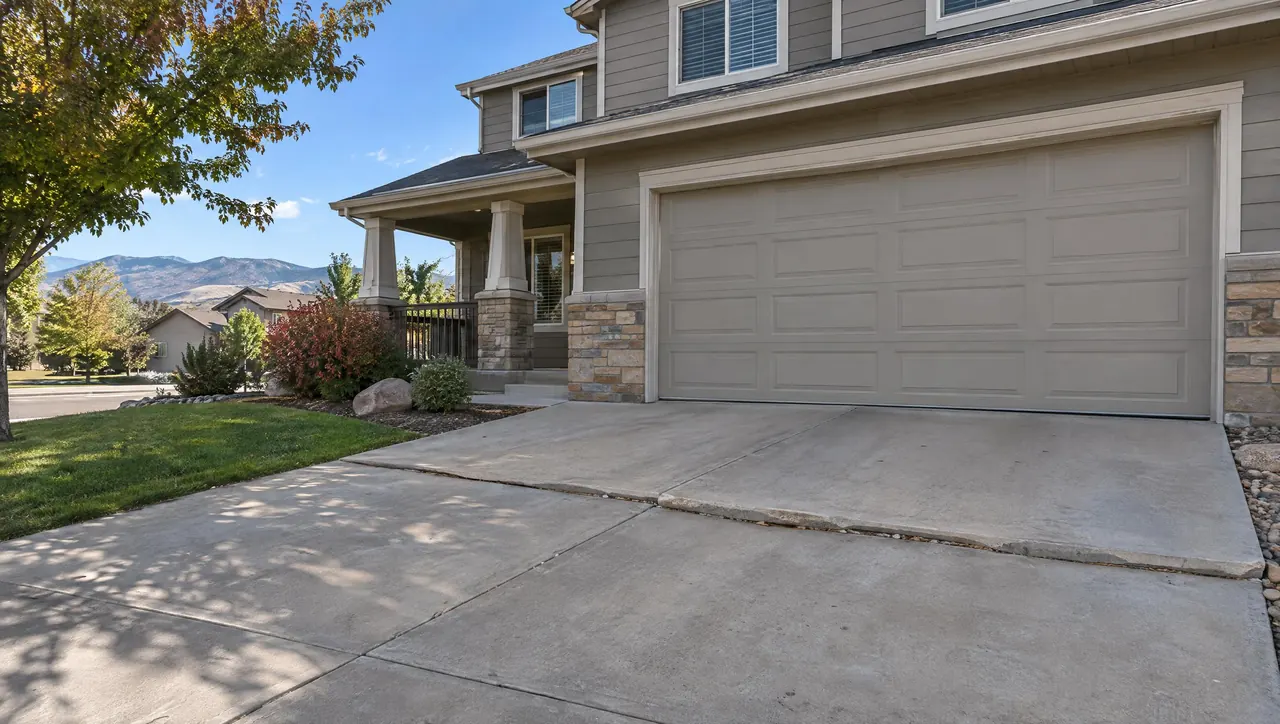
Bigger lots mean more concrete. A Wheat Ridge driveway may run well back from the street to a detached garage, and some properties add a shop building or a pad for a trailer or camper. Those slabs settle for the usual reasons, plus a few of their own:
- A long driveway has more joints, and each one that loses its sealant lets water into the base.
- A detached garage floor is often poured separately from its apron, so the joint between them tends to open and drop.
- Pads poured by an earlier owner may sit on fill nobody compacted.
- Utility trenches crossing the drive leave a strip of softer backfill.
Floors inside a garage or shop can usually be lifted or supported from inside; our page on garage floor leveling covers what the crew checks first. For the long run out front, driveway leveling works panel by panel, so one bad joint doesn't mean redoing the whole drive.
Have each joint along your Wheat Ridge driveway checked for settlement versus heave before you decide anything.
Request an estimateWet ground near Clear Creek and other low spots
Clear Creek crosses the middle of Wheat Ridge, with its trail and greenbelt running alongside. Soil conditions vary lot by lot, near the creek or not. What holds everywhere is that low ground stays wet longer, and soil that stays wet under a slab loses support.
Trees add to it. A large tree pulls a lot of water from the soil in summer and much less in winter, so ground near its roots can dry and rewet more than open lawn. Where clay is present, that swing is one more source of movement under a slab.
On a damp site, foam is usually the first thing we'd look at. It weighs little, doesn't wash out and cures fast. Mudjacking still has a place under a driveway with a big void over firm ground, as long as cars can stay off it while it cures.
Before digging out a root, trenching a downspout extension or regrading a low spot, call Colorado 811 so buried lines get marked. Talk to an arborist before cutting any large root, since that can weaken or kill the tree. A tree in the parkway strip may also involve the City of Wheat Ridge, so ask them first.
On a property with mature trees, measure across three panels before calling anyone. A low panel is a leveling job. A high one is a root job, and sometimes you have one of each.