Slope is the first thing to read on a Golden property
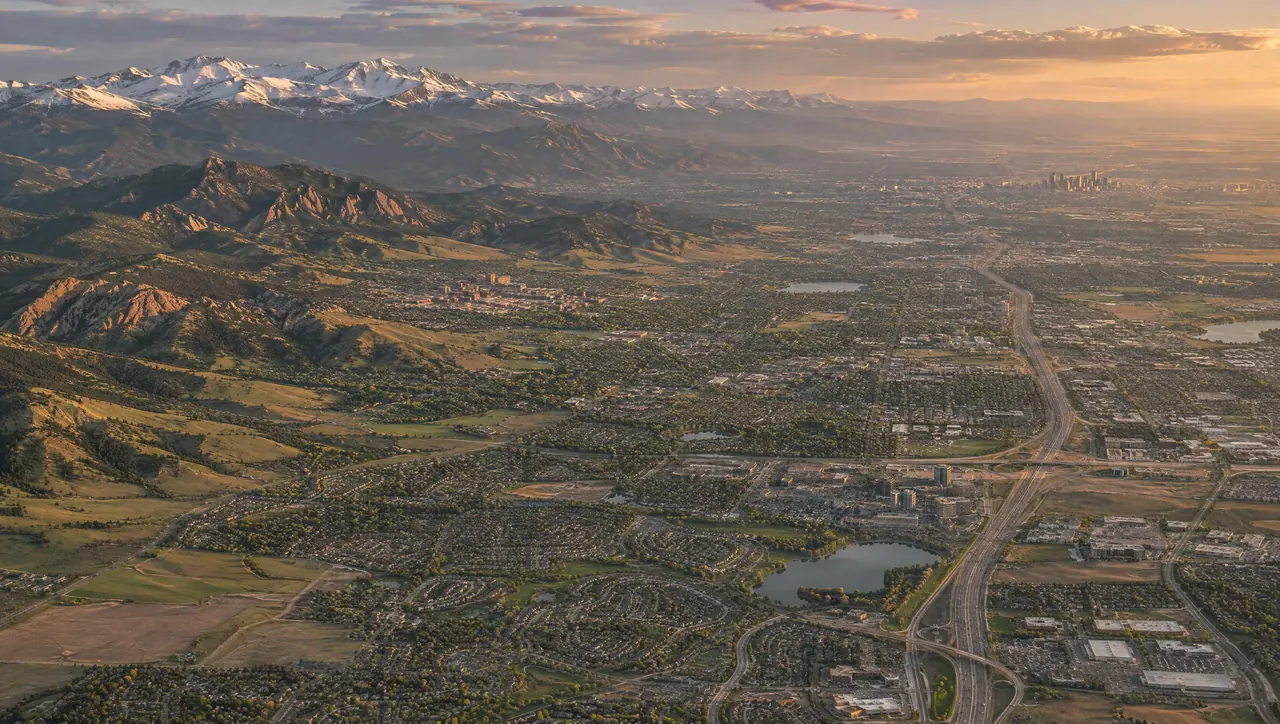
Golden sits where the plains meet the foothills, roughly 15 miles west of downtown Denver by US-6 or I-70, with Lookout Mountain on the west and North and South Table Mountain to the east. Clear Creek runs through downtown, past the Colorado School of Mines. A good share of the homes here sit on lots that aren't flat, and that shapes concrete leveling in Golden more than anything else.
On level ground, water from a downspout soaks in near where it lands. On a slope it travels. It runs along the uphill side of the house, under the edge of the patio, down the side of the driveway and into whatever low spot catches it. The slab that sinks is often downhill from the real source.
| Where the slab sits | What tends to happen | What to check |
|---|---|---|
| Uphill of the house | Runoff collects against the slab edge and soaks the base | Whether a swale or drain can carry water around it |
| Downhill of the house | Roof water and slope runoff pass under it on the way down | Downspout discharge and the joint at the wall |
| Driveway sloping to the garage | The lowest panel takes all the runoff | The joint and any trench drain at the garage door |
| Steps cut into a slope | Soil at the bottom of the run washes out first | Whether the bottom step has dropped or slid outward |
Steps and stoops take the most abuse
Sloped lots mean more steps, and steps are the trickiest concrete to level. A poured stoop and stair unit can often be lifted as one piece if it has tipped away from the house. Stairs made of separate treads, or with hollow centers, behave differently, and a unit that's cracked through may be easier to replace. Our page on step, porch and patio leveling explains what the crew looks for.
Steps also catch water where they meet the house. Snowmelt collects in that joint, turns to ice overnight and widens it a bit every cold season. Sealing that joint once the steps are back up is small work that keeps the gap closed.
Older houses on the flatter ground downtown
Not every Golden property sits on a hillside. The older blocks near downtown and along Clear Creek are flatter, and their concrete problems look more like any older Front Range neighborhood: front walks with joints that have been open for years, stoops tipped away from the house, and panels raised by street trees. Downspouts matter more than slope on those lots. A gutter that empties beside the front walk will soften the soil under it whatever the grade.
The sidewalk along the street is its own question there. Ask the City of Golden how that stretch is handled before paying for work on it. Houses a few miles east in Lakewood share a lot of the same older-walk issues.
Have the steps, patio and driveway on your Golden lot measured with the slope in mind.
Request an estimateWhy weight matters on a hillside
Mudjacking slurry is much heavier than polyurethane foam. On flat, firm ground that extra weight rarely matters. On a slope, or above a retaining wall, it's one more load pushing soil downhill.
The full sequence from measuring to patching the holes is laid out on our leveling process page. On a hillside property, expect the conversation to spend as long on drainage as on the slab itself.
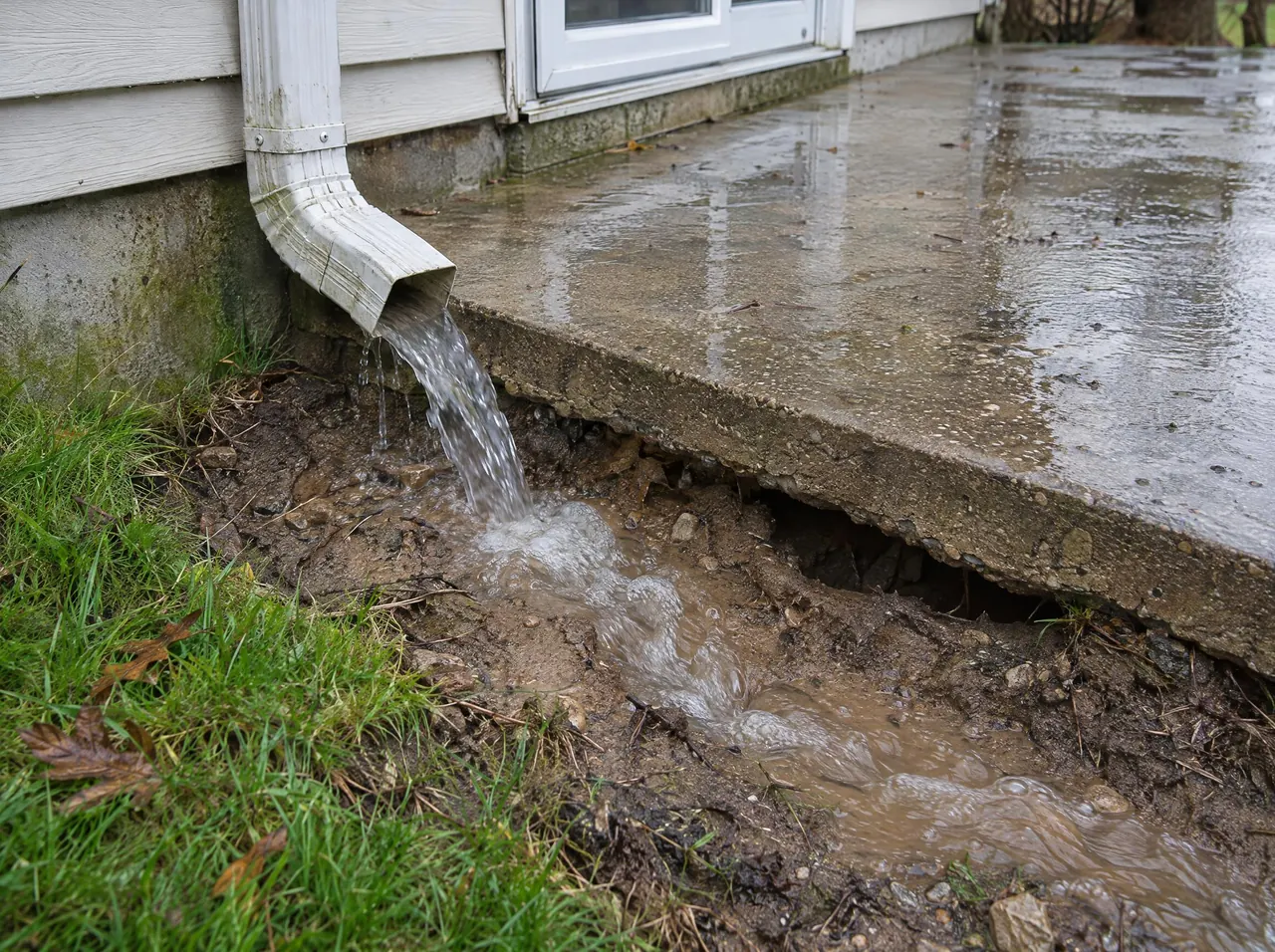
On a Golden lot, trace the water uphill from the slab that dropped. Lift with something light when the ground slopes, and fix the drainage in the same season.