From the foothills edge to the I-25 corridor
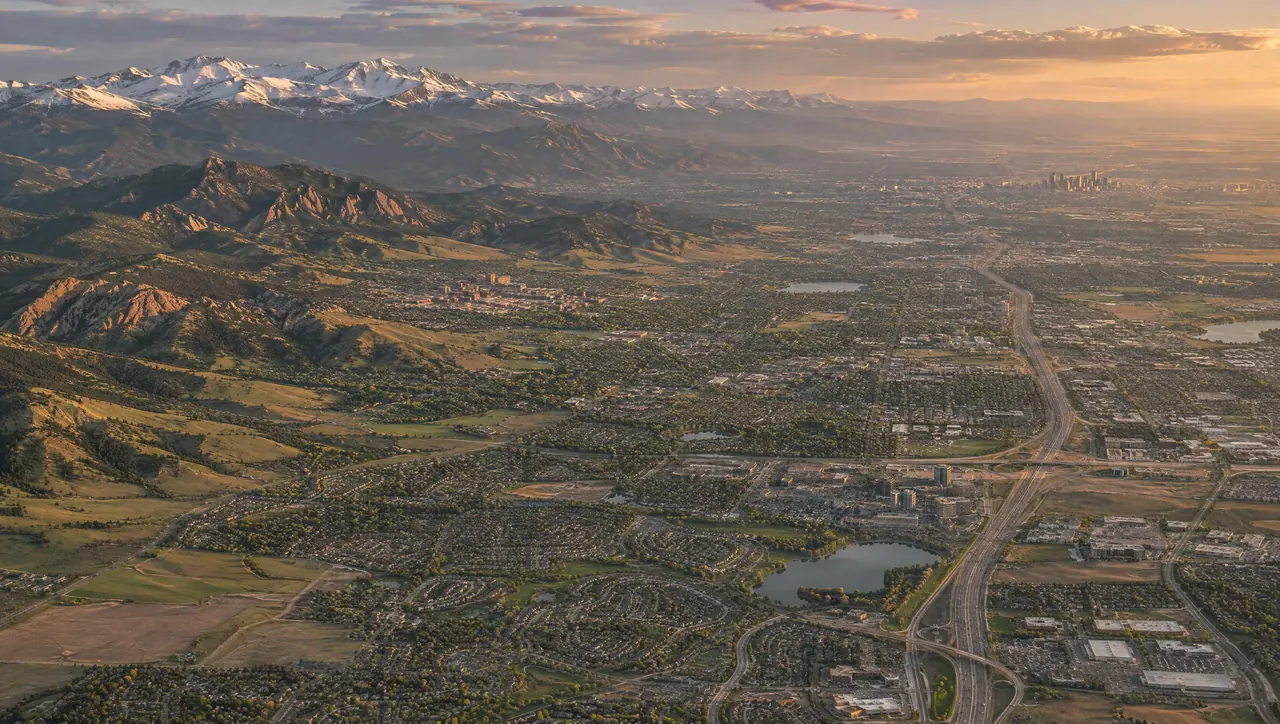
Loveland runs from the base of the foothills on its west side out to I-25 and past it, with US-34 crossing east-west through the middle. It's in Larimer County, roughly 50 miles north of Denver. The Big Thompson River leaves its canyon west of town and follows the south side of the city on its way east.
That spread makes Loveland a good place to see how terrain shapes concrete problems. More of the west side sits on rolling ground, where water moves fast across yards after a storm. Farther east, toward Centerra, where US-34 meets I-25, the land is flatter and most homes are newer, so the trouble looks more like typical new-construction settling over backfill.
Sloped lots and patios that drain the wrong way
On a lot with grade, runoff from uphill gathers against whatever sits downhill, and that is often a patio or the back wall of the house. Once a patio settles enough to tip toward the foundation, every storm delivers water to the spot you least want it. The soil beside the house stays wetter, the patio sinks a little further, and the cycle keeps going.
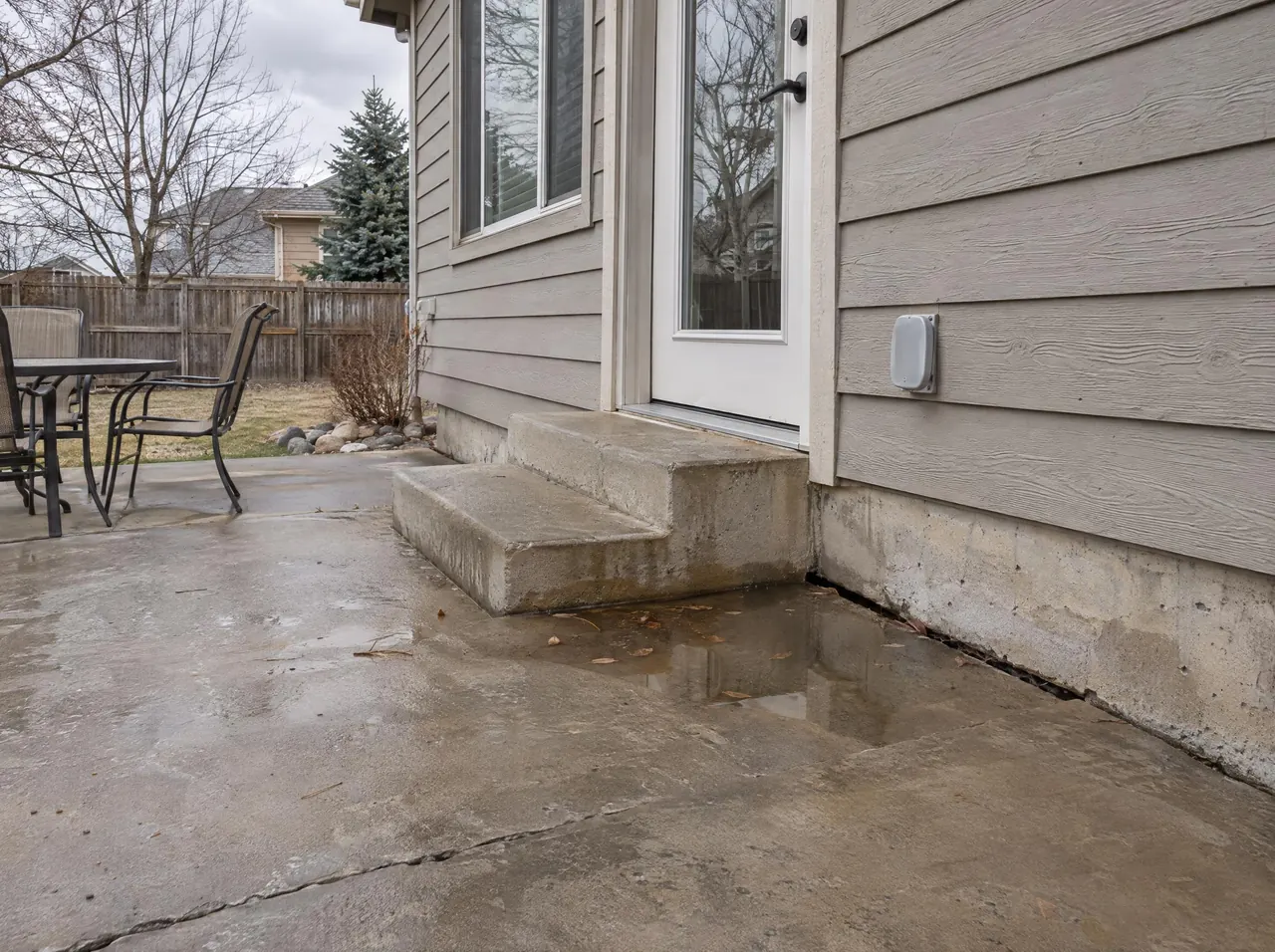
Lifting the slab so it falls away from the house breaks that loop. We'd also look at where uphill water enters the yard, because a patio lifted back into the path of the same runoff is going to be tested again. Our patio, porch and step leveling guide goes into back patios and front stoops.
Newer neighborhoods on the east side
East Loveland looks very different. Subdivisions near Centerra and along the routes toward I-25 are mostly recent, many with HOAs, and the usual story there is backfill settling against the foundation. A driveway that drops at the garage, a stoop tipping back toward the front door, a garage floor with a low corner: each of these is one slab that dropped intact, and slabs like that lift well. See driveway leveling for how the method gets chosen on a settled drive.
After high water: hollow spots under slabs
The Big Thompson has flooded badly more than once, most famously in 1976 and again in 2013. A flood is the extreme case, but the same thing happens on a small scale every year: moving water carries fine soil out from under a slab and leaves a cavity. The concrete may span the gap for a while, then crack under a car or after a hard freeze.
If a walk or driveway sounds hollow when tapped, or you can see daylight under an edge, getting the cavity filled before the slab drops is simpler than lifting it later. See concrete void filling for how that works. Foam is often a good material for this because it is light and doesn't wash out if water comes back.
A slab that dropped at the same time a crack opened in the house wall beside it may point to foundation movement. Leveling the flatwork won't fix that. Have a structural engineer look first.
What the water is telling you
In Loveland, the cause of a sunken slab is usually visible if you watch where water goes during the next storm.
Send us the spot where your Loveland slab dropped and how far, and we'll arrange a measurement.
Request an estimatePublic sidewalks, storefronts and multifamily
Before anyone works on the street-side sidewalk, get in touch with the City of Loveland, since that walk usually sits in the right-of-way. If digging is part of the drainage fix, call Colorado 811 first so buried lines get marked.
Downtown businesses, apartment communities and HOAs with trip edges on their own walks have a different set of concerns, mostly about keeping people moving while the work happens. Our commercial concrete leveling work is planned around foot traffic, with every offset measured before lifting starts. Owners south of town toward Berthoud deal with a lot of the same drainage questions on larger lots.
Most settled concrete in Loveland traces back to water moving across the ground. Change where the water goes, then lift the slab.