A farm town that grew toward I-25
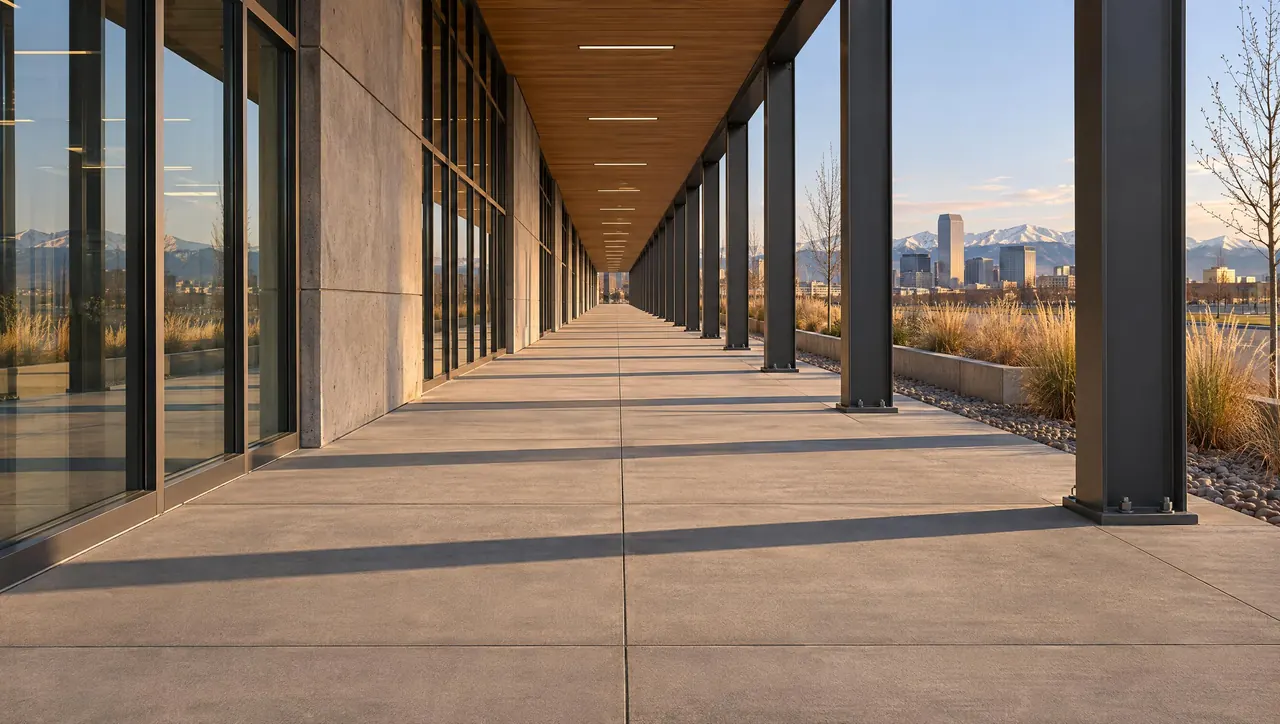
Johnstown's original town center sits a few miles east of I-25, and its limits now reach west to the I-25 and US-34 interchange, about 50 miles north of Denver. The town spans the Weld and Larimer county line. For most of its history it was a small farm town; over the last couple of decades it has added large subdivisions and a cluster of retail and commercial development near the highway.
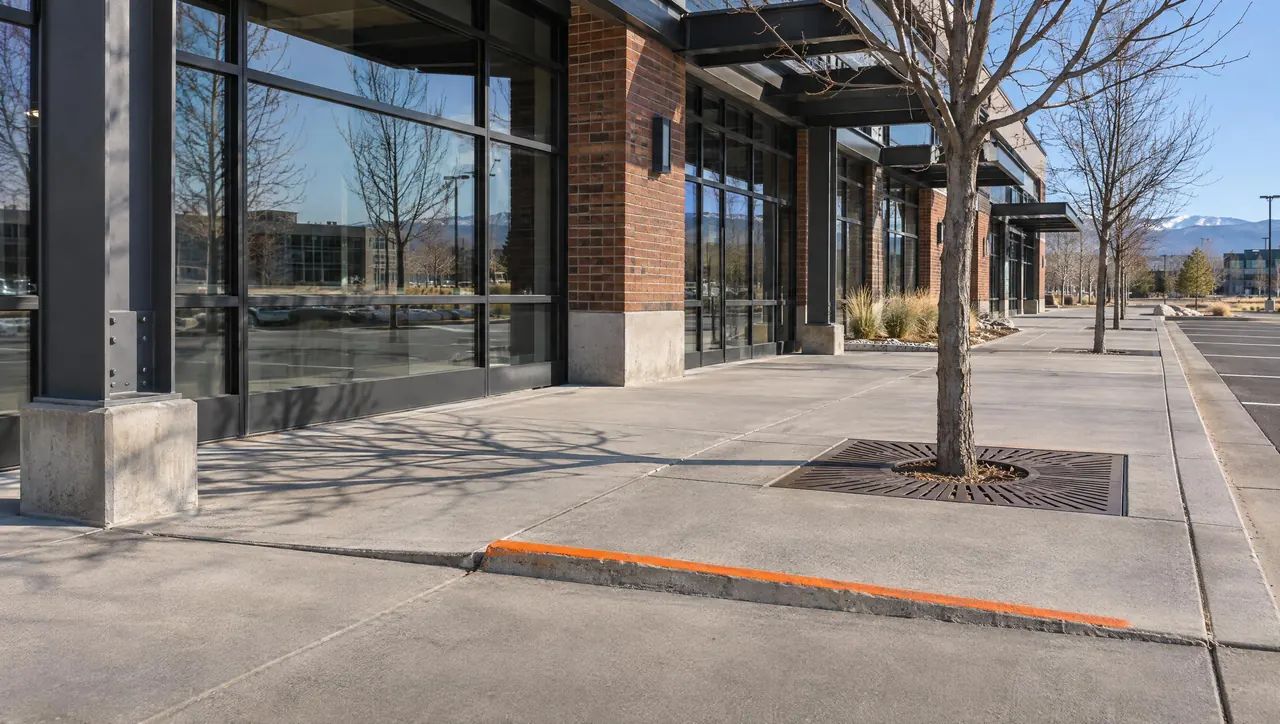
That mix means concrete leveling in Johnstown is as much about shared walkways and storefront sidewalks as private driveways. Newer commercial sites and HOA common areas share a weak point with new houses: fill placed and compacted during construction keeps consolidating after the concrete goes on top, and irrigation along landscaped strips keeps feeding it water.
Sorting trip hazards on shared walks
For a property manager or HOA board, the real question is which offsets to deal with first. The ADA 2010 Standards give a handy yardstick for changes in level along accessible routes. We use it to rank the list. It isn't legal advice, and your own counsel or accessibility consultant has the last word on compliance.
| Vertical change at the joint | What the 2010 Standards say | Our usual advice |
|---|---|---|
| Up to 1/4 in | Permitted as is | Record it and recheck next season |
| 1/4 to 1/2 in | Allowed if beveled no steeper than 1:2 | Raise the low panel to flush; a bevel hides the cause |
| Over 1/2 in | Must be treated as a ramp | Lift the panel; at this height it's a real trip edge |
Mapping every offset on a site in one walk-through lets the worst go first and keeps the number of visits down. The page on leveling walkways for HOAs and commercial sites describes how that survey works.
On a busy walkway, foam is usually the easier fit. The injection holes are small, the material cures fast, and people can usually use the section again that day, which matters at a store entrance or a mailbox cluster.
Driveways and stoops in newer subdivisions
On the residential side, the pattern is familiar from any fast-growing Front Range town. A garage apron dips. A front stoop tips. A patio poured over loose fill drops one corner. These are usually single slabs that moved as one piece, which is the best case for lifting.
Before calling, figure out whether the slab is on your lot or on HOA ground. The walk from your driveway to the front door is yours; a trail or shared sidewalk behind the houses probably isn't. For the private side, see driveway leveling, and for a walk with a single sunken panel, lifting a sidewalk panel back to flush.
Walks beside irrigated landscaping
Commercial sites and HOA common areas in Johnstown lean heavily on landscaped beds and turf strips along their walks, and those strips get watered all summer. The panel edge closest to the irrigation is usually the first to sink, and the joint between two panels is where water gets into the base. Two changes help a lifted walk stay put: adjust spray heads or drip lines so they water plants, not pavement, and fill the joints with flexible sealant once the panels are back in line. The joint and crack sealing page explains why that last step is worth the time.
Whether it's one Johnstown driveway or a list of offsets across a property, the first step is measuring them.
Request an estimatePublic walks and buried utilities
Sidewalks along public streets are a question for the Town of Johnstown, so ask there before scheduling work in the right-of-way. Anything that involves digging, even a short trench to carry a downspout away from a slab, starts with a call to Colorado 811 so buried lines are marked.
Rank trip hazards by measured height, fix the tallest first, and confirm who owns each walk before scheduling. When the low panel is the one that moved, lifting it beats grinding the high one.