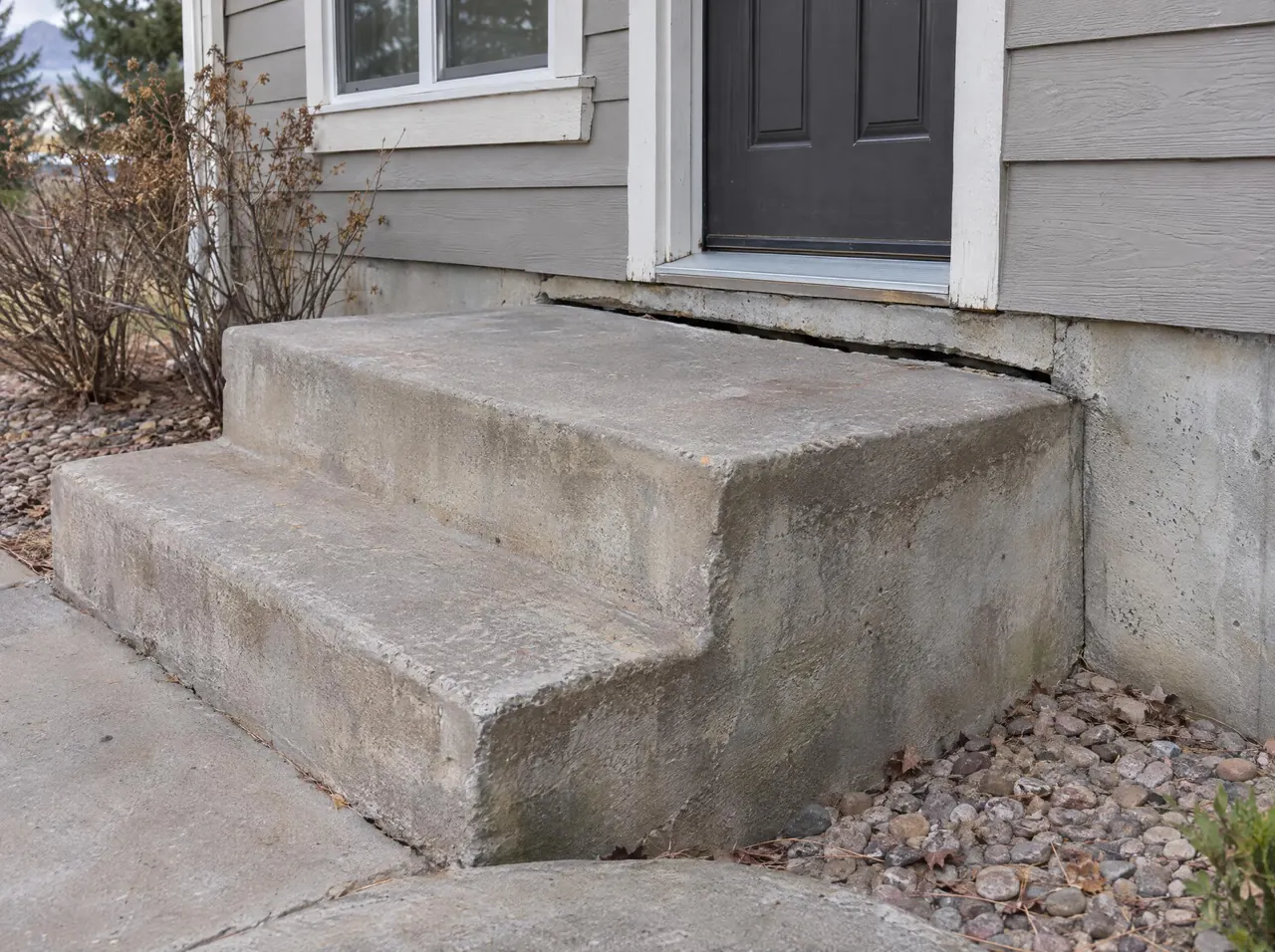
New homes settle too
Most houses in Timnath are recent. The town stayed tiny for most of its history, then development spread east from Fort Collins across I-25, and the bulk of what's there now went up since the 2000s. It's in Larimer County, roughly 60 miles north of Denver.
New construction doesn't mean the concrete stays put. Building a house means digging out for the foundation, then pushing soil back against the walls. That fill isn't as dense as the untouched soil beside it, and it can keep compacting for years, faster when water keeps reaching it. Driveways, stoops and patios all rest partly on that ring of fill. That's why the end nearest the house is nearly always the end that drops.
What to check in the first few years
If you bought a newer home in Timnath, walk the outside concrete each spring once the snow is gone and look for:
- A lip forming where the driveway meets the garage floor
- The front stoop tipping toward the foundation or pulling away from it
- Patio panels that hold a puddle after rain
- A gap opening under the edge of a slab, wide enough for a finger
- Downspouts emptying onto concrete or right beside it
- A walk or stoop that sounds hollow when tapped
One of these on its own isn't urgent. Two or three on the same slab, or a lip that grows from one spring to the next, means the ground underneath is still moving and the slab is worth measuring.
Fix the water, then lift
Irrigated lawns and short downspout extensions do more harm to young slabs than most owners expect. Around a newer house, the fill hasn't finished settling, and a sprinkler head that overshoots onto the patio edge every summer evening keeps it soft. Lifting a stoop while the same sprinkler soaks its edge only buys time.
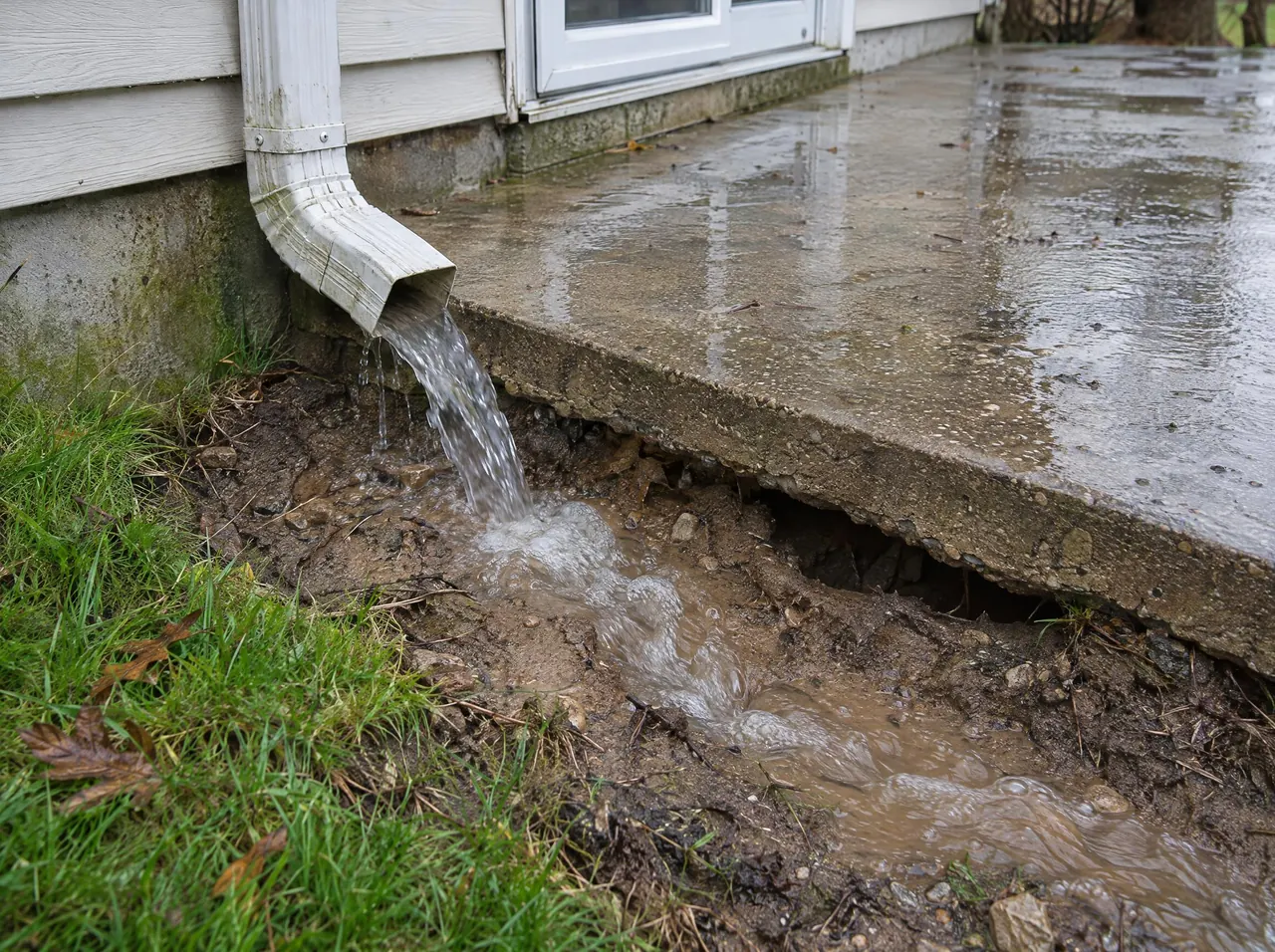
Two inexpensive changes go a long way. Extend downspouts so they discharge several feet from any slab, and adjust spray heads to water grass instead of concrete. If an extension is going to run underground, call Colorado 811 to have utility lines marked before you dig.
How much drop is worth fixing
Size matters less than location. A quarter inch at a garage apron is mostly cosmetic, while the same quarter inch on a front stoop that now tips toward the house is already steering water at the foundation every time it rains. A walk with a lip of a half inch or more is a real trip edge, and those tend to get worse each winter as water freezes in the gap.
A rough guide: fix anything that pitches water toward the house, anything people catch their feet on, and anything that keeps growing year to year. Slabs that dropped a little and then stopped can wait.
Working inside an HOA
Nearly every Timnath subdivision has a homeowners association. Leveling your own driveway or patio rarely changes how anything looks, since the slab goes back up with its finish intact and the small holes get patched. Still, some associations want notice of exterior work, and walks along common areas or trails generally belong to the HOA. Check the covenants or ask the management company before scheduling work on anything you aren't sure you own.
Boards dealing with trip edges across shared walks can read how we approach HOA and commercial walkway leveling, where the whole site gets measured before any panel is lifted.
If a slab at your Timnath home has started to drop, a measurement now shows how far it has gone.
Request an estimateWhy foam often suits younger lots
Where the soil under a slab is still soft or damp, the light weight of polyurethane foam helps. It adds very little load to ground that is already struggling, and it cures fast enough that a lifted stoop is normally ready to walk on later that day. Mudjacking remains the right call for some slabs, and the crew decides per job. The polyurethane foam leveling page explains how the injection works.
Timnath sits just east of Fort Collins, near the Cache la Poudre River, well inside the I-25 corridor we cover.