On flat ground, drainage decides everything
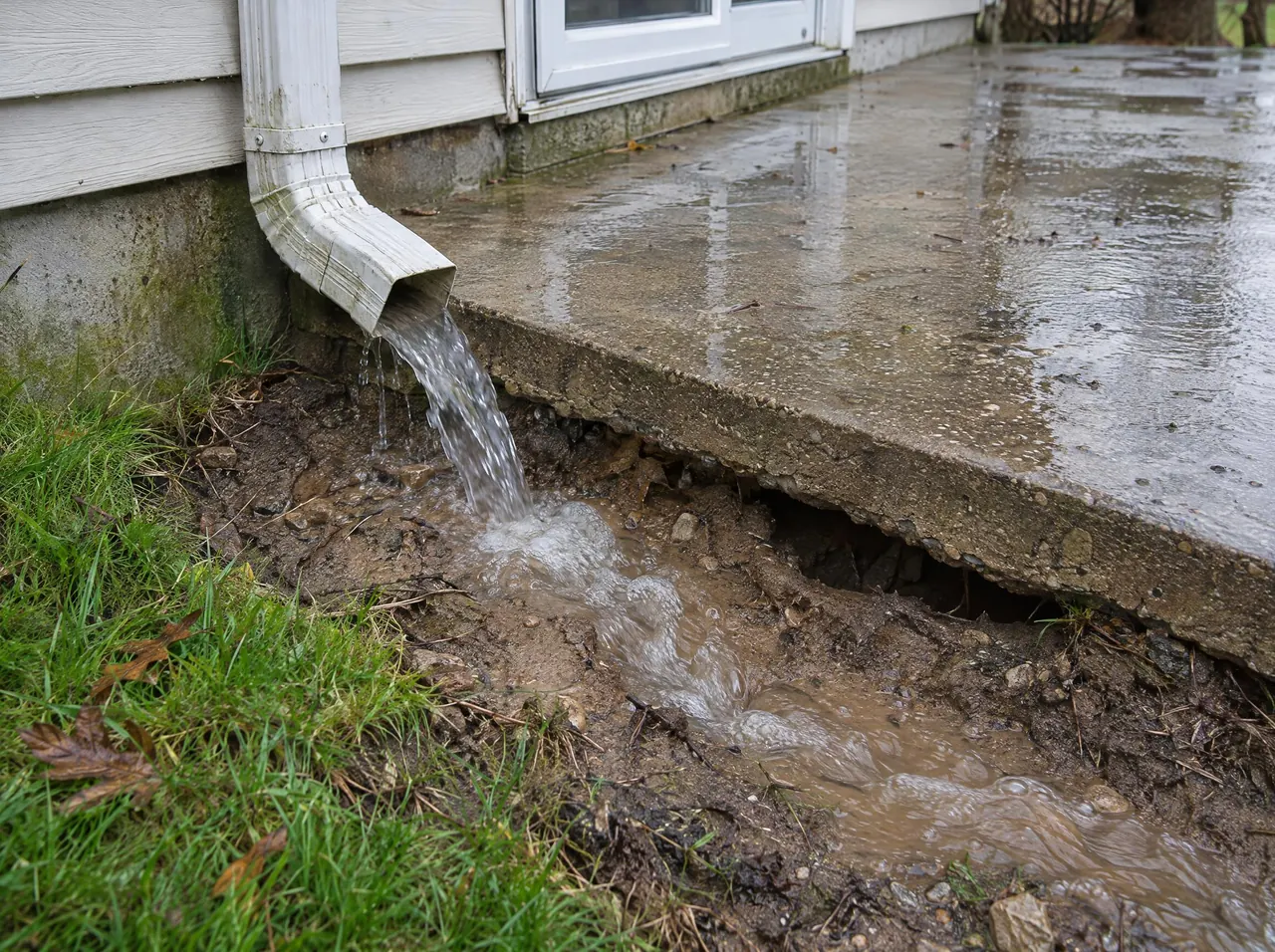
Brighton sits out on the plains about 20 miles northeast of downtown Denver, along I-76 and US-85, with the South Platte River on the west side of town. The land is flat. That sounds like good news for concrete, and in one sense it is, since slabs don't creep downhill here. The trouble is water. On a lot with little natural fall, a downspout or sprinkler that empties beside a slab leaves water sitting there, and the soil under the slab edge softens and settles.
A patio that has tipped even slightly toward the house compounds it, because roof runoff then collects against the foundation. When the ground itself barely slopes, the pitch built into the concrete is often the only thing carrying water away. Restoring that pitch is one of the most useful things leveling does in Brighton, and the patio leveling page shows how a slab is lifted back to drain.
Find where the water sits
Look after a downpour or a fast spring thaw, while the evidence is fresh.
- Note puddles that stay on a slab or along its edge for hours.
- Follow each downspout to where it discharges. One that ends next to a walk, driveway or patio needs an extension.
- Run each sprinkler zone once and watch for heads that spray concrete.
- Look for silt stains or mud lines on the slab surface; they show where water has flowed and stood.
- Knock on low areas with the butt of a hammer. A hollow sound means soil has washed out underneath.
Colorado 811 marks the lines owned by utility companies. Private lines, such as power or water run out to a detached shop, are usually not marked, so a private locator is worth arranging before trenching for a downspout line on a rural property.
Downtown blocks and newer subdivisions
Brighton is the Adams County seat and grew up as a farm town, with a historic downtown and older homes on the surrounding blocks. Concrete there has typically been patched or partly replaced over the years, and settlement tends to be slow and tied to one water source. Since the 2000s, large subdivisions have spread over former farmland on several sides of town. Their concrete faces the familiar new-construction issue: fill against the foundation that keeps compacting under the driveway apron and front stoop.
On a newer driveway that has dropped at the garage, foam is often the first choice because it adds so little weight to fill that is still settling. On a long older driveway with a lot of empty space under it, mudjacking is a reasonable pick and usually costs less in material. Both are compared on the sunken driveway repair page.
Get the low slabs measured and plan the drainage fix at the same time, so the lift and the water problem are solved together.
Request an estimateShop floors and outbuildings on acreage
Around the edges of town, properties on acreage often have a detached shop, barn or garage with its own slab, along with long driveways and aprons that take heavier vehicles than a suburban drive. A shop floor that has sunk at one corner, or dropped where it meets the door apron, can often be raised from inside the building the same way as a house garage. See leveling a sunken garage floor for how that works.
For a raised public sidewalk, check with the City of Brighton about responsibility. Neighboring Thornton lies to the west, across the river.