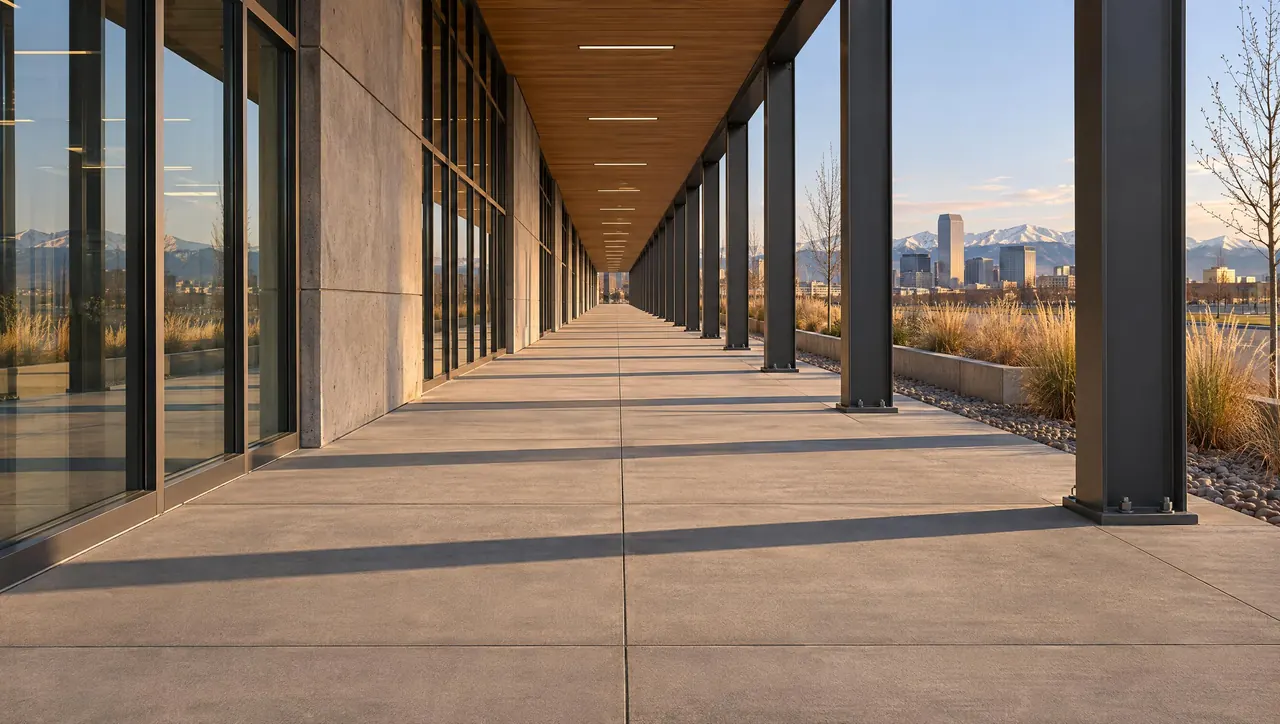
Seventy years of building in one city
Thornton began in 1953 as a planned community north of Denver and incorporated a few years later. From that original core in the south end, roughly 10 miles from downtown Denver, it has grown north along I-25 for decades, past E-470, and subdivisions are still going up on its northern edge.
So concrete leveling in Thornton covers a wide range of slabs. A 1950s ranch in the south end and a house finished last year near E-470 can share the same complaint, a driveway lip at the garage, for different reasons. On the older house, years of water from a downspout or sprinkler slowly eroded the base. On the newer one, foundation backfill is still compacting. Both can usually be lifted. What differs is what you fix alongside the lift and how much more movement to expect.
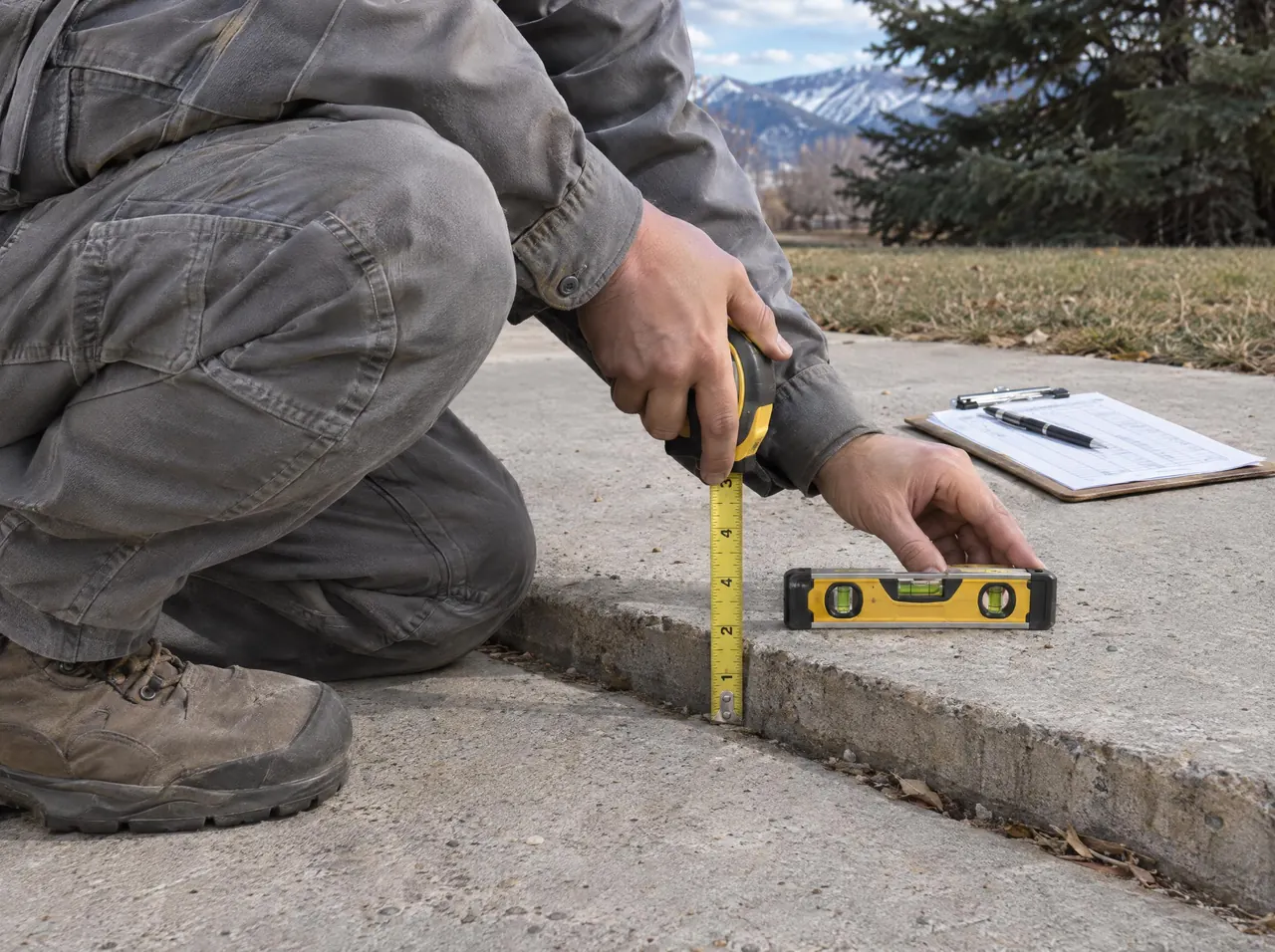
Measure the problem before you call
Ten minutes with a few household tools gives a clearer picture than any verbal description, and it leaves you a baseline to compare against next season.
- Lay a straight board or a long level across the joint, resting on the higher slab.
- Measure the gap down to the low slab at its worst point and write it down in inches.
- Repeat at every joint that looks off: driveway, walks, patio and garage floor.
- On a patio, set the level pointing away from the house. The bubble shows whether the slab still drains away or has tipped back.
- Tap suspicious areas with a hammer handle and listen for a hollow sound.
- Photograph each spot with the tape in the frame.
Take later readings at the same marks. Expansive clay, common across parts of the Front Range, swells when wet and shrinks when dry, so a slab can read slightly differently in a soggy April than in a dry September. A trend over several readings tells you more than any single number.
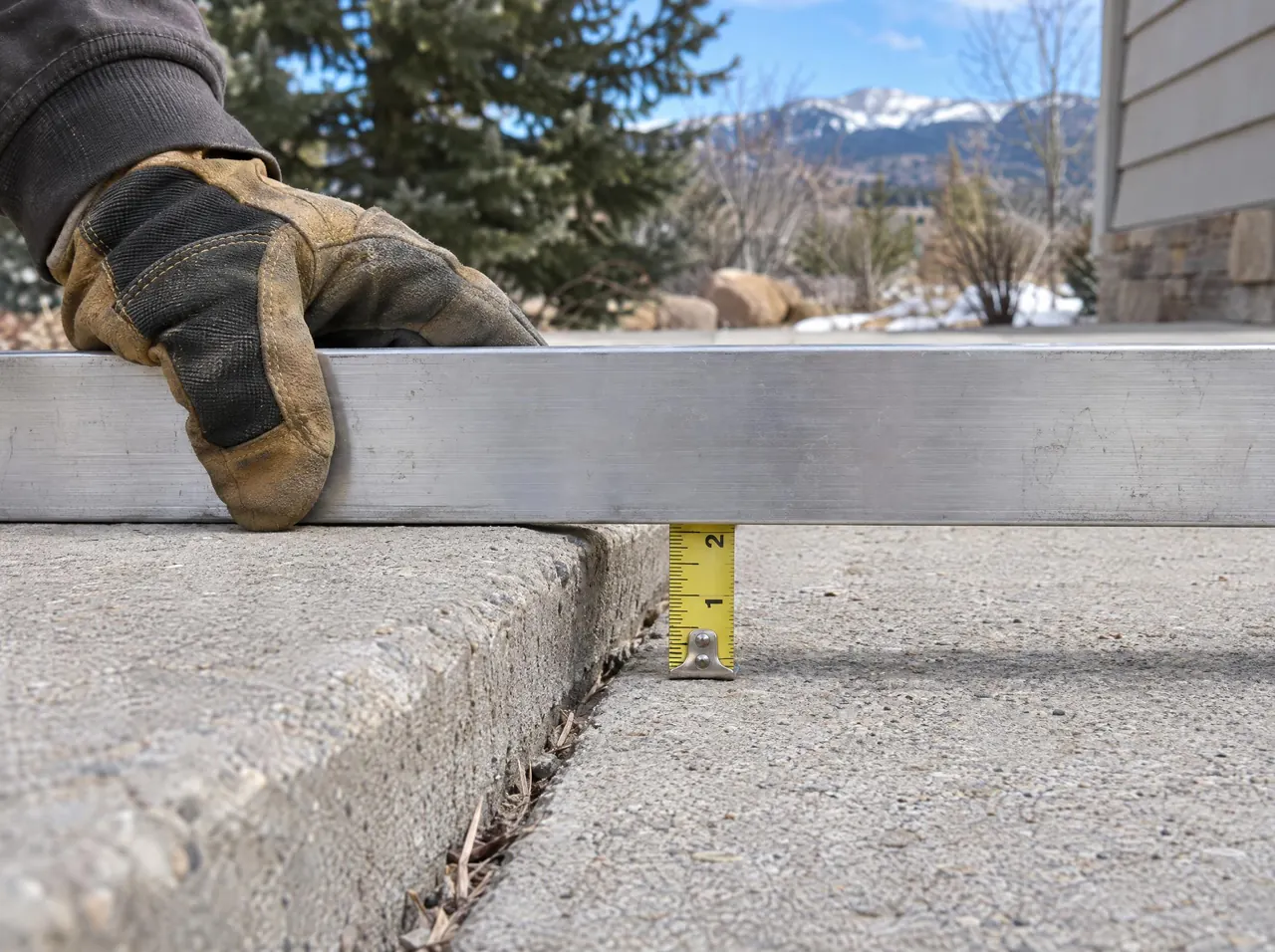
What the measurements tell you
Bring your measurements and photos, and have the crew confirm on site which slabs can be lifted.
Request an estimateFoam or mudjacking for a Thornton driveway
Driveways are a common target here, and both methods work on them. The crew chooses per job. This is how they compare:
| Polyurethane foam | Mudjacking | |
|---|---|---|
| Hole size | About 5/8 in | Roughly 1 to 2 in |
| Weight added under the slab | Very light | Much heavier |
| Back in use | Foot traffic usually the same day | Needs more curing time before vehicles |
| Material cost | Higher | Usually lower |
| Strong fit | Newer homes on fill still compacting | Large voids under older slabs on settled ground |
On a newer house in the north end, foam's light weight is a real advantage over fill that is still compressing. On an older south-end driveway with settled ground under it, either can work, and the size of the void often decides it. The page on raising a sunken driveway goes further, and how polyurethane foam lifting works explains the injection itself.
Inside the garage, a section that has dropped near the door or along a crack gets the same treatment from within the building; see garage floor repair. Questions about the public sidewalk go to the City of Thornton.
Measure first, find the water second, lift third. In the older south end, the water source is usually the story; in the newer north, it is the backfill.