Commercial walks along US-36
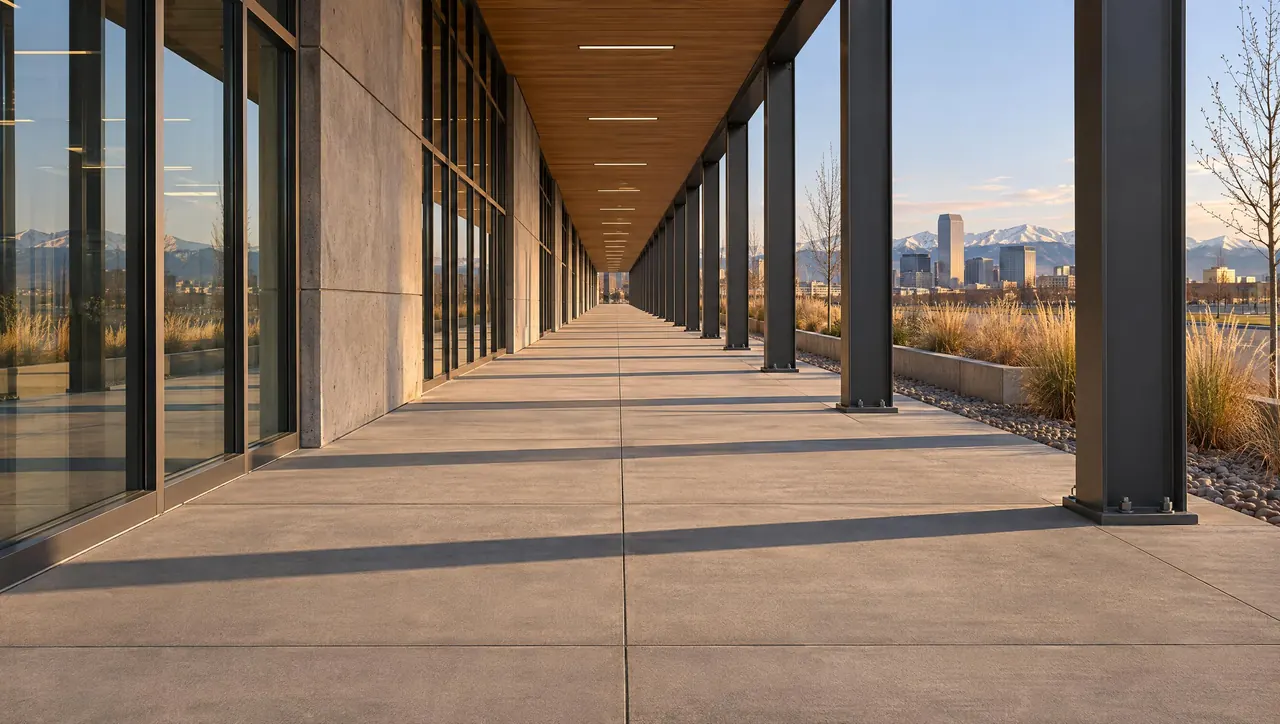
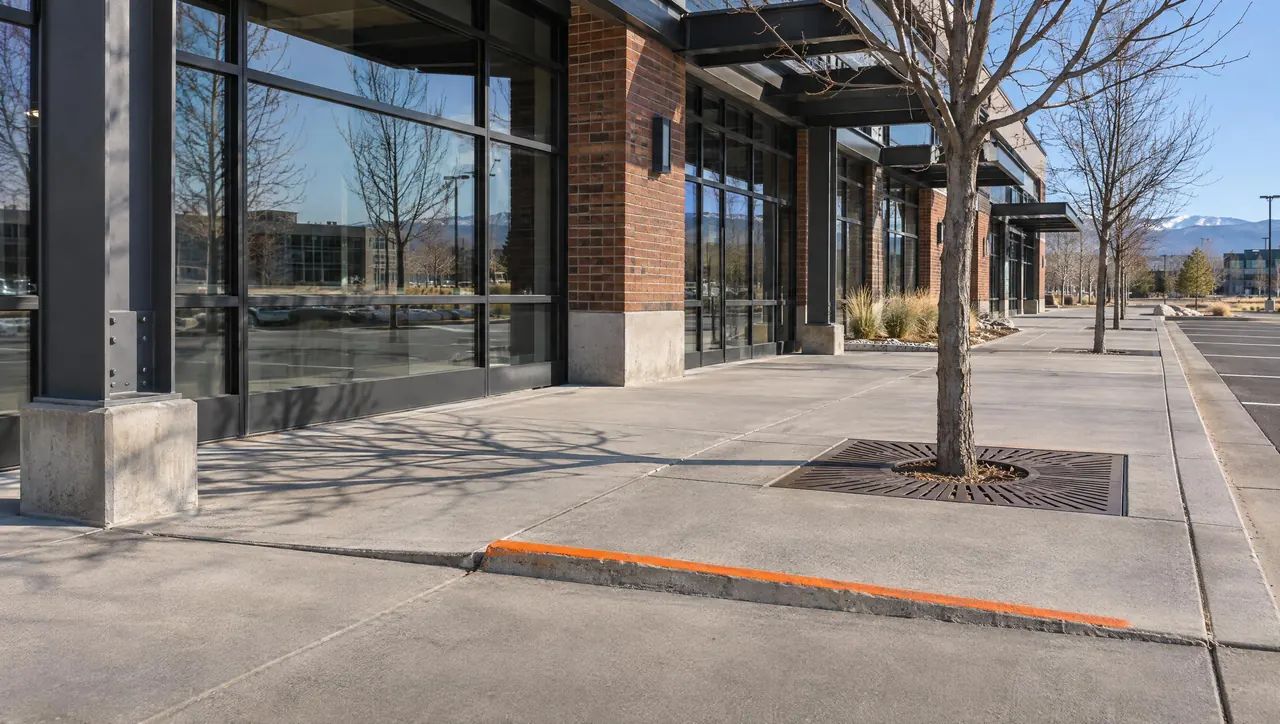
Broomfield sits between Denver and Boulder on US-36, roughly 15 miles northwest of downtown Denver, and a large share of its concrete belongs to businesses. Office buildings in the Interlocken area, retail around FlatIron Crossing and plenty of apartment and townhome communities all have long runs of sidewalk, entry plazas and parking-lot walks that people cross all day. For property managers, concrete leveling in Broomfield mostly comes down to trip hazards.
The ADA 2010 Standards (sections 303.2 and 303.3) spell out how much vertical change a walking surface can have. They give managers a clear way to rank a list of offsets:
| Offset at the joint | ADA 2010 Standards | Practical response |
|---|---|---|
| Up to 1/4 in | Allowed without treatment | Record it and remeasure after winter |
| 1/4 to 1/2 in | Must be beveled no steeper than 1:2 | Lift the low panel; a bevel is a stopgap |
| Over 1/2 in | Needs a ramp | Lift the low panel back to flush |
None of this is legal advice. Your counsel or an accessibility consultant can say what applies to a particular building; the numbers are simply a defensible way to decide what goes first.
Lifting has a practical edge over grinding or tear-out on a busy site. The panel stays in place, the holes are small, and with foam the walk is usually open again the same day. Our commercial leveling services page covers phasing work around tenants and customers.
A few things make a commercial estimate go smoothly: a site plan or aerial photo with the offsets marked, the hours when each entrance is busiest, and which walks can be closed for a short stretch. Note any panels by downspouts from the building or by landscape irrigation, because those are the ones likely to move again unless the water is redirected.
Have every offset on your Broomfield property measured and ranked so the worst go first.
Request an estimateTownhome and apartment walks over utility trenches
Multifamily sites have a pattern of their own. Walks between buildings often run over utility trenches, and trench backfill settles in long lines, so three or four panels in a row can step down one after another. Lifting them in sequence, starting with the lowest, brings the run back to grade. The page on lifting a run of sidewalk panels explains how each offset is read before anything is drilled.
Walks beside parking areas take meltwater from plowed snow piles all winter, and the edge nearest the pile is often the one that drops. If drainage changes or new trenching are part of the plan, get utilities located through Colorado 811 first.
Homes from the 1950s to Anthem
Residential Broomfield covers a long stretch of building eras. The first neighborhoods went up in the mid-1950s as Broomfield Heights, laid out along the then-new Denver-Boulder Turnpike, so their walks and driveways are now more than 60 years old. Later decades added subdivisions in every direction, and the Anthem communities in the north part of the city are among the newest. Anthem Ranch is an age-restricted community, and on walks used by older residents even a small lip is worth correcting early.
The problems track the age. Older slabs tend to show slow settlement at one or two joints, often under a downspout, and sometimes the round patches of an earlier mudjacking job. Newer houses show the familiar drop at the garage apron and front stoop as foundation fill compacts. Garages get it from the inside as well: garage floor leveling raises sunken sections of the floor working from within the building.
Broomfield has been a consolidated city and county since 2001, so there is one local government to ask about the public sidewalk along your street: the City and County of Broomfield. Check with them about responsibility before arranging a repair in the right-of-way.
The city also reaches east toward I-25 and the Northwest Parkway, and its neighbors include Westminster to the south and Superior to the west.