Walkways around the Tech Center come first
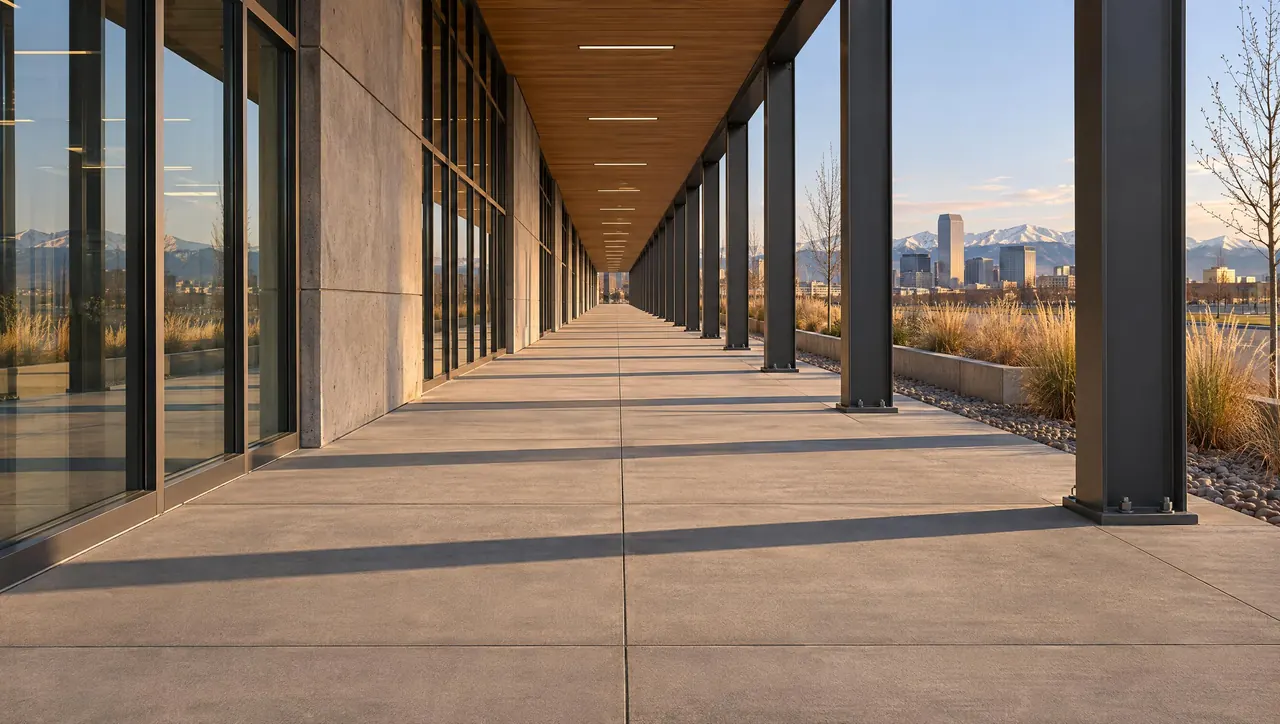
Much of the Denver Tech Center sits inside Greenwood Village, along I-25 roughly 10 miles south of downtown Denver. That puts an unusual amount of commercial concrete into one small Arapahoe County city: entry plazas, long walks between parking structures and lobbies, paths to the light-rail stations, and sidewalks along the frontage roads. Concrete leveling in Greenwood Village is as often a property manager's question as a homeowner's.
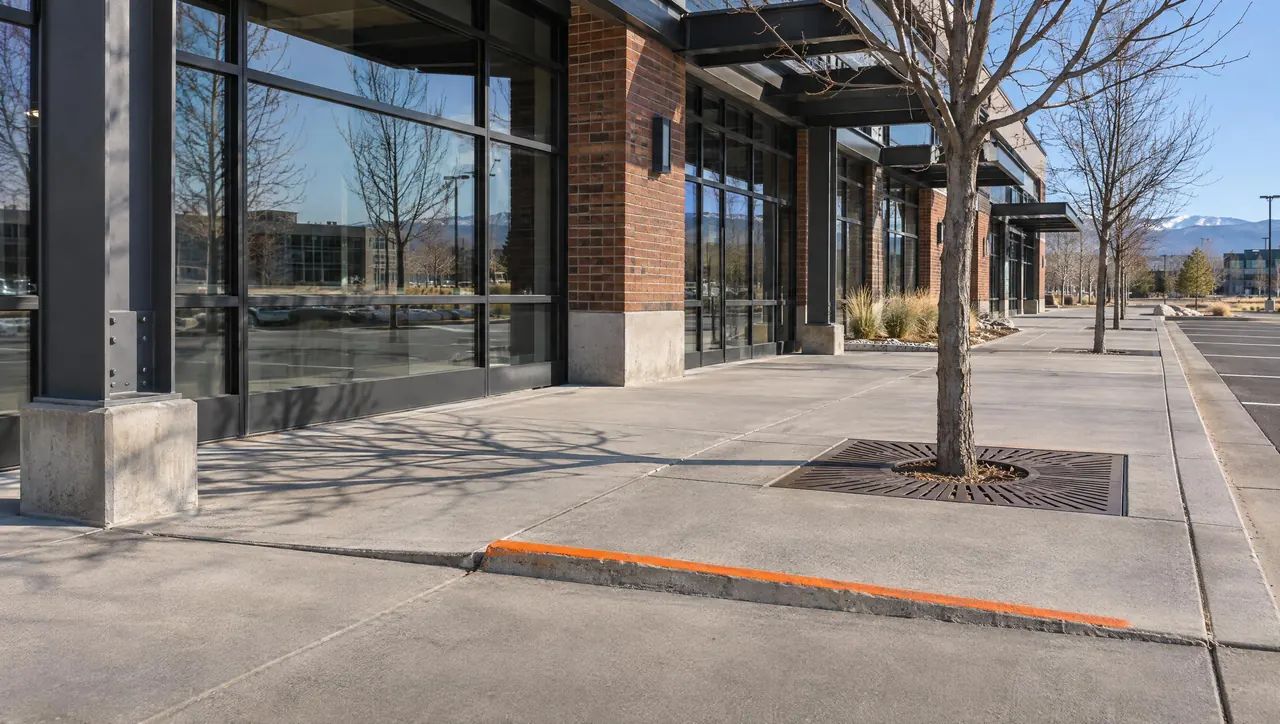
Commercial walks settle for the same reasons residential ones do. Backfill along building foundations keeps consolidating for years after construction. Irrigated planting beds soak the soil at slab edges all summer. Snowmelt works into open joints every winter, and expansive clay in parts of the Front Range adds seasonal movement on top. What changes on a commercial site is how many people cross a raised edge in a day. A lip that one homeowner steps over twice a day might be crossed by hundreds of office workers, visitors and delivery drivers on a single walk to a lobby door.
How the 2010 ADA Standards treat a raised edge
| Vertical change in level | What the Standards say | Practical response |
|---|---|---|
| Up to 1/4 in | Allowed without treatment | Keep an eye on it; seal the joint if water gets in |
| 1/4 to 1/2 in | Must be beveled no steeper than 1:2 | Lift the low panel, or bevel as a stopgap |
| Over 1/2 in | Treated as a ramp | Lift the low panel back to flush |
That's how we sort which offsets on a site to fix first. It isn't legal advice. Grinding the high edge is a common stopgap on office walks; it takes the lip off, but the low panel stays low and keeps catching water. Lifting corrects the slab that actually moved. Larger sites are covered on our commercial walkway leveling page.
On a busy entrance, downtime usually decides the material. Polyurethane foam goes in through holes about 5/8 in across and cures quickly, so a walk can usually reopen to foot traffic the same day. Mudjacking uses larger holes and a much heavier slurry that needs more curing time before loads go on it.
Bigger lots, bigger slabs
Away from the office towers, residential Greenwood Village runs to larger lots than most of the south metro, and the concrete on them tends to be larger too: long driveways, circular drives, pool decks and broad back patios. A long slab has more joints, and every joint is a place for water to reach the soil.
On these properties the problem panel is often well away from the house. A driveway section that dropped where the drive crosses a drainage swale, or a pool deck sitting over old excavation backfill, can be lifted on its own without touching the rest of the slab. Pool decks need extra care around plumbing lines and the coping; our page on pool deck leveling explains what the crew watches for.
Send us the location and a photo with a tape across the worst offset, and we'll talk through whether it's a lift.
Request an estimateSort these out before work starts
- Confirm who owns the slab. Public sidewalks along streets go to the City of Greenwood Village; private walks belong to the owner or association.
- Get board or management approval for any common-area concrete.
- Call Colorado 811 for utility locates if drainage or landscape digging is planned alongside the leveling.
- Measure the worst offsets with a straightedge and tape, and photograph each one with the tape visible.
- Note where sprinkler heads and downspouts hit the slab, since that water will undo a lift if it keeps coming.
Match the method to the slab
The crew makes the final call per job, whether the slab is an office plaza or a back patio in Greenwood Village. Our step-by-step leveling process shows what happens from the first walk-through to sealing the joints, and if your property sits just over the line, the Centennial service area page covers the neighborhoods to the south and east.