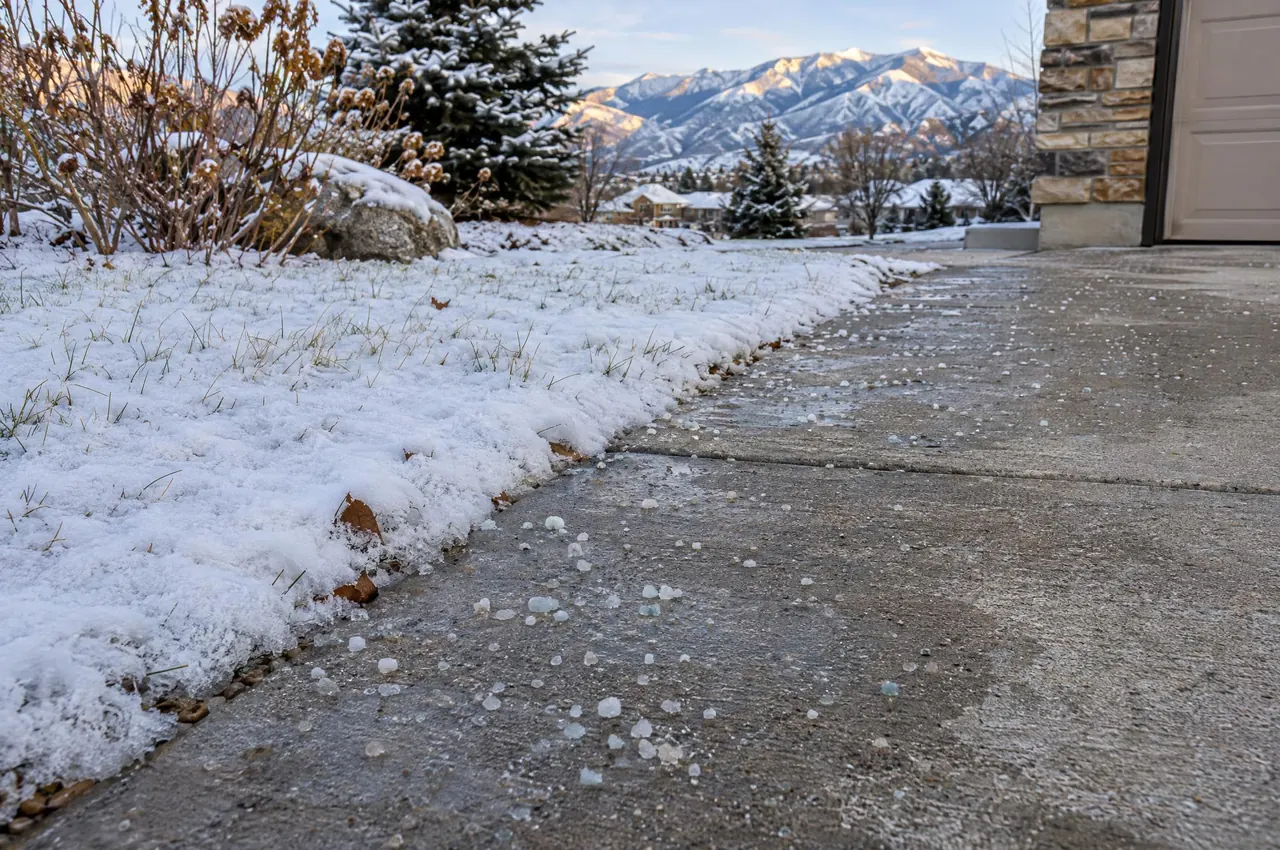
Most de-icer damage to concrete starts with water, not with salt dissolving the slab. Ice melt turns snow into brine. The brine soaks into the surface and the joints, and the next cold night freezes it again. The first snows are reaching the Front Range and the first bags of ice melt are going home from the hardware store. Here is what's true, and what isn't, about the common products and the habits around them.
How de-icers actually hurt a driveway
Concrete is porous. Water gets into the cement paste near the surface, freezes, expands and pushes outward. Every Colorado driveway sees some of that. De-icers make it worse in two ways. They keep more water liquid for longer, so it soaks deeper before it refreezes. They also melt snow during the day that freezes again overnight, so the slab goes through more freeze-thaw cycles than it would under a plain layer of snow.
The visible result is scaling: the top layer flakes off in patches and exposes the stone underneath. Some chemicals also react with the cement paste itself, which is why the product on the label matters.
Myths and facts about the products
Myth: "Rock salt eats concrete."
Fact: Sodium chloride does little chemical harm to sound, well-made concrete. Its damage is mostly physical, through the extra freeze-thaw cycling. It does corrode steel, including car underbodies, railings and any reinforcing in the slab once chloride reaches it through cracks. It also burns grass along the driveway edge, and it loses strength in hard cold. The bag lists its lowest working temperature.
Myth: "Anything sold for ice is safe on concrete."
Fact: Ammonium nitrate and ammonium sulfate attack concrete chemically. They're common in fertilizer, which people sometimes grab in a pinch. Don't. Magnesium chloride and calcium chloride, at the heavy concentrations that build up with repeated use, have been linked to deterioration of the cement paste on top of ordinary scaling.
Myth: "Calcium chloride is the gentle option."
Fact: Calcium chloride works in colder weather than rock salt and gives off heat as it dissolves, so it bites into ice fast. That's a performance advantage, not a concrete-safety one. It also pulls moisture from the air, so treated surfaces stay damp. Save it for the coldest days and use a light hand.
Myth: "Pet-safe means concrete-safe."
Fact: That label is about paws. Many pet-friendly blends are still chloride-based. Read the ingredient list. Calcium magnesium acetate (CMA) is generally regarded as the gentlest common choice for concrete, though it costs more and works more slowly.
| Product | On ice | Concrete concern | Sensible use |
|---|---|---|---|
| Sodium chloride (rock salt) | Good in mild cold, weak in hard cold | Scaling from extra freeze-thaw; corrodes steel | Light use on mature concrete |
| Calcium chloride | Fast, works colder | Keeps surfaces wet; paste damage with heavy repeated use | Small amounts on the coldest days |
| Magnesium chloride | Works in cold | Paste damage with repeated exposure | Sparingly |
| Potassium chloride | Weaker in cold | Scaling, same mechanism as salt | Mild days |
| CMA | Slower | Generally gentlest on concrete | Steps, entries, younger slabs |
| Ammonium nitrate or sulfate (fertilizer) | Varies | Chemical attack on concrete | Never |
| Sand | No melting, traction only | None chemical; tracks grit indoors | New concrete, very cold days |
Concrete placed this year is the most vulnerable. Industry guidance from the Portland Cement Association is to keep de-icers off new concrete through its first winter. Use sand for traction, and remember that brine dripping off your car does the same job as a bag of ice melt.
If a sunken driveway panel is already holding meltwater, we can look at it and tell you which repair fits.
Request an estimateMyths about how you use ice melt
Myth: "More ice melt works faster."
Fact: Past the label rate, extra product barely speeds things up. It just makes stronger brine that runs into joints, cracks and the lawn. Shovel first, then spread a thin, even layer where people walk. Sweep up leftover pellets once the surface clears.
Myth: "Ice melt keeps the driveway dry."
Fact: It keeps it wet. Meltwater that can't drain refreezes at night, often as a thin glaze. Push snow piles to spots that drain away from the slab, and squeegee standing water off during the day when you can.
Myth: "The damage only happens on the surface."
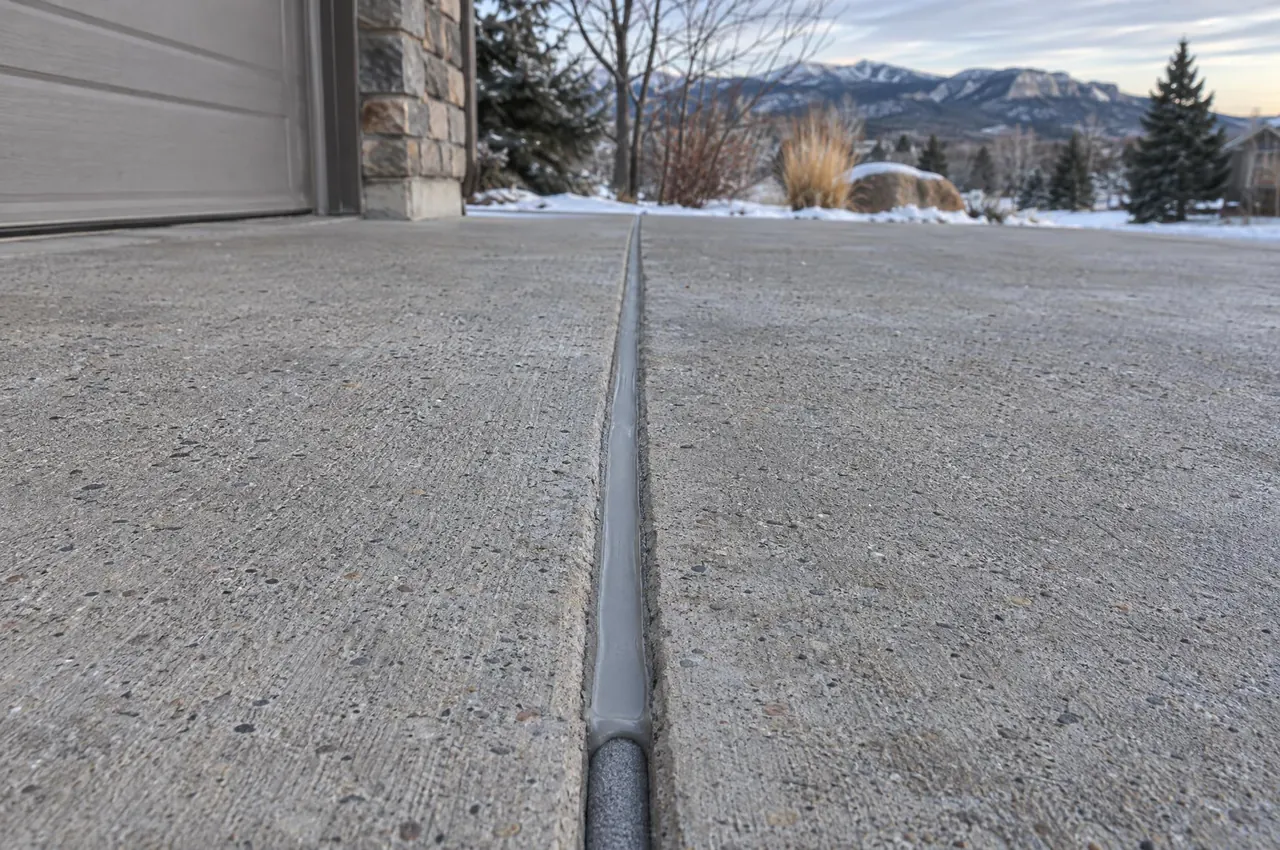
Fact: Brine flows to the lowest point, which on a driveway is often an open control joint, the seam at the garage apron or the slab edge. Open joints let water and salt reach the base under the slab, where repeated wetting and freezing can soften support. A flexible sealant keeps that water on top where it can drain, which is the purpose of our concrete joint and crack sealing work.
Myth: "The garage floor is protected."
Fact: Snow falling off the car melts on the garage slab with road brine in it, and those puddles can sit for days. Rinse or squeegee them out on mild days.
When de-icers meet a settled slab
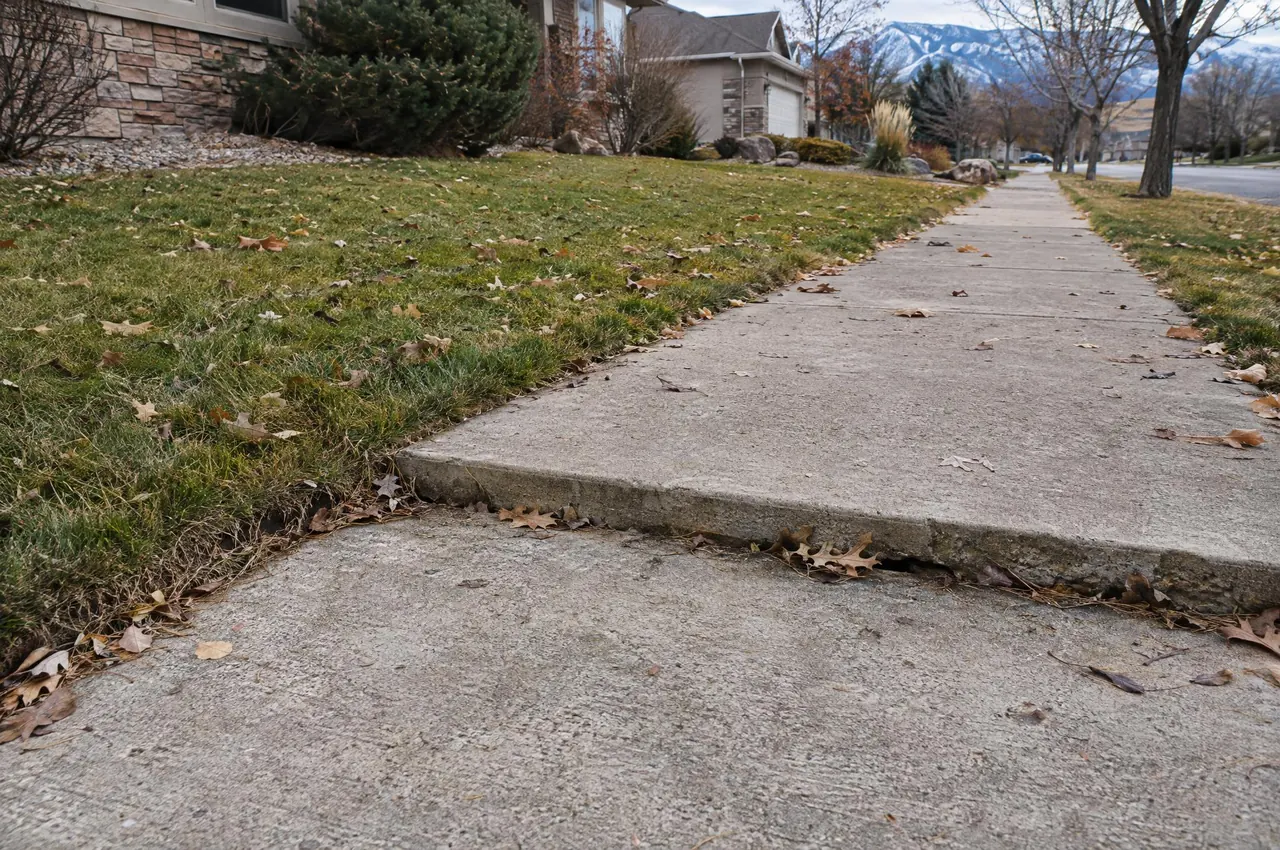
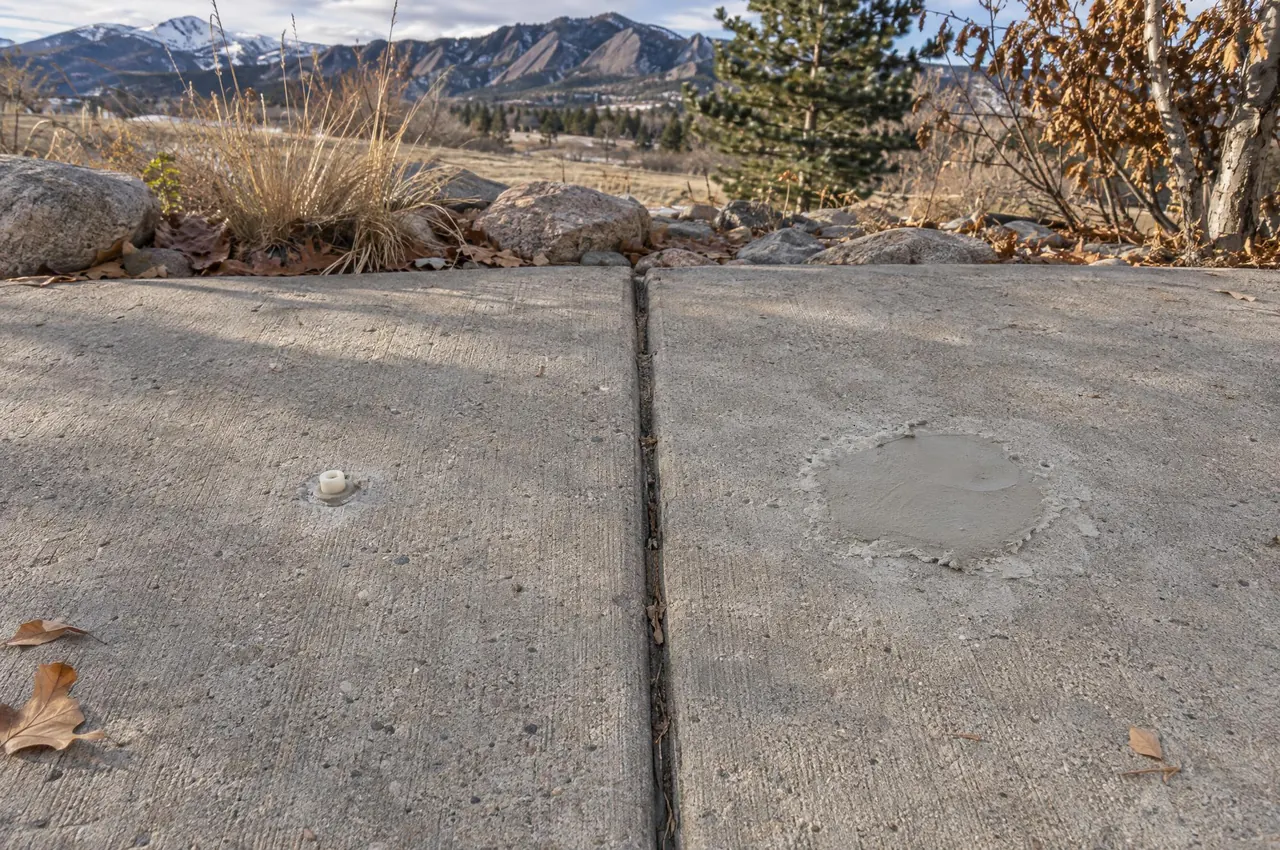
A panel that has sunk or tilted holds water. Brine pools in the low spot, stays longer and freezes more often, and the ice there usually gets more product. Raising the panel so meltwater drains is what driveway leveling with foam or mudjacking does. Leveling corrects elevation. It does not restore a surface that has already scaled, and neither method fixes concrete broken into many pieces.
A winter de-icer checklist
- Shovel before you spread anything.
- Read the ingredients and skip ammonium nitrate, ammonium sulfate and fertilizer.
- Stay at or below the label rate.
- On concrete placed this year, use sand instead of any ice melt.
- Keep pellets off lawn and planting edges.
- Sweep up leftover product after each storm.
- Note where water pools after a melt so you know where to look in spring.
Use less product, pick it by its ingredients and get water off the slab. A driveway that drains and has sealed joints handles a Colorado winter far better than one that holds brine in its low spots.