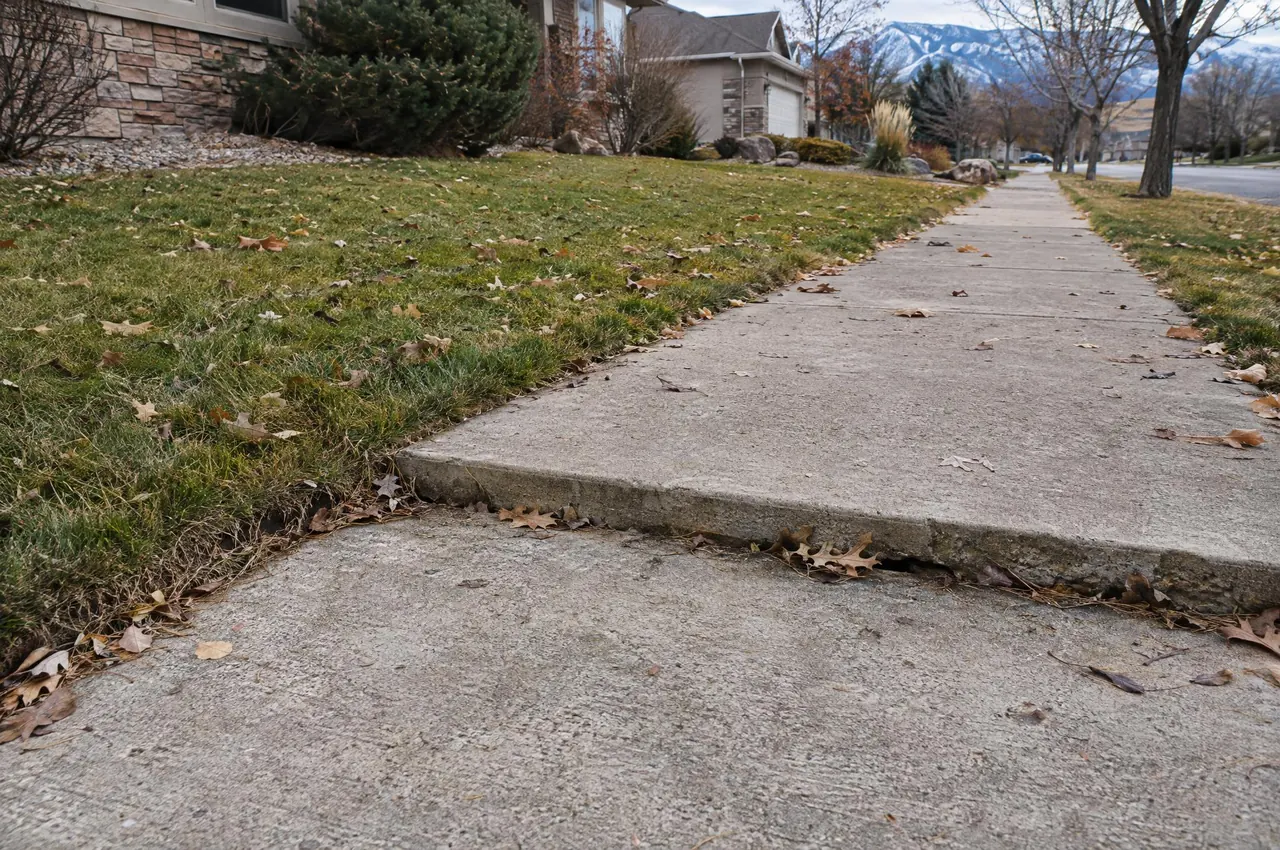
Ask why does concrete sink and the answer almost always sits underneath it. The slab rarely fails on its own. Something in the soil below gave way, and the concrete followed it down. Along the Front Range the usual causes are loose fill, misdirected water, expansive clay, plumbing leaks and freeze-thaw. Fall is a good time to sort out which one you have. Once sprinklers shut off in October, soil that stayed wet all summer starts drying, and settlement that irrigation was masking often shows up along lawn edges and walks.
Match the symptom to the likely cause
Where and how a slab dropped usually points to the reason it dropped.
| Symptom | Likely cause | Check here first |
|---|---|---|
| Slab tilts toward the house or a gap opens at the foundation | Loose backfill | The first few feet out from the foundation wall |
| Low corner near a downspout | Roof water washout | Downspout outlets and gutter overflow points |
| Edge you can slide fingers under, or a hollow sound when tapped | Void from erosion | Slab edges and nearby sprinkler heads |
| Walk panel tips toward the lawn after irrigation season | Clay shrinking as it dries | The turf edge beside the walk |
| One area of a garage or basement floor sinking | Plumbing leak | Drain lines and the water bill |
| Joints widen and edges drop more each spring | Freeze-thaw with water getting in | Unsealed joints and cracks |
| Slab raised rather than dropped | Root heave, not settlement | Nearby trees |
Cause 1: Fill that was never compacted
Soil dug out for a foundation goes back around the walls with little compaction, and it keeps settling for years. Utility trenches and the fill under stoops and garage aprons behave the same way.
What to look for: patios and walks tipping toward the house, steps pulling away from the wall, and driveway panels dropping where they meet the garage slab.
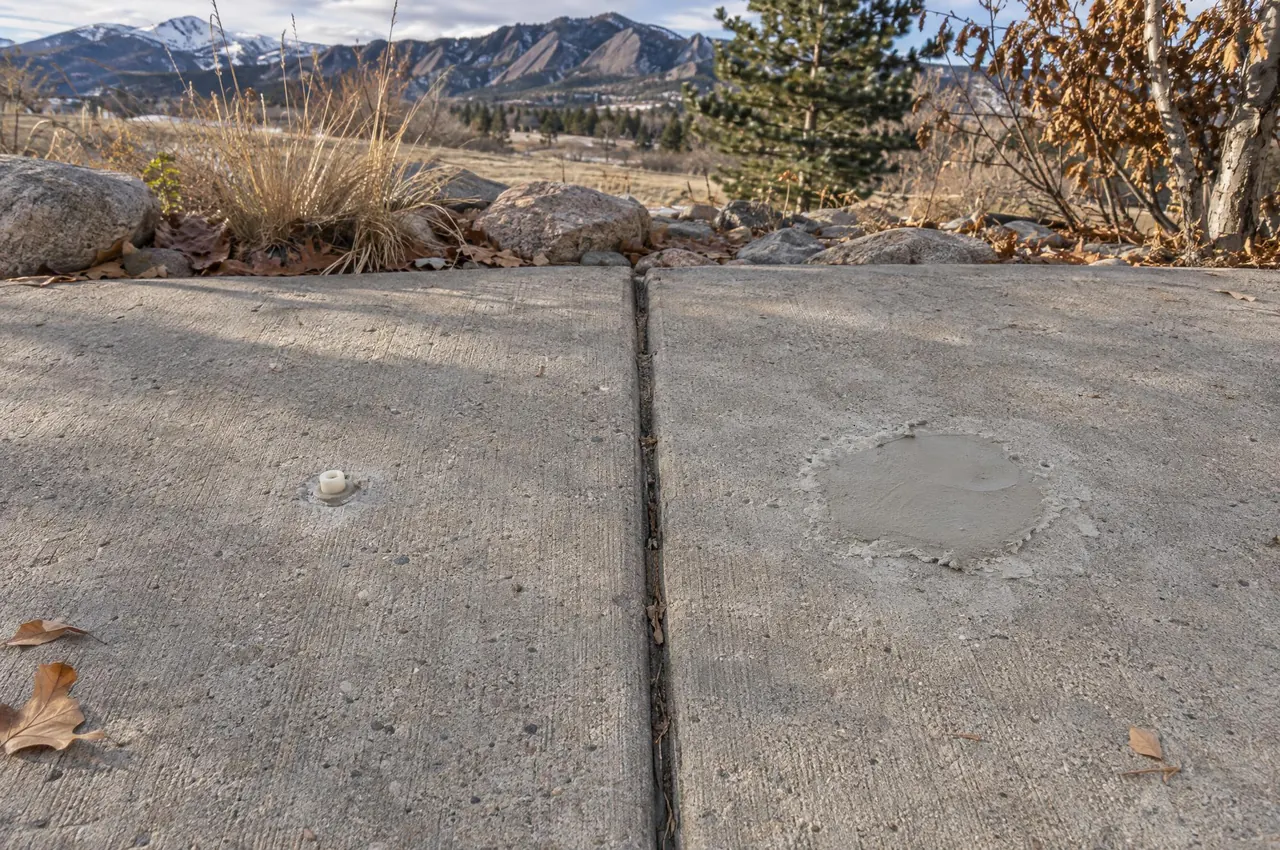
What fixes it: lifting the slab and filling the space beneath it once the fill has done most of its settling. Polyurethane foam suits weak fill because it adds very little weight. For a panel that dropped at the garage or the street, our driveway leveling work brings it back in line with the slabs around it.
Cause 2: Roof and sprinkler water carrying soil away
Water dumped in one spot moves soil. A downspout that empties at a slab corner or a sprinkler head that soaks the edge of a walk will slowly wash fine soil out from under the concrete. The slab bridges the hollow for a while, then cracks or sinks into it.
What to look for: a low corner right where water lands, eroded soil along the edge, and a slab that rocks underfoot.
What fixes it: redirect the water first. Extend downspouts, clean gutters and turn sprinkler heads away from concrete. Then filling the voids under the slab restores support, and lifting brings the surface back to grade. Skip the water step and the same spot will wash out again.
You can map a void with a hammer handle. Tap across the slab in a rough grid: concrete on firm soil sounds sharp and solid, while concrete over a void sounds dull and hollow. Chalk the hollow areas so they're easy to point out later.
Can't tell which cause is behind your sunken slab? We'll look at it and recommend foam or mudjacking for your situation.
Request an estimateCause 3: Expansive clay and the fall moisture swing
Much of the Front Range sits on clay soils that swell when they take on water and shrink as they dry. The Colorado Geological Survey publishes maps and homeowner guidance on swelling soils if you want to know what's under your neighborhood.
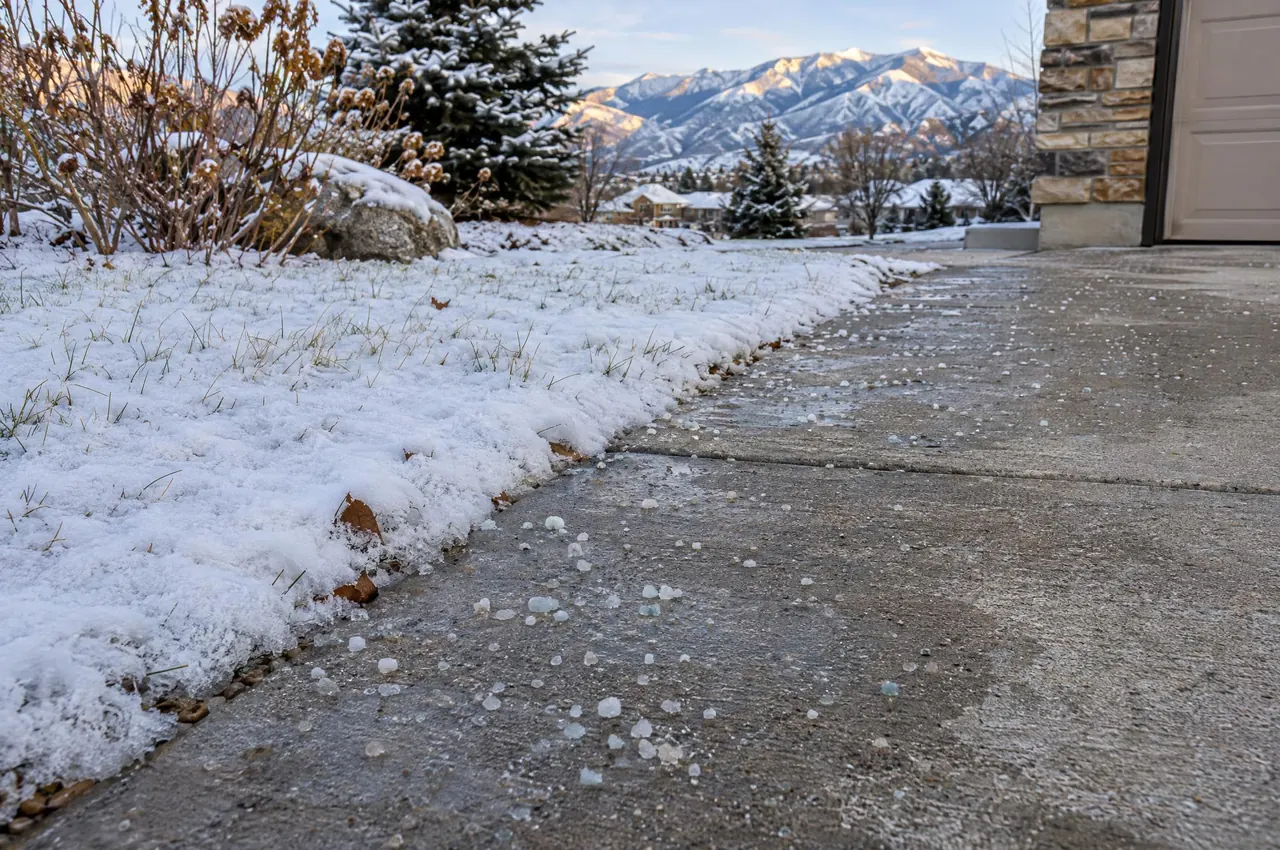
All summer, irrigation keeps the strip of soil beside a lawn wet. After the system is winterized, that strip dries through the fall while the soil on the far side of the walk may barely change. The result is a panel that tilts toward the grass, or one that drops along the lawn edge and cracks lengthwise.
What to look for: movement that wasn't there in August, panels tipping toward turf, and offsets that grow and shrink with the seasons.
What fixes it: steadier moisture comes first. Avoid soaking one side of a slab and keep roof water away from it. Measure the offset now and again in spring so you know how much the panel moves. Leveling corrects the settled position, and consistent watering limits the next swing.
Cause 4: Plumbing leaks under the slab
A leaking drain or supply line under a garage or basement floor can soften soil or carry it off, and you often won't see the water until the floor moves.
What to look for: one area of an interior slab sinking while the rest stays put, damp patches, or a water bill that climbs for no clear reason.
What fixes it: a plumber first. Once the leak is repaired, void filling and lifting can restore the floor.
An interior slab that drops noticeably over weeks rather than years points to active water. Leveling over a live leak doesn't hold, because water keeps undermining the soil around and below the new support. Get the leak found and fixed before anyone lifts the floor.
Cause 5: Freeze-thaw working through open joints
Water that runs into unsealed joints and cracks collects under the slab. When it freezes it expands and loosens the soil. When it thaws, that soil is soft and saturated, so it compresses under the concrete or drains away with the melt. Colorado winters can cycle through many freezes and thaws.
What to look for: joints that open wider each year, edges that sit a little lower every spring, and chipping along joint lines.
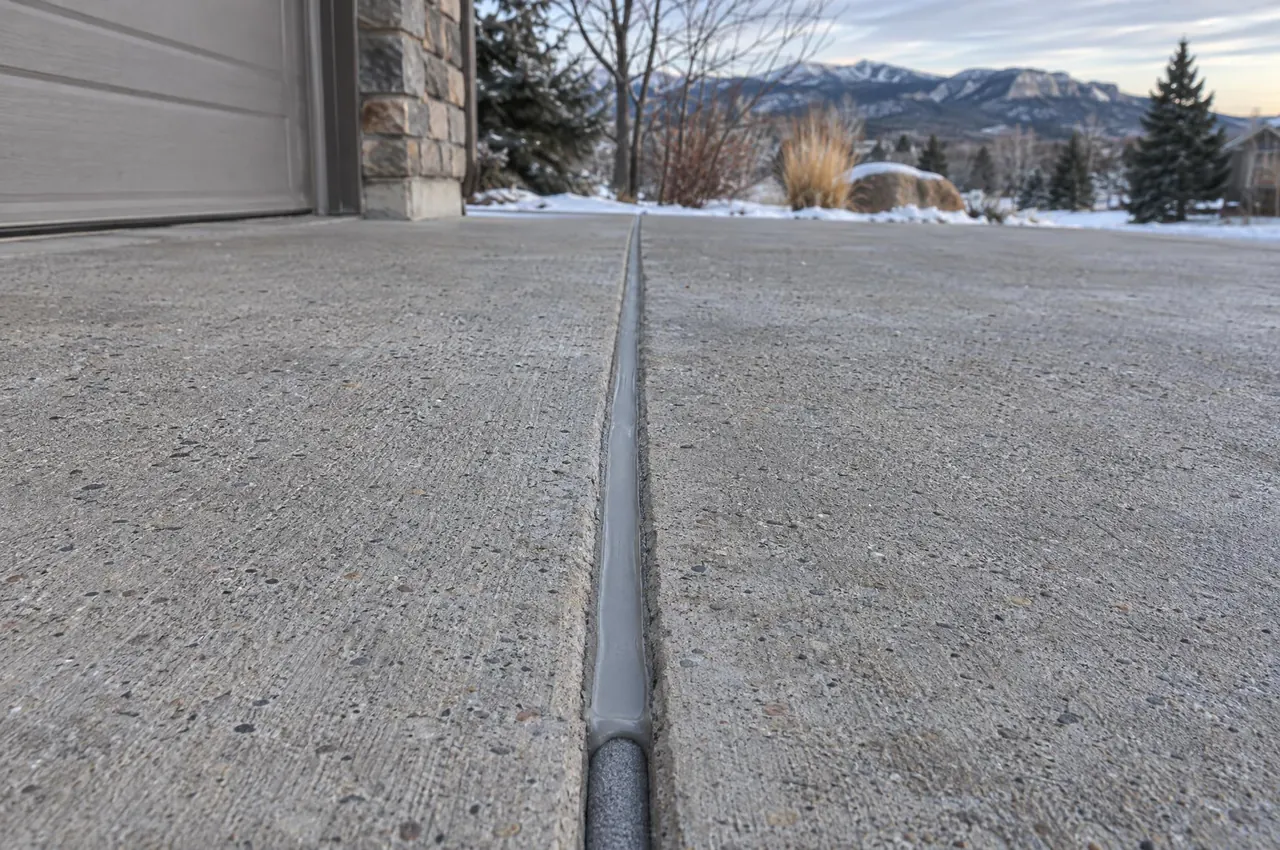
What fixes it: level the slab, then seal joints and cracks so water stays on top of the concrete instead of under it.
Know when it isn't settlement
Some problems look like sinking concrete but need a different fix. Leveling won't solve these:
- Root heave. A slab pushed up by tree roots is rising, and the roots are the real problem.
- Foundation movement. Cracked foundation walls or sticking doors call for a structural engineer.
- Shattered concrete. A slab broken into many small pieces can't be lifted as a unit.
- Public sidewalks. Ask your city's public works department who handles repairs before arranging anything.
If a fix involves digging, such as regrading or burying a downspout line, call Colorado 811 first to get utilities marked.
Decide what to do this fall
We work along I-25 from Colorado Springs to Fort Collins. Check our Front Range service areas to confirm we cover your neighborhood.
Concrete sinks because the ground under it changed. Find the water, leak or loose fill behind the drop and deal with it first, and the leveling that follows will hold far better.